Business & Finance
Indian Pharma Firms Face Shrinking U.S. Sales and Margins Amid Buyer Consolidation and Rising Competition
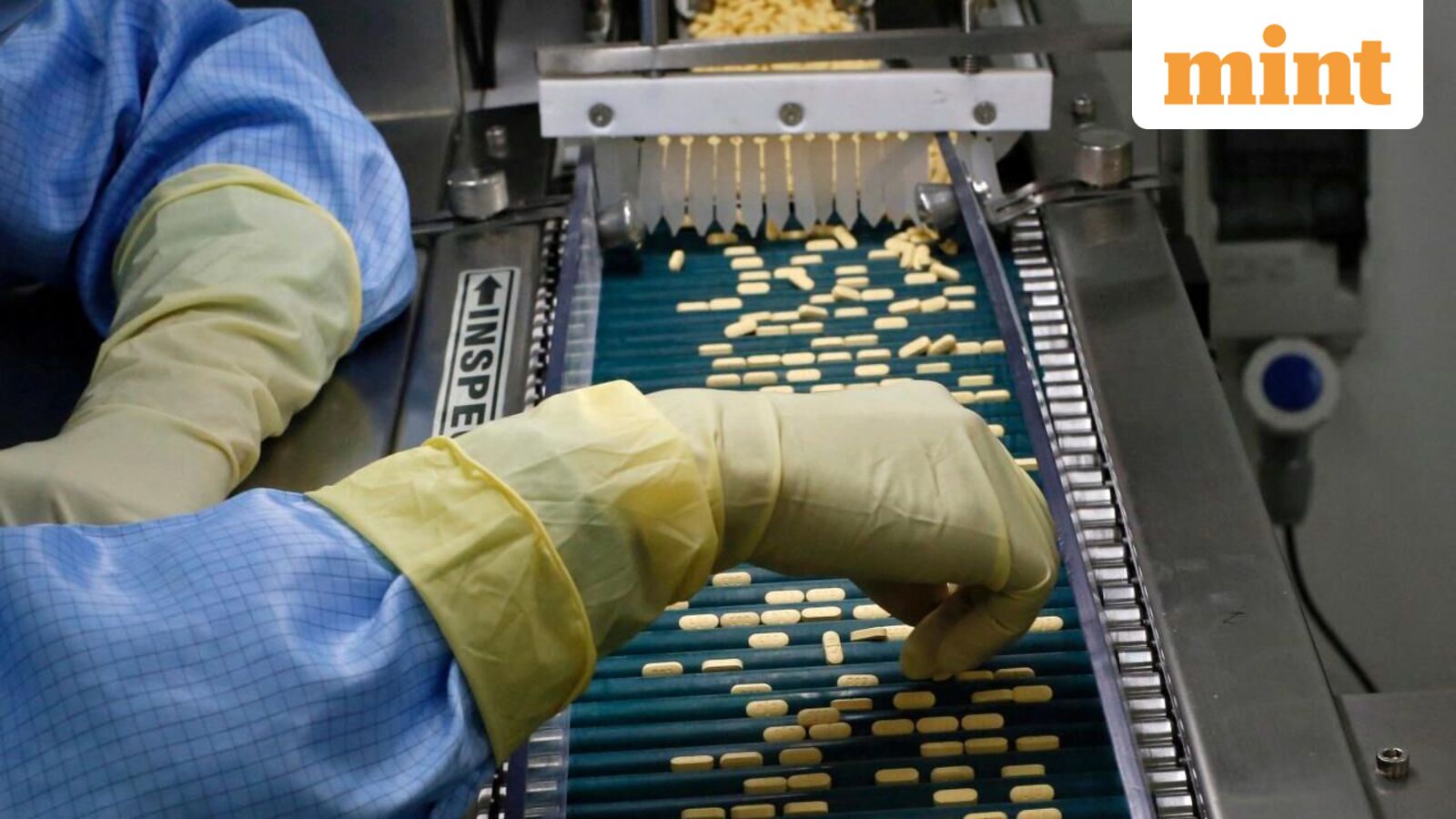
Indian drugmakers are experiencing reduced pricing power in the United States, their largest market, as concentrated buying groups and increasing competition squeeze sales and margins. In the July‑September 2026 quarter, Cipla’s North America revenue fell 19% in rupee terms, driven by a decline in sales of the generic blood‑cancer drug Revlimid amid competitive pressure. Revlimid also weighed on Dr. Reddy’s North America sales, while Lupin’s U.S. sales dropped 13% from the April‑June quarter after losing exclusivity on Tolvaptan and Mirabegron.
The pressure is structural. A handful of buying groups dominate U.S. drug purchases, and competition is eroding prices faster than companies can replace lost revenue. Indian drugmakers are increasingly shifting toward complex products that offer better pricing resilience but require years to develop and commercialize. U.S. drug exports from India are shrinking even as shipments to other markets grow. Exports to the U.S. fell nearly 10% to $9.47 billion in 2025‑26, according to Pharmexcil, the export council. In contrast, exports to Europe rose 7% and to Africa 13%. Total exports grew 2.1%, implying that exports to markets outside the U.S. increased 8.5%. The U.S. share of total exports fell by four percentage points to 30%.
Export figures do not capture drugs that Indian companies manufacture in the U.S., so company results give a complete picture. The U.S. accounted for 33% of the revenue of 25 large listed drugmakers in 2025‑26, according to Icra. For some companies, the importance was higher. In the June‑September 2026 quarter, the U.S. contributed 44% of Aurobindo’s revenue, 42% of Zydus’s and 39% of Lupin’s. Revenue growth in the U.S. has also slowed at these companies. It fell to 2% in the June 2026 quarter, from 6.8% in 2025‑26, due to lower sales and continued price erosion of generic Revlimid, Icra said in September. The agency projects growth of 5‑7% in 2026‑27, supported by new launches and acquisitions.
Buyer power A small number of buyers have set the terms for U.S. generic drugs for more than a decade. Three buying groups, formed between 2012 and 2016 by wholesalers and pharmacy chains, accounted for nearly 80% of U.S. retail generic purchases, according to a 2023 report by the Drug Channels Institute, a U.S. research firm. Their pharmacy members have also been under strain. The two remaining national drugstore chains have closed more than 3,000 stores since 2018, the institute said. Pharmacies are paid at rates that do not depend on how much they paid for a particular generic, so a cheaper supplier raises their margins, according to a March 2026 Brookings Institution analysis. Crisil said in 2025 that wholesale consolidation had reduced Indian suppliers’ bargaining power. As the largest suppliers, Indian companies are most exposed. India supplied 61% of the 187 billion generic pills dispensed in U.S. retail and mail pharmacies in 2024, according to Brookings. Generics made up 90% of U.S. prescriptions that year and 12% of drug spending, according to the Association for Accessible Medicines.
Revlimid cliff Generic Revlimid, or lenalidomide, a blood‑cancer drug, was a high‑margin U.S. product for Indian drugmakers until early 2026. Under patent settlements with the brand’s owner, several companies, including Dr. Reddy’s, Cipla, Zydus and Aurobindo, began selling limited volumes in 2022. These volume restrictions ended on 31 January 2026, paving the way for new manufacturers, including Intas’s Accord Healthcare. Prices fall as the number of sellers increases. A generic sells at 75‑85% of the brand price when there is one maker, but at 20‑30% when there are ten or more, according to a U.S. health department study of Medicare data for 2007‑2022. Dr. Reddy’s set aside $50 million in the January‑March 2026 quarter to compensate buyers for price cuts on Revlimid stock they held. The impact on sales has also been significant. Dr. Reddy’s North America generics sales fell 29% in dollar terms to $264 million in the July‑September quarter, even as sales excluding Revlimid grew by double digits. Assuming that the base business grew 10‑15%, Revlimid sales a year earlier worked out to at least $130 million, or more than a third of the total. Icra expects large drugmakers’ operating margins to fall from 24.1% in 2025‑26 to 22‑23% in 2026‑27, partly due to lower Revlimid sales.
Short windows New products with little competition can command high prices, but only briefly. Lupin, the only generic maker of Tolvaptan, a kidney drug, held about half the market until two rivals entered in the July‑September quarter. “The bigger impact is on pricing,” Lupin CEO Vinita Gupta told analysts after the September‑quarter results. Lupin and Zydus also face competition in Mirabegron, a bladder drug. Sales gains can quickly reverse. Helped by Tolvaptan, Lupin’s quarterly U.S. sales rose from $245 million in March 2025 to $371 million a year later. Its full‑year guidance of $1.1‑1.2 billion, against $683 million in the first half, implies quarterly sales of $210‑260 million in the second half, roughly the level before Tolvaptan. Replacing lost sales takes time. Cipla aims to increase quarterly U.S. sales by 45%, from $172 million to about $250 million, by March 2027. This depends on respiratory and peptide products, some of which are awaiting FDA approval.
Margins reflect the pressure. In the year to September, EBITDA margins fell by about six percentage points at Lupin, Cipla and Dr. Reddy’s. Zydus’s margin fell by nine percentage points, largely due to smaller currency gains and higher costs. Aurobindo’s margin rose slightly following the acquisition.
Complex shift Complex products, such as biosimilars, peptides, inhalers and complex injectables, hold their prices better because fewer companies make them. Respiratory products typically remain “a fewer player market”, Cipla told analysts. Dr. Reddy’s expects its biosimilar of abatacept, an arthritis drug administered in clinics, to be the brand’s only competitor if approved in December. Such drugs have lower “sensitivity to price”, CEO Erez Israeli told analysts. The shift is also reflected in companies’ filing plans. Cipla plans 45‑50 U.S. filings over three years, up from about 10 a year, with none being plain generics. At Zydus, only 10‑12 of about 30 filings are for ordinary generics. The shift requires higher spending and longer development timelines. R&D spending rose 36% at Zydus and 18% at Lupin in the September quarter, year on year, but fell 16% at Dr. Reddy’s. The companies’ R&D spending guidance stands at 8‑8.5% of revenue for Zydus, about 8% for Lupin, 7‑8% for Dr. Reddy’s and 6‑7% for Cipla. Cipla’s biosimilar of the cancer drug Keytruda is due in 2029. Lupin’s finance chief told analysts that 2027‑28 could be “a period of consolidation”, with margins potentially reaching 29‑30% by 2029‑30.
Frequently asked questions
What caused Cipla's North America revenue decline in Q3 2026?
A 19% drop in rupee terms driven by lower sales of the generic blood‑cancer drug Revlimid amid competitive pressure.
How did U.S. drug exports from India change in 2025‑26?
Exports fell nearly 10% to $9.47 billion, while exports to Europe rose 7% and to Africa 13%.
What effect does buyer consolidation have on Indian pharma companies?
Three buying groups account for nearly 80% of U.S. retail generic purchases, reducing Indian suppliers’ bargaining power and squeezing margins.