India
Delhi Deploys Anti‑Smog Guns to Tackle Dust, but Experts Question Their City‑Wide Impact
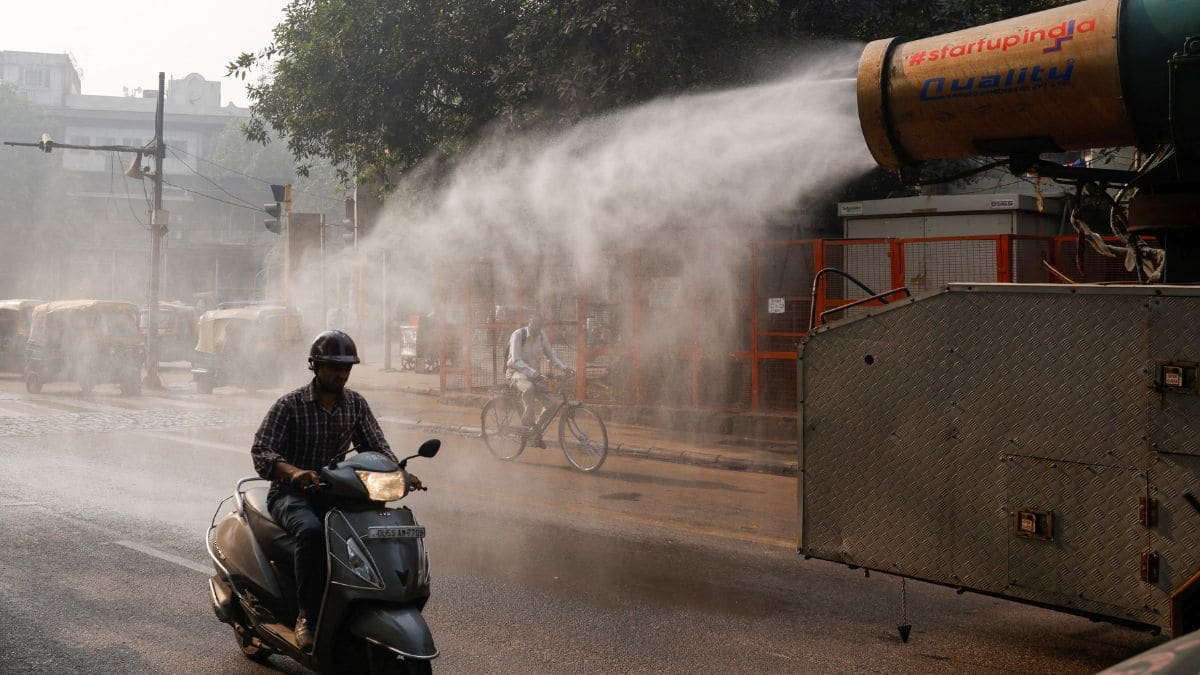
Anti‑smog guns, also called spray guns or mist guns, are being used at construction sites, busy roads and residential complexes in the Delhi‑NCR area to reduce dust pollution. The machines spray fine water droplets—typically 50 to 100 microns in size—into the air, creating a mist that can reach up to 150 feet high. The droplets attach to suspended particles such as PM2.5 and PM10, bringing them down to the ground. The equipment is connected to a water tank mounted on a vehicle and can consume between 30 and 100 litres per minute, depending on the model.
The Delhi government first tested anti‑smog guns in 2017 and has since directed agencies to increase their deployment at construction sites and key roads. While the technology can suppress dust locally, environmental experts say its effect is temporary and limited to the area where the water is sprayed. A scientist from the Central Pollution Control Board, D Saha, observed a trial at Anand Vihar on 20 December 2017 and noted that the system is suitable only for confined spaces such as stadiums, not for open urban areas.
Water consumption is also a concern; some machines can use up to 250 litres of bacteria‑free water per minute. Critics question whether such large volumes are justified given the limited benefits.
Private residential societies in Gurugram have also adopted anti‑smog guns and other dust‑control measures. At Central Park Resorts in Sector 48, mist‑spraying vehicles and rooftop guns operate from 4 am, running for 15 minutes each hour. Rising Homes in Sector 92 invested 2.5 lakh rupees to connect its sewage treatment plant to sprinklers along green belts, while Vipul Greens on Sohna Road uses guns, rooftop sprinklers and dust compression units.
DLF City has allocated funds for winter pollution‑control measures, including mechanised road sweeping, water sprinkling and misting. Facility‑management head Nitya Mohan said the priority is to clear dust and silt before traffic re‑aerosolises it, and to enforce dust‑control measures at construction sites.
These initiatives show that residents and developers are turning to local interventions to cope with poor air quality, but experts emphasize that spraying water can only reduce dust in a specific area and cannot address the broader pollution problem across the city.
Frequently asked questions
What do anti‑smog guns do to reduce dust pollution?
They spray fine water droplets (50‑100 microns) that attach to PM2.5 and PM10 particles, creating a mist that can reach up to 150 feet high and bring the particles down to the ground.
How much water do anti‑smog guns consume?
The equipment can consume between 30 and 100 litres per minute, depending on the model, and some machines can use up to 250 litres of bacteria‑free water per minute.
When did Delhi first test anti‑smog guns?
The Delhi government first tested anti‑smog guns in 2017.