World
Bilawal Says Parliament, Not Forums, Is Right Venue for New Provinces Debate
By News Desk
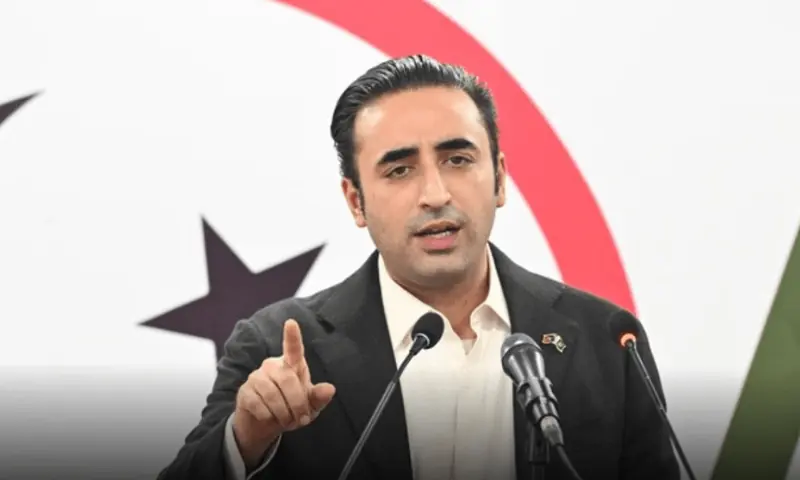
PPP Chairman Bilawal Bhutto-Zardari has said that any discussion on creating new provinces in Pakistan should take place in Parliament, not at public forums. He made the remarks while speaking to media in London, where he is accompanying his father, President Asif Ali Zardari, on a visit during which the president met Interior Minister Mohsin Naqvi.
Naqvi triggered political controversy in July after calling for a restructuring of the country's governance system and the creation of new administrative units. Asked in London whose position Naqvi was reflecting, Bilawal said the minister was entitled to his own views. "Mohsin Naqvi sahib must be speaking his own language, and I speak my language. It is his right to express his opinion," he said.
Bilawal argued that the issue of new provinces should be debated in the National Assembly, noting that Naqvi seldom attended the lower house. "So instead of speaking at business forums, Mohsin Naqvi should visit Parliament," he said, referring to Naqvi's initial remarks on the subject at the Pakistan Economic Summit 2026 in July. He added that he was willing to debate the matter with any representative of the federal government. "The real issues resulting in the system's collapse and their solutions should be discussed in Parliament by the people's elected representatives," he said.
Naqvi's July proposal drew criticism from government ministers and divided opinion among leading lawyers' bodies. The PPP, which governs Sindh and is a coalition partner of the PML-N-led federal government, has firmly opposed the idea, insisting that any move to create new provinces must go through constitutional and parliamentary channels with political consensus. The party's main objection centers on proposals to divide Sindh, though it has long supported creating a separate South Punjab province, a position also backed by the opposition PTI. Separately, the Muttahida Qaumi Movement-Pakistan, a federal coalition partner but opposition party in Sindh, has continued to demand that Karachi be made a province independent of Sindh.
Following President Zardari's meeting with Naqvi in London, the Sindh Assembly passed a resolution rejecting any division of the province or creation of new administrative units. Sindh Chief Minister Syed Murad Ali Shah stated there would be "no compromise on Sindh's geographical unity." On Tuesday, the Sindh Assembly Secretariat formally notified the principal secretaries to the president and prime minister, as well as the Senate and National Assembly, about the resolution.
Two days later, Naqvi reaffirmed his position, saying new administrative units would eventually be necessary given Pakistan's growing population and evolving needs, which he said could no longer be managed under the existing structure. Speaking at a National Policy Dialogue on "Devolution of Powers and Good Governance in Pakistan" at the University of Management and Technology in Lahore, he clarified that the proposed reset did not imply a change in government but rather a broader restructuring of the administrative system to better serve citizens. He also suggested debating whether Islamabad should be granted provincial status, noting that its residents do not receive a share under the National Finance Commission award.
In response, the PPP intensified its opposition to federal statements on new provinces. At a meeting chaired by Sindh PPP president Nisar Ahmed Khuhro, party leaders accused federal ministers of interfering in the province's constitutional affairs and warned against any attempt to undermine Sindh's autonomy or territorial integrity. The meeting urged Prime Minister Shehbaz Sharif to restrain his ministers from commenting on new provinces, warning that continued statements could lead the PPP to view them as part of a "conspiracy against Sindh's unity, provincial autonomy and the 18th Amendment."