World
PML-N's Islamabad Wing Endorses Bid for Provincial Status Amid Local Poll Delay Fears
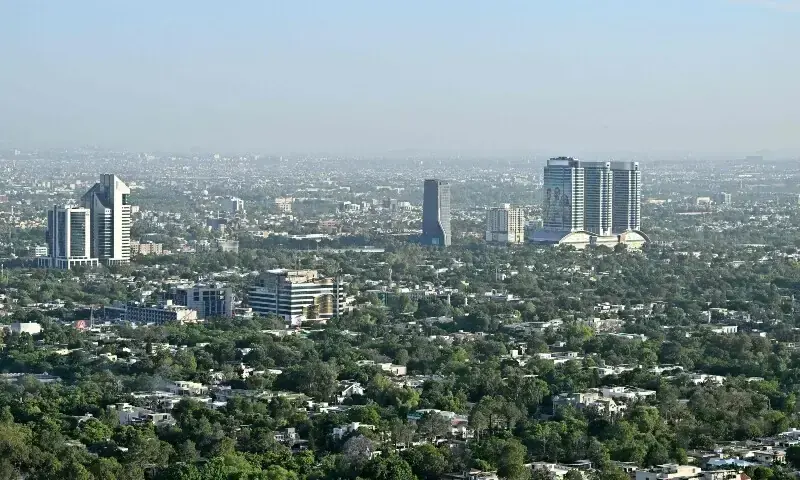
The Islamabad chapter of the ruling Pakistan Muslim League-Nawaz (PML-N) has thrown its full support behind a proposal by Interior Minister Mohsin Naqvi to grant provincial status to Islamabad. Raja Khurram Shahzad Nawaz, chairperson of the National Assembly Standing Committee on Interior and the local MNA from Islamabad, told Dawn that the party not only backs the interior minister's statement but thanks him for raising a long-standing demand of the capital's residents. Naqvi had earlier said that despite paying various taxes, Islamabad residents receive no share from the National Finance Commission (NFC) Award, calling this an injustice. Nawaz expressed hope that Islamabad would eventually have its own provincial assembly. He noted that the Excise and Taxation department alone collects Rs20 billion annually, which goes directly to the federal government's account, in addition to income tax, stamp duty, land transfer fees and other levies paid by residents who receive nothing in return through the NFC Award. According to Nawaz, without provincial status, the problems faced by Islamabad's residents cannot be properly resolved. He explained that in urban areas, the Capital Development Authority (CDA) funds development work through land sales, while rural areas depend on federal government packages that are often unsuccessful. He said a share in the NFC Award was the only viable solution. Nawaz revealed that Prime Minister Shehbaz Sharif had constituted a committee headed by Planning Minister Ahsan Iqbal, which has already submitted recommendations to the prime minister proposing the devolution of powers from the federation to the Islamabad Capital Territory (ICT) as a federating unit. He said the goal was to establish a provincial-style government for Islamabad under these proposals. Under the plan, the Islamabad Assembly would consist of 27 members, including 21 directly elected members—seven from each of the three National Assembly constituencies—along with five women on reserved seats and one minority member. The assembly would elect its own leader, referred to as chief minister or mayor, who would act as chief executive, while the position of chief commissioner would be replaced by a chief secretary. Nawaz added that all departments would operate under the assembly's authority except for law and order and master planning, which would remain under federal control. When asked whether new delimitation by the Election Commission of Pakistan (ECP) would be needed if the plan proceeds, Nawaz said this posed no problem, stressing that the party did not want to repeat the ineffective local government elections of 2015-16 and instead sought an efficient system to address public issues. However, experts warn that the proposal could further delay local government elections in Islamabad, as it would require amendments to the Local Government Act or a new law altogether, along with changes to the CDA Ordinance, before fresh delimitation could occur. The ECP is currently conducting delimitation and had planned to publish final constituency and Union Council details by October 14, 2026, ahead of announcing an election schedule. That timeline now appears uncertain. The last local government in Islamabad completed its term in February 2021, and elections have been repeatedly postponed since then. As a result, roughly 2.5 million residents continue to face problems such as water shortages and unpaved roads. The federal government has previously scheduled and then cancelled elections multiple times, often citing the need to strengthen the Local Government Act. In January this year, President Asif Ali Zardari approved an ordinance amending the Local Government Act 2015, replacing the Metropolitan Corporation Islamabad (MCI) with three town corporations and granting the government-appointed administrator expanded powers, including an indefinite tenure. This came just as elections had been scheduled for February 15, with nomination papers already submitted from all 125 Union Councils. The ordinance also allowed the administrator to remain in office indefinitely in the absence of a local government, removing the previous six-month limit, and gave the administrator authority to impose taxes, fees, rents, tolls and surcharges. When the ECP announced the election schedule in February 2026, the local PTI chapter alleged the government would avoid holding elections out of fear of losing. Former PML-N deputy mayor Syed Zeeshan Ali Naqvi dismissed this claim, saying the ordinance was meant to improve the local government system and predicting a PML-N victory in the polls. Since the local government's term ended in 2021 under the PTI government—which failed to hold elections within the required 120 days—successive governments, including the Pakistan Democratic Movement (PDM) coalition and the current administration, have also failed to conduct the long-overdue polls.