India
4.1-Magnitude Earthquake Hits Assam's Goalpara District, Experts Explain Tectonic Causes
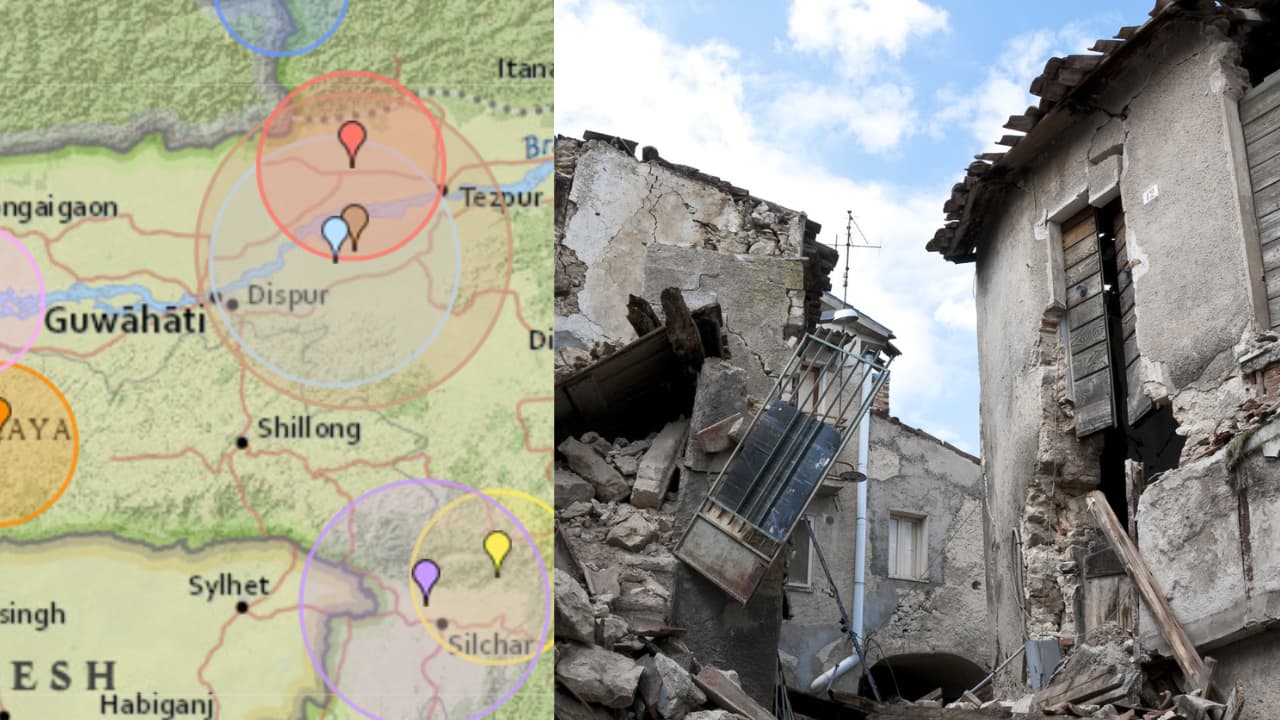
Parts of Assam experienced ground tremors on Tuesday morning after a 4.1-magnitude earthquake struck the region at 9:57 am IST on September 8, 2026, India's National Centre for Seismology (NCS) reported. The quake's epicentre was located in Goalpara, Assam, approximately 81 kilometres west-southwest of Guwahati, at a depth of 10 kilometres.
Scientists attribute the seismic activity to Assam's position within one of India's most seismically active zones. The continuous northward movement of the Indian Plate toward Asia generates significant underground stress in the Northeast region. This stress does not always accumulate gradually. Rocks along fault lines can remain locked together for extended periods until accumulated stress exceeds the rocks' structural strength, causing a sudden slip.
Experts explained that earthquakes originate when rocks abruptly rupture or shift along a fault line, releasing energy that travels outward in the form of seismic waves. Some of these waves pass through the Earth's interior, while others move along the surface. Shallower earthquakes tend to produce stronger shaking in surrounding areas—Tuesday's quake was relatively shallow at 10 kilometres deep, according to the NCS.
Addressing concerns about whether this earthquake signals a larger one to come, scientists clarified that a single seismic event cannot reliably forecast another, more powerful earthquake. While researchers can identify regions with elevated seismic risk, current scientific methods cannot pinpoint the exact timing, location, or magnitude of future earthquakes. Officials cautioned that unverified predictions about earthquakes could lead to unnecessary public panic.
Regarding Northeast India's vulnerability to seismic activity, experts noted the region's proximity to several active tectonic structures. The ongoing interaction and movement among the Indian, Eurasian, and Burma plates have significantly shaped the geological features of the wider Northeast region. Assam has a history of notable earthquakes, reflecting the area's inherent geological instability.
While earthquakes cannot be predicted with precision, experts emphasized that preparedness measures remain essential for reducing potential risks associated with future seismic events in the region.