World
Kurds Weigh Political Path Forward After SDF Dissolution in Syria
By Sherko Rauof
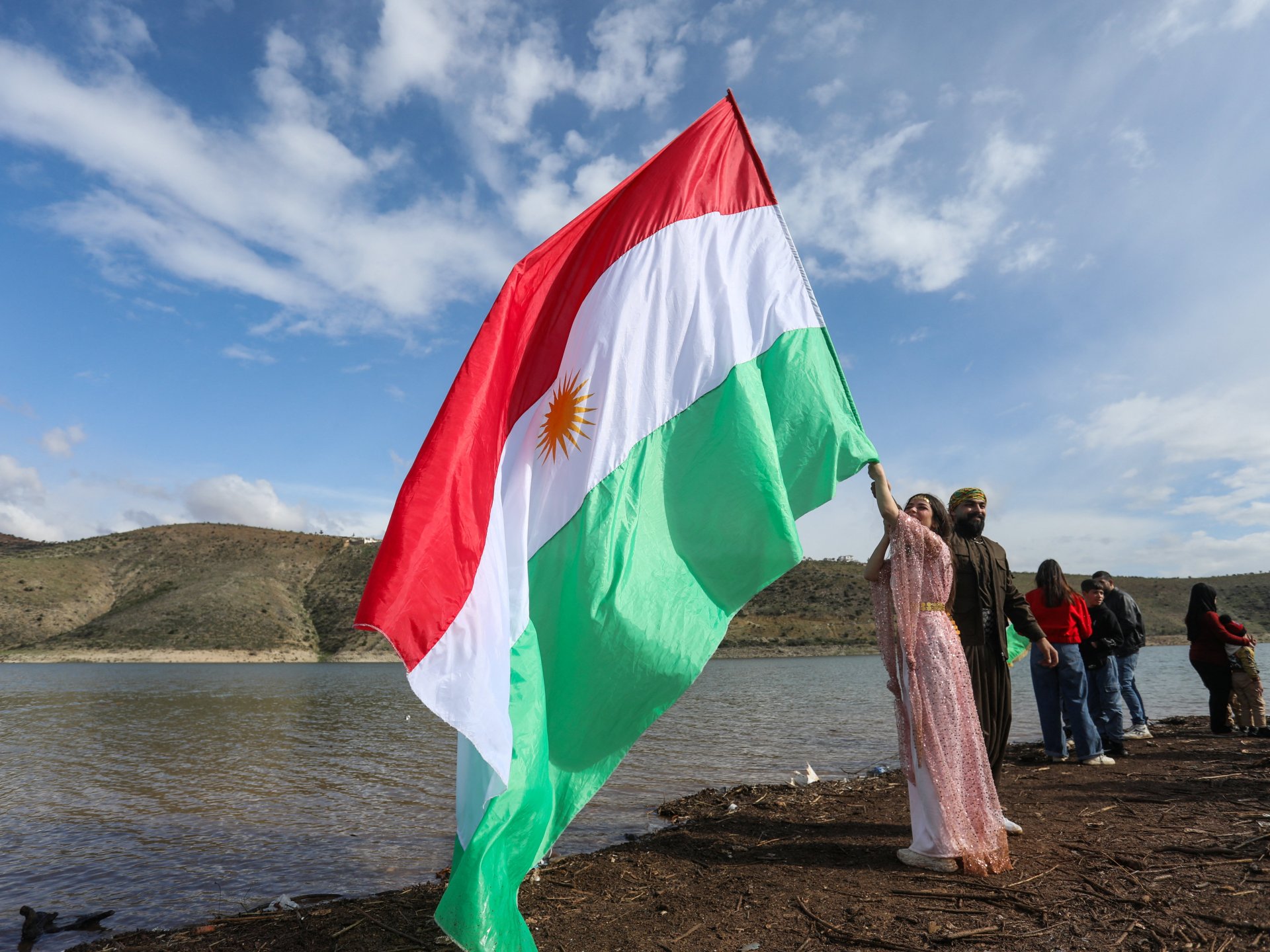
The recent merger of the Syrian Democratic Forces (SDF) into Syria's national army has triggered widespread debate among Kurdish communities in Syria, Iraq, and Turkiye regarding the future of their political and cultural rights.
Syrian President Ahmed al-Sharaa has pledged constitutional protections for Kurdish language and political rights, but analysts are divided on whether abandoning armed struggle will help or hinder efforts to secure Kurdish identity and autonomy.
SDF commander Mazloum Abdi, speaking from the presidential palace in Damascus last month, described the transition as moving "from the battlefields to the fields of construction, and from the era of weapons to the era of peace." He characterized the moment as a significant historical turning point for Syria.
Reactions among Kurdish politicians are mixed. Some view the integration as an opportunity to participate in shaping Syria's future and to pursue rights through constitutional means, while others see it as the product of pressure from Turkiye and the United States.
Turkiye has strengthened ties with Syria's post-Assad government, which took power in December 2024, while historically targeting Kurdish fighters near its border. The United States, which helped establish the SDF in 2015 to combat ISIL, has since shifted its support toward al-Sharaa's administration.
For over a decade, the SDF controlled northeastern Syria, the heartland of the country's Kurdish population. Earlier this year, Syrian government forces rapidly took control of northern territories, leading to months of negotiations that culminated in the SDF's dissolution and the end of Kurdish-led autonomous administration.
Talal Mohammed, head of the Kurdistan Democratic Peace Party in Syria, called the developments a pivotal moment. "This represents an opportunity for the Kurds to be partners in building a democratic Syria," he said, noting that previous self-administration and military capabilities lacked international recognition. He emphasized the need for Kurdish unity to secure rights within a new constitution, while cautioning that Turkiye continues pushing to dismantle armed Kurdish organizations.
Turkiye classifies the Kurdistan Workers' Party (PKK) and its regional affiliates as terrorist organizations, accusing them of separatist violence. The PKK announced its dissolution in May 2025, ending decades of armed conflict following calls from imprisoned leader Abdullah Ocalan to lay down weapons. Turkish officials welcomed this decision. Ankara also considers the People's Protection Units (YPG), which led the SDF, an extension of the PKK within Syria.
Mohammed noted that the PKK's influence extends throughout the region, affecting Kurdish issues broadly. "Ending the SDF and the PKK was a Turkish dream and a major Turkish project," he said.
Other Kurdish figures see the peace process differently. Perwin Yousef, co-chair of the Democratic Union Party (PYD), a PKK affiliate in Syria, rejected characterizations of the integration as a setback. "Our project continues, and we will continue to work to obtain all our rights through political understandings and agreements within the new Syrian constitution," she said, while acknowledging the absence of concrete guarantees for Kurdish cultural, political, or national rights—including official recognition of the Kurdish language and meaningful participation in governance.
The Kurds, an Indigenous ethnic group spanning southeastern Turkiye, northeastern Syria, northern Iraq, northwestern Iran, and southwestern Armenia, have long sought a unified Kurdish state. Joost Hiltermann of the International Crisis Group noted in 2016 that differences in dialect, tribal affiliation, and historical experience among Kurdish populations often outweigh shared identity.
Sarbast Nabi, a political philosophy professor at Koya University in Iraq's Kurdistan region, argued that recent agreements between the PKK, SDF, and the Turkish and Syrian governments primarily serve Turkish interests. "This decision is neither Syrian nor Kurdish, but rather it is an expression of a Turkish will," he said, suggesting the Trump administration's efforts to align with Turkiye further marginalized Kurdish aspirations.
Muhammad Amin Penjweny, an expert on PKK and Turkish affairs, framed the SDF's integration as pragmatic rather than defeatist, given the withdrawal of American and French military support following Assad's fall. "It had no other solution after the withdrawal of American and French forces," he said, describing the move as necessary rather than voluntary.
Despite official progress, skepticism persists within Kurdish communities, particularly regarding Ocalan's fate. Penjweny noted that while the PKK symbolically burned weapons as a goodwill gesture, it will not fully disarm until Ocalan and other imprisoned members are released. He also pointed to ongoing Western reconsideration of the 1923 Treaty of Lausanne, which divided Kurdish territories among four nations and which some in the US, France, and Britain now view as a source of regional instability.
Perspectives vary significantly by country. In Iraq, Kurds maintain substantial autonomy through the Kurdistan Regional Government, protected under the post-2003 constitution following Saddam Hussein's removal. Kurdish writer Soran Ali noted that while full independence remains unlikely, the current constitutional framework offers more security than what Syrian Kurds have historically experienced.
In Turkiye, however, sentiment is notably more pessimistic. Nationalist researcher Ahmed Kani expressed doubt about future Kurdish statehood. "As long as Turkiye is a strong state, the Kurds in the four parts of Kurdistan will not be able to achieve their dream of statehood," he said.