World
Iran Strikes US Base in Jordan After American Forces Sink Five Iranian Tankers
By Akriti Anand
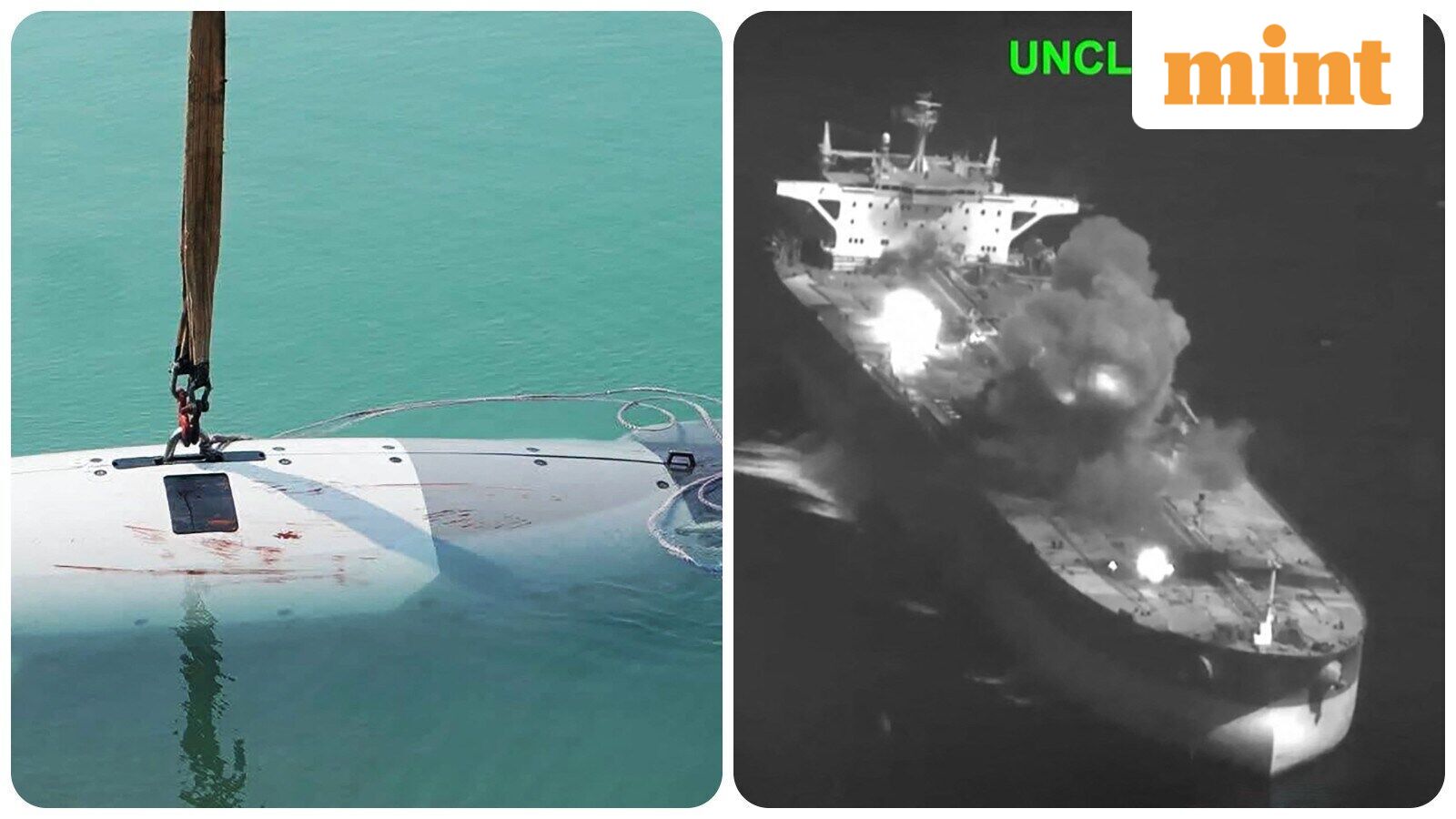
Tensions between the United States and Iran escalated sharply this week after US forces destroyed multiple Iranian oil tankers linked to the Islamic Revolutionary Guard Corps (IRGC) in response to attempted missile attacks on a US Navy warship, a US official told Reuters on Tuesday.
Central Command confirmed that US forces destroyed five Iranian crude oil carriers on Tuesday following two attempts in as many days to strike a US Navy vessel with ballistic missiles. The targeted American ship, which was not identified, was not hit and continues to patrol regional waters, with no US injuries reported. According to a monitoring group, the destroyed vessels were identified as the Charminar, Kaviz, Horizon 1, Riesco, and the empty National Iranian Tanker Company supertanker Derya.
Central Command said crews were instructed to abandon their ships before the tankers were rendered inoperable. This action followed a similar strike on Saturday, when US forces destroyed three other Iranian crude oil carriers after a separate failed attempt to attack a US aircraft carrier and guided-missile destroyer.
In retaliation, the IRGC said it struck a US-hosting base in Jordan, claiming to have hit maintenance and deployment hangars for F-35, F-16 and F-15 fighter jets, along with fighter shelters. The IRGC stated it had targeted US Navy destroyers designated DDG-119 and DDG-53, which it said were carrying ballistic missiles.
Jordan's military reported that its air defenses intercepted and destroyed 18 of 20 ballistic missiles fired from Iran toward its territory. The remaining two missiles landed in unpopulated areas, causing no casualties. A US official told Reuters that all American troops in Jordan were accounted for following the attack.
Early Wednesday, Iranian state media reported that additional ballistic missiles had been launched from several Iranian cities toward what officials described as hostile US targets. The state-run Student News Network cited local sources reporting missile launches from Isfahan, Yazd, Khomein, Tabriz, Khorramabad and Shahrekord.
Iran's top military commander warned that any further strikes on Iranian tankers would trigger retaliatory attacks on American bases throughout the region. Following the tanker strikes, the IRGC Navy issued evacuation orders for tankers located in Kuwait and Bahrain.
The IRGC also said Tuesday that its navy had targeted two US vessels and eight oil tankers in the Persian Gulf, in addition to ten other ships attempting to transit the Strait of Hormuz, in response to the US strikes on Iranian tankers.
Iran additionally reported that US forces struck an Iranian oil tanker near Kharg Island and another near the port city of Jask, with some reports suggesting a third vessel near Kharg was also attacked.
US Secretary of State Marco Rubio said Tuesday that Iran was clearly behind at least some of the Houthi attacks on Saudi Arabia, calling the Yemeni group agents and proxies of Tehran. Defending the US strikes on Iranian tankers, Rubio said Iran would continue to lose vessels each time it attempted to target American naval ships. "The back and forth is pretty straightforward, and that is that Iran continues to try to hit U.S. naval ships, and for every time they do that or try to do that, they're going to lose tankers," he told reporters, adding that further such incidents were likely.
Amid the escalating conflict, oil prices extended gains for a fourth consecutive session. Brent crude futures rose $1.57, or 1.6 percent, to $99.49 a barrel as of 00:01 GMT, while US West Texas Intermediate crude climbed $1.60, or 1.72 percent, to $94.63 a barrel.