India
Bloomberg Study Questions Effectiveness of ₹43,060-Crore Ganga Clean‑Up Over Ten Years
By Bhanu Pratap
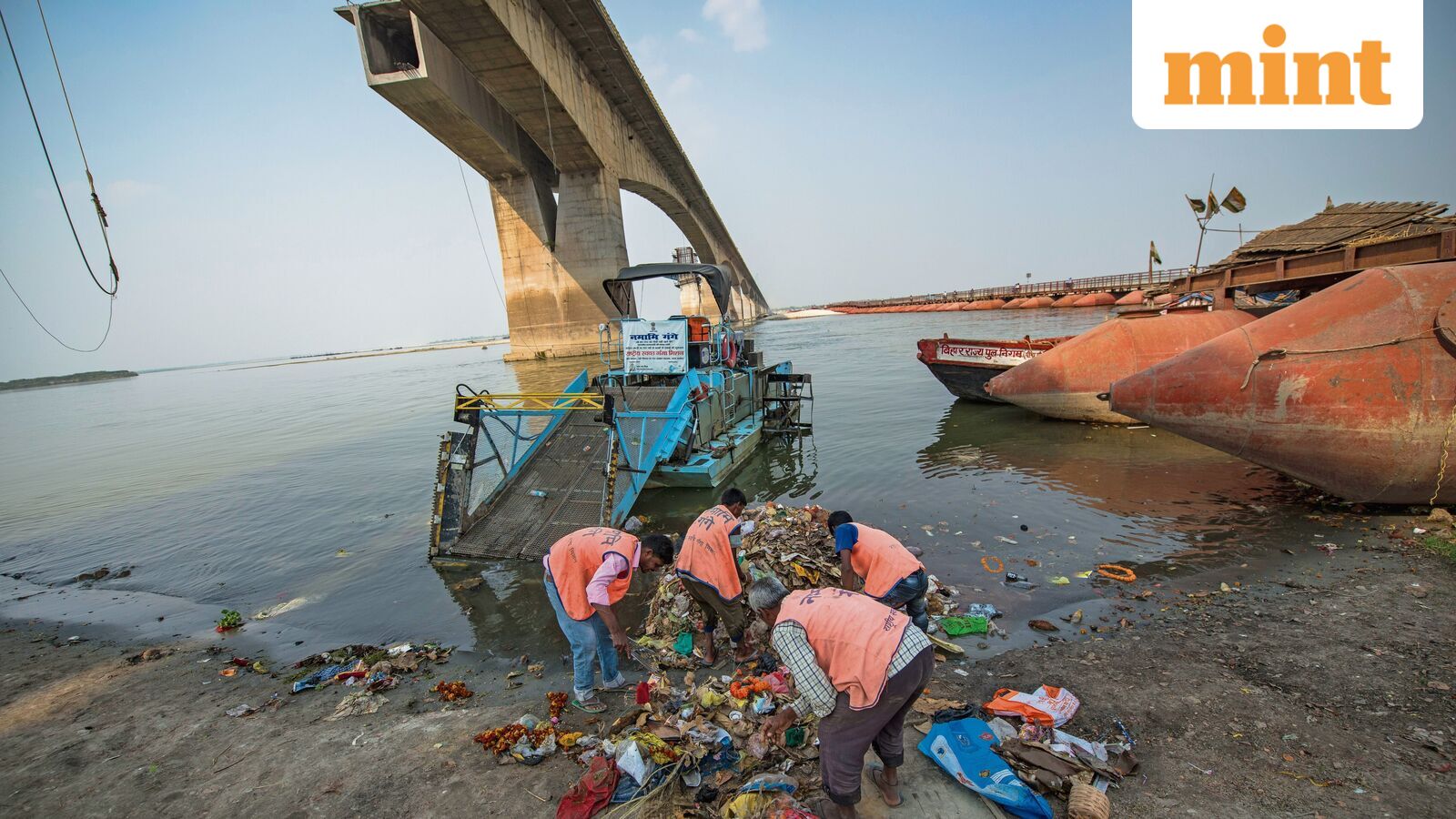
A decade after the launch of the Namami Gange programme, a Bloomberg investigation has raised doubts about whether the government’s ₹43,060 crore investment has substantially improved the Ganga’s water quality. The study analysed ten years of satellite data covering almost 2,000 km of the river and independent water tests from 12 sites near Kanpur and Varanasi. It examined changes in turbidity, algae growth and surface temperature, and found that large stretches of the river remain polluted. The findings question whether the money spent and infrastructure built have translated into a cleaner river.
The government has defended the programme, arguing that the investigation does not capture the condition of the entire river. It says that water quality has improved in several stretches, sewage‑treatment capacity has increased and industrial pollution has declined. However, it also acknowledges that pollution continues in parts of Uttar Pradesh, that sewage‑treatment capacity remains inadequate in some areas, and that stronger enforcement is needed.
The report highlights a mixed picture: progress has been made in some sections, but cleaning the Ganga remains a work in progress. The investigation underscores that measuring the success of a river‑cleaning programme requires more than spending money and building treatment plants; it must be reflected in regular water‑quality tests.
The government argues that a river stretching nearly 2,500 km cannot be fully assessed through satellite observations and samples from just 12 locations. The Ganga flows through five states and passes through varied geographical and climatic conditions, receiving water and sediment from major tributaries such as the Yamuna, Ghaghara, Gandak, Kosi, Gomti and Son. Water conditions differ markedly between the Himalayan stretches and the densely populated plains downstream, and factors such as rainfall, seasonal changes, water flow and local pollution sources affect the river.
A comprehensive assessment must therefore cover different stretches and seasons, examine pollution levels, the functioning of treatment plants and whether water quality has improved over time. Satellite images can monitor large stretches of a river over several years, tracking changes in turbidity, algae and surface temperature and identifying areas that need closer examination. However, satellite data cannot provide a complete picture of water quality; they cannot directly measure dissolved oxygen, biochemical oxygen demand (BOD), chemical oxygen demand (COD) or harmful microorganisms, which require water samples and laboratory tests.