World
US Overseas Bases Face Rising Threats from Iran, Prompting Strategic Reassessment
By Caolán Magee
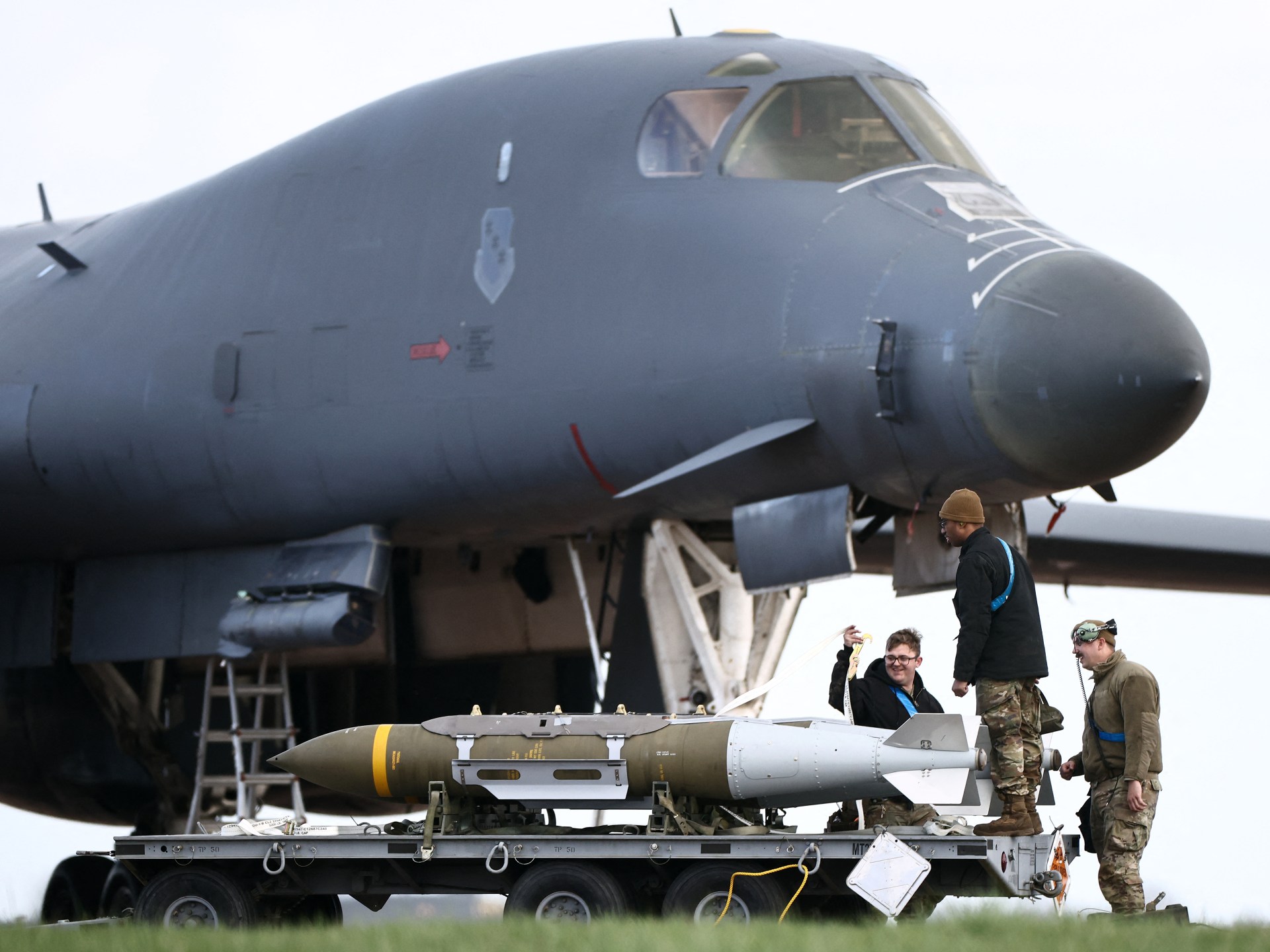
For decades, U.S. overseas bases have enabled Washington to project power and support allies, but Iran’s recent attacks have altered that calculus. In March 1999, a U.S. B‑52 bomber departed RAF Fairford in Gloucestershire, launching the NATO bombing of Yugoslavia. The base has since served as a launchpad and refueling hub for U.S. operations in the Gulf War, the 2003 Iraq war, and the U.S.–Israeli campaign against Iran that began on February 28, 2026. In October, the U.S. withdrew all 12 B‑1 Lancer bombers from Fairford amid fears of Iranian threats. Earlier this month, a dozen aircraft were also pulled from RAF Mildenhall. In July, reports indicated that U.S. forces were relocating assets from Gulf bases heavily damaged by Iran to Jordan, and possibly to Israel.
Iran’s attacks have exposed U.S. installations across the Middle East and Europe. A Pentagon watchdog report released in September documented damage to hundreds of U.S. facilities in Kuwait, Bahrain, Qatar, the UAE, Saudi Arabia, Iraq, Oman, and Jordan during the first four months of the war. At Prince Sultan airbase in Saudi Arabia, five KC‑135 aerial refueling tankers were damaged, and an airborne early‑warning aircraft was struck on the ground. In Kuwait, an attack on the Port of Shuaiba killed six U.S. service members and destroyed an operations centre. Iranian drones and missiles also damaged aviation facilities at Ali Al Salem airbase, Camp Buehring, Al Udeid airbase in Qatar, and the U.S. Fifth Fleet headquarters in Bahrain.
U.S. prosecutors have charged three men, described as Iranian‑backed operatives, with plotting nearly 20 attacks across the United States and Europe, including on RAF Fairford. Iran has cited the presence of U.S. bases as justification for targeting its neighbours, bombing Qatar, the UAE, Saudi Arabia, Bahrain, Kuwait, Oman, Jordan, and Iraq.
Analysts note that hosting U.S. forces now exposes allies to retaliation in a conflict they did not initiate, while the bases also provide defensive benefits such as missile interception and weapons transfers. The war has disrupted flights and shipping, threatening the oil and gas exports that many Gulf economies rely on. President Donald Trump said further military action against Iran was unnecessary for now, but the naval blockade remains in place and shipping through the Strait of Hormuz has not returned to normal.
"The vulnerability of these assets is increasingly front‑of‑mind for host governments," said Middle East analyst Mohammad Ali Shabani. "They have not sought war, yet have been drawn into it without having had any real say."
The U.S. faces a dilemma: bases in Europe and the Middle East extend its reach but also provide Iran with targets. In March, an Iranian drone struck a hangar at a British base in Cyprus used by the U.S. for intelligence and logistics. Tehran threatened Bulgaria after reports that the country had allowed U.S. air tankers to refuel there; weeks later, the Bulgarian defence minister announced the tankers had left.
"Large bases are becoming more easily targeted," said Mark Hilborne, senior lecturer at King’s College London. He added that drones and cheap ballistic missiles have increased vulnerability. Urban Coningham of the Royal United Services Institute noted that the range of actors who might target bases has broadened, making attacks harder to attribute.
As Washington moves assets out of Gulf and European bases, it may rely more heavily on Israel, its closest ally in the Middle East. Shabani observed that CENTCOM is already moving toward using Israel as a key forward base. Coningham said the U.S. must work with partners to ensure allied forces can defend themselves, but the policy conundrum remains: the U.S. cannot see an alternative to having bases in some form.
Frequently asked questions
Which U.S. bases were targeted by Iranian attacks?
Iranian attacks hit RAF Fairford, RAF Mildenhall, Prince Sultan airbase (Saudi Arabia), Port of Shuaiba (Kuwait), Ali Al Salem airbase, Camp Buehring, Al Udeid airbase (Qatar), U.S. Fifth Fleet HQ (Bahrain), and a U.S.‑used base in Cyprus.
How many U.S. service members were killed in the attack on Port of Shuaiba?
Six U.S. service members were killed.
How many B‑1 Lancer bombers were withdrawn from RAF Fairford?
All 12 B‑1 Lancer bombers were withdrawn.