World
UK Leads 10‑Nation Maritime Alliance to Counter Russian Threats
By Urooba Jamal
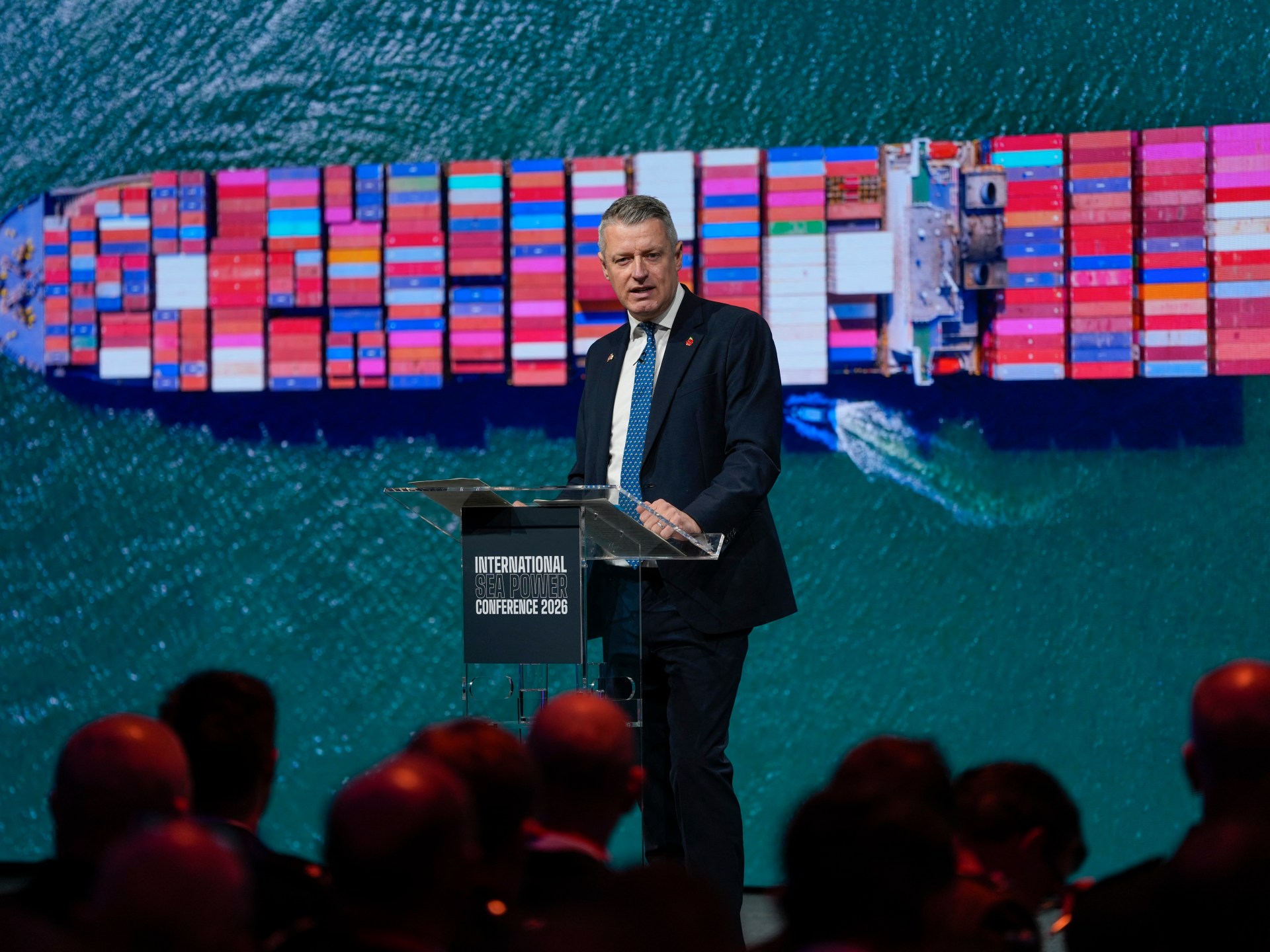
The United Kingdom has announced the Northern Navies Initiative, a defence framework that will link the Royal Navy with the navies of Denmark, Estonia, Finland, Iceland, Latvia, Lithuania, the Netherlands, Norway and Sweden. The plan will share sea drones and warships and create a unified surveillance capability to respond to growing maritime threats, particularly from Russia.
First Sea Lord General Gwyn Jenkins said after the agreement was signed on Tuesday that “the threats we face are multiplying … we must rise to the challenge before us.” He added that the alliance shows what is possible when like‑minded nations unite.
The UK will invest 90 million pounds ($121 million) in drones, sensors and artificial intelligence systems to help the Royal Navy counter Russian undersea threats in the North Atlantic and protect critical infrastructure.
Luke Pollard, the UK minister for defence readiness, said Russian naval activity around the country had increased by 41 percent in the first nine months of the year. He described the initiative as a “huge increase” in violations that justified the new plan. Pollard explained that British autonomous drones could be teamed with a British warship or a warship from Denmark, Norway or another partner, and then handed over to an allied vessel.
The initiative will create a network of autonomous systems equipped with advanced sensors, allowing the 10‑country alliance to detect and monitor submarine activity. The Joint Expeditionary Force (JEF) nations, a UK‑led partnership for crisis management in the High North, the North Atlantic and the Baltic Sea, will be able to act early, combine quickly and transition seamlessly into NATO command if required.
The Royal Navy said that greater interoperability would enable a Royal Navy frigate to transfer operational responsibility to another JEF member without losing momentum, and that a warship could repair, refuel and resupply in an allied port rather than returning home.
Bruegel senior fellow Guntram Wolff said the alliance was “a very important initiative” and that “deepening interoperability among national navies… is absolutely critical for credible deterrence.”
Western officials have warned that Russia has increased activity around subsea infrastructure. The Royal Navy said it was responding to the “growing threat posed by hostile activity below the threshold of armed conflict,” which includes risks to critical undersea infrastructure, malicious seabed activity and other forms of hybrid aggression.
In April, Britain deployed military vessels to deter Russian submarines that had spent more than a month in and around British waters. Pollard said Russian spy ships such as the Yantar have been trying to obtain “an increased picture of our critical national infrastructure” and map undersea cables. Russian frigates have been seen escorting oil tankers and other trade vessels in UK waters, and in June one fired shots at a yacht south of the Isle of Wight.
Russia has largely denied claims that it poses a maritime threat to European countries. In April, the Russian embassy in London rejected the British government’s claims that its submarines threatened undersea cables. The embassy also accused the UK of “Russophobic” hysteria after the UK alleged that Russia directed lasers at British pilots monitoring the spy ship Yantar.
Russia has accused the UK of carrying out the 2022 Nord Stream pipeline attack and has opposed NATO’s expansion, arguing that the US and its European allies are encircling it militarily. It has also opposed NATO membership for Ukraine as a condition for ending the war in Ukraine.
Frequently asked questions
How many navies are part of the Northern Navies Initiative?
Ten navies: the United Kingdom, Denmark, Estonia, Finland, Iceland, Latvia, Lithuania, the Netherlands, Norway, and Sweden.
What is the UK’s investment in the initiative?
The UK will invest 90 million pounds ($121 million) in drones, sensors and AI systems.
By what percentage did Russian naval activity around the UK increase in the first nine months of the year?
Russian naval activity increased by 41 percent.