Agriculture
Govt Targets Rainfed Lands to Boost Chana Production and Cut Imports
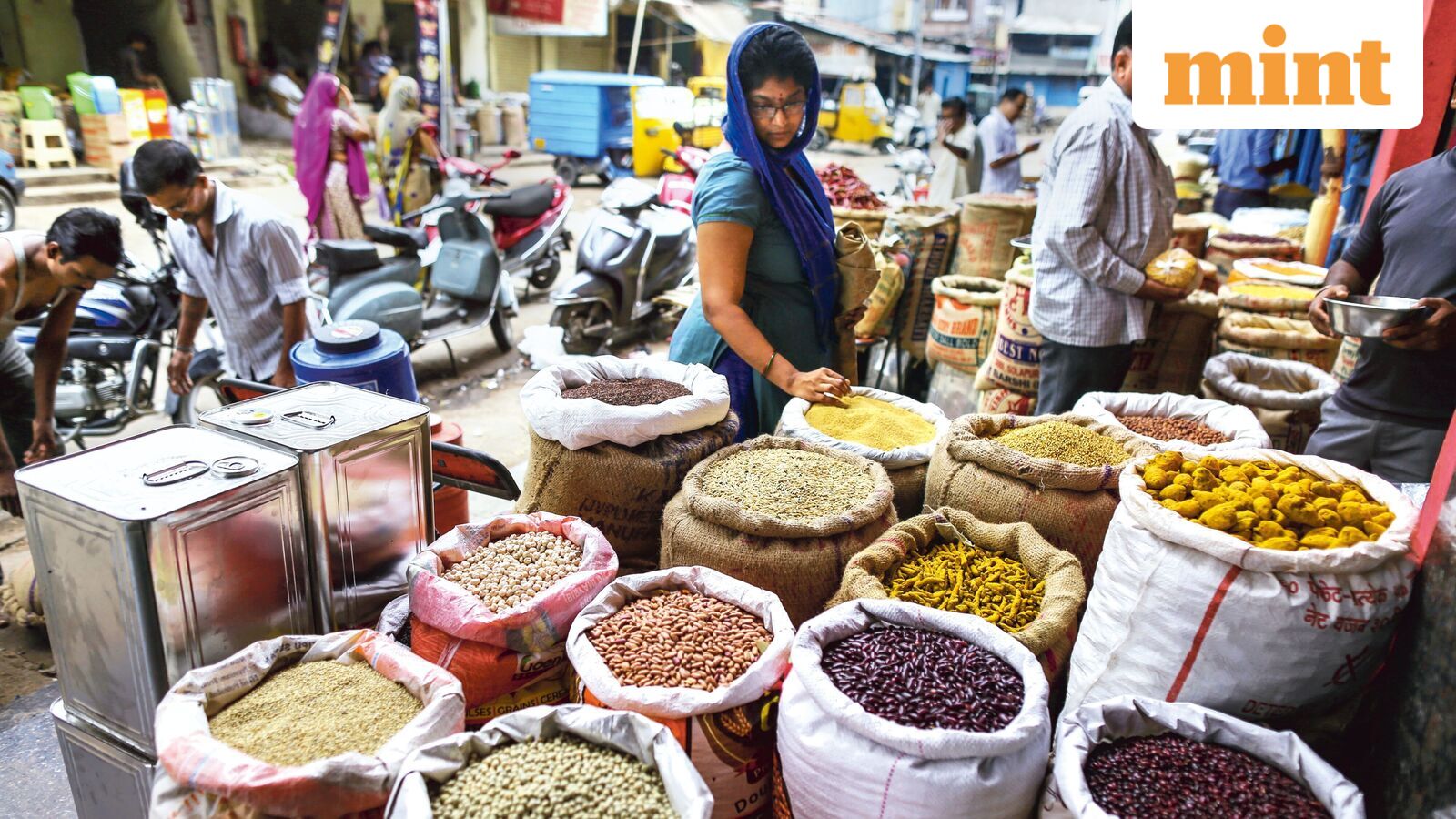
New Delhi – Following a decline in India’s gram (chana) imports in FY26 from a record high the previous year, the government is intensifying efforts to strengthen domestic pulse production and reduce import dependence. The Department of Consumer Affairs is mapping rainfed areas that can be brought under chana cultivation, according to two officials. The department has identified 80 districts across Madhya Pradesh, Rajasthan, Maharashtra, Uttar Pradesh, Karnataka, Andhra Pradesh, Gujarat, Haryana, Punjab, Jharkhand and Bihar where rainfed land could be used for the crop. India imported gram worth $3.63 billion in FY26, down from $5.54 billion in FY25. The plan aims to build on this reduction by expanding domestic chana supplies. “The government has a tentative estimate of around 2.38 million hectares of rainfed land across watershed areas in the identified states, and the exact extent of land suitable for chana cultivation will be mapped by the two departments,” said the first official. The department will approach the agriculture ministry and the Department of Land Resources to identify suitable acreage and assess its additional production potential. The second official added that the department will support farmers with quality seeds, technical assistance and procurement assurance. Chana is a relatively low‑water‑intensity crop that can be grown using residual soil moisture after the kharif harvest. The government expects the expansion to strengthen domestic supplies and eventually create scope for chana dal exports, subject to domestic demand and surplus availability. The average retail price of chana dal rose 10.8 % year‑on‑year to ₹90.27 per kg as of 9 November. Domestic chana consumption is estimated at 8–8.5 million tonnes annually, according to industry estimates. The effort also has implications for food price stability. The RBI’s October 2026 Monetary Policy Report noted that pulses inflation stood at 3.6 % in August, after the category remained in deflation through much of FY26. Queries sent to the spokespersons of the department of consumer affairs and agriculture ministry remained unanswered till press time. The initiative is part of the Centre’s Mission for Aatmanirbharta in Pulses, which aims to make India self‑reliant in pulse production and reduce import dependence. The six‑year mission, running from 2025‑26 to 2030‑31, has a financial outlay of ₹11,440 crore. Agriculture ministry data show that the gram cultivation area declined from 10.74 million hectares in 2021‑22 to 9.12 million hectares in 2024‑25, then recovered to 9.66 million hectares in 2025‑26. Chana acreage fell 21.61 % in the current rabi sowing as of 6 November to 2.14 million hectares, according to the ministry’s weekly sowing data. Production fell from 13.54 million tonnes in 2021‑22 to 11.03 million tonnes in 2023‑24, before recovering to 12.51 million tonnes in 2025‑26. Meanwhile, the area under pulses during the current rabi sowing season declined 14.39 % year‑on‑year to 3.19 million hectares as of 6 November. “Identifying rainfed land alone will not be enough to expand chana production,” said B.B. Singh, former ADG (oilseeds & pulses), ICAR. “The key is to match the crop variety and its duration with the soil type, available moisture and local weather conditions. If sowing is timed well and farmers have access to varieties suited to their region, they can make better use of land that otherwise remains fallow after the monsoon.” Expanding chana cultivation in suitable rainfed areas can improve domestic availability, while a more stable supply would also reduce the need for imports to bridge production shortfalls, said Rakesh Arrawatia, professor at the Institute of Rural Management Anand and dean, School of Cooperative Banking and Finance. Rainfed areas offer significant potential to expand chana cultivation, as the crop can utilize residual soil moisture after the monsoon and with suitable crop planning, improved seeds and better agricultural practices, these areas can help increase production, said K.J. Ramesh, former director general of the India Meteorological Department.
Frequently asked questions
Which states have 80 districts identified for rainfed chana cultivation?
Madhya Pradesh, Rajasthan, Maharashtra, Uttar Pradesh, Karnataka, Andhra Pradesh, Gujarat, Haryana, Punjab, Jharkhand, and Bihar.
How much did India import gram in FY26 compared to FY25?
$3.63 billion in FY26, down from $5.54 billion in FY25.
What is the estimated area of rainfed land for chana cultivation?
Around 2.38 million hectares of rainfed land across watershed areas in the identified states.