World
Iran Tightens Security Measures Amid US Strike Threats
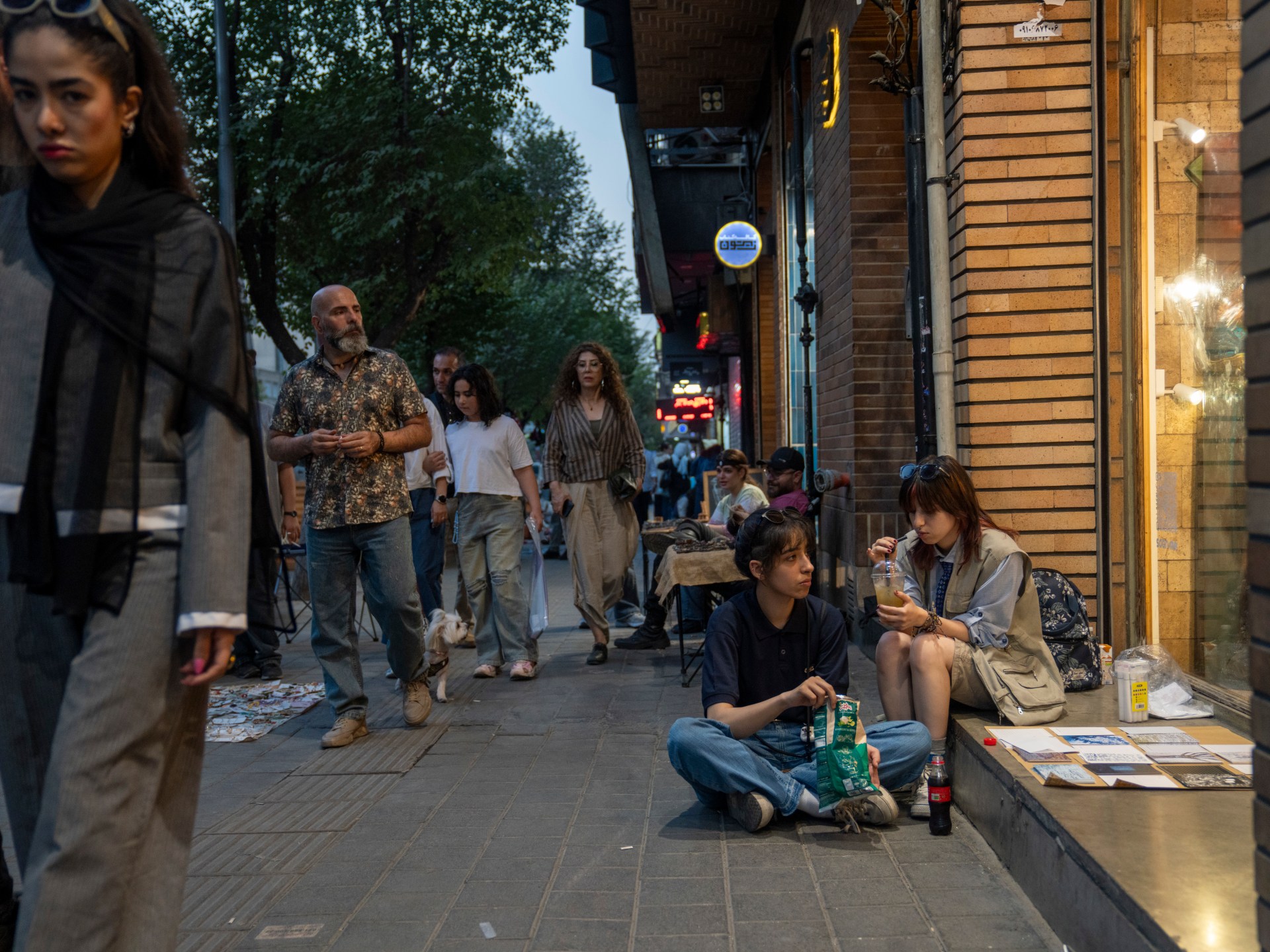
Iran’s domestic security forces have intensified measures against perceived threats ranging from alleged spies to youth gatherings. Authorities have warned the public that protests against the government will be met with harsh sentences and have tightened control in public spaces after months of relaxed dress‑code restrictions. The move is seen as an effort to project unwavering commitment to the Islamic Republic’s principles amid an eight‑month war with the United States and the possibility of a broader US attack wave.
Mahjoob Zweiri, director of the Gulf Studies Center at Qatar University, said the authorities have mobilised supporters, including the Islamic Revolutionary Guard Corps (IRGC) and civilians, to maintain government continuity. He noted that this mobilisation is likely to continue until the war ends.
Iran routinely imposes severe punishments to deter dissent. The war, which began on Oct. 28 after US and Israeli strikes on Iranian leaders, has accelerated this trend. On Sunday, the judiciary announced that three young men arrested during nationwide protests in January were executed for allegedly attacking government offices and damaging public property near Tehran to aid the US and Israel. Authorities label anti‑government protests as a “coup” attempt by “terrorists” linked to the US and Israel.
An independent United Nations fact‑finding mission found that authorities committed crimes against humanity during a violent crackdown on protesters, with human rights groups reporting thousands of deaths, mainly on the nights of Jan. 8 and 9. Foreign‑based rights organisations claim many political cases leading to executions involve torture, forced confessions and due‑process violations. This year, Iran has executed at least 79 political or religious prisoners, including 40 arrested during the January protests, according to the Norway‑based Hengaw Organization for Human Rights. Some were executed after espionage convictions.
Political scientist Ali Alfoneh said Iran’s strategy toward Tehran remains unclear amid its war with the US and Israel, which pursue a declared policy of overthrowing the regime. He argued that the Islamic Republic’s repression is comparable to other regimes facing similar threats. Alfoneh noted that authorities have relaxed enforcement of laws on mandatory headscarves, alcohol, narcotics and other social issues to distract people from political activism, reserving repression for political freedom and anti‑regime uprisings.
In Tehran, authorities have cracked down on what they view as public opposition to the theocracy. On Oct. 30, hundreds of mostly Gen Z Iranians celebrated Halloween on Iranshahr Street, wearing makeup or costumes and gathering in cafés. Motorcyclists and plainclothes security personnel arrived within hours to disperse crowds, close cafés, and report assaults and detentions. The authorities did not comment officially but have since set up pro‑government stations on the same street, where supporters chant revolutionary slogans and wave flags. Pro‑government demonstrators have blocked city squares and streets since the war began, with some receiving gun training and support at these locations to serve as part of the Basij, a domestic IRGC paramilitary force used to crack down on anti‑government protests.
Police have criticised gatherings on Iranshahr, Sanai and other streets, which have become popular spots for young Iranians to express themselves amid deteriorating living conditions from the war, an economic crisis and domestic mismanagement. Tehran traffic police chief Teymour Hosseini said these streets had become places where people “cruise and walk around,” and that gatherings of young people were a reason for cafés and businesses being shut down.
The government continues to impose a dress code, especially for women, since shortly after the 1979 revolution. Since the nationwide Mahsa Amini protests of 2022‑2023, women have increasingly removed headscarves in public in defiance of the law. Hard‑line media figure Hossein Shariatmadari wrote that loose hijabs are “one of the levers used by the enemy in the coming war” and must be taken seriously.
Local media have also addressed the crackdown. The reformist Shargh newspaper described the Halloween operation as a “tense night in Iranshahr” and urged policymakers to study public desires and provide attractive cultural opportunities. The Rouydad24 news website questioned the usefulness of treating cultural preferences of young people as security problems. The ultraconservative Keyhan newspaper called Halloween celebrations evidence of “cultural alienation” weakening knowledge of ancient traditions like Nowruz.
Zweiri said whether Iran and the US end the war through negotiation or a more devastating conflict will influence the likelihood of nationwide protests. Some Iranians feel any protest could be seen as aligning with foreign powers. “The second level of reality is the identity of being Iranian, which means no Iranian wants to be affiliated to an enemy that attacks and destroys the country,” Zweiri said. He added that the outcome of the war will determine Iran’s economic, political and social development.