Politics
Congress Accuses Modi Govt of Delaying Prorogation to Enable Delimitation Bills
By PTI
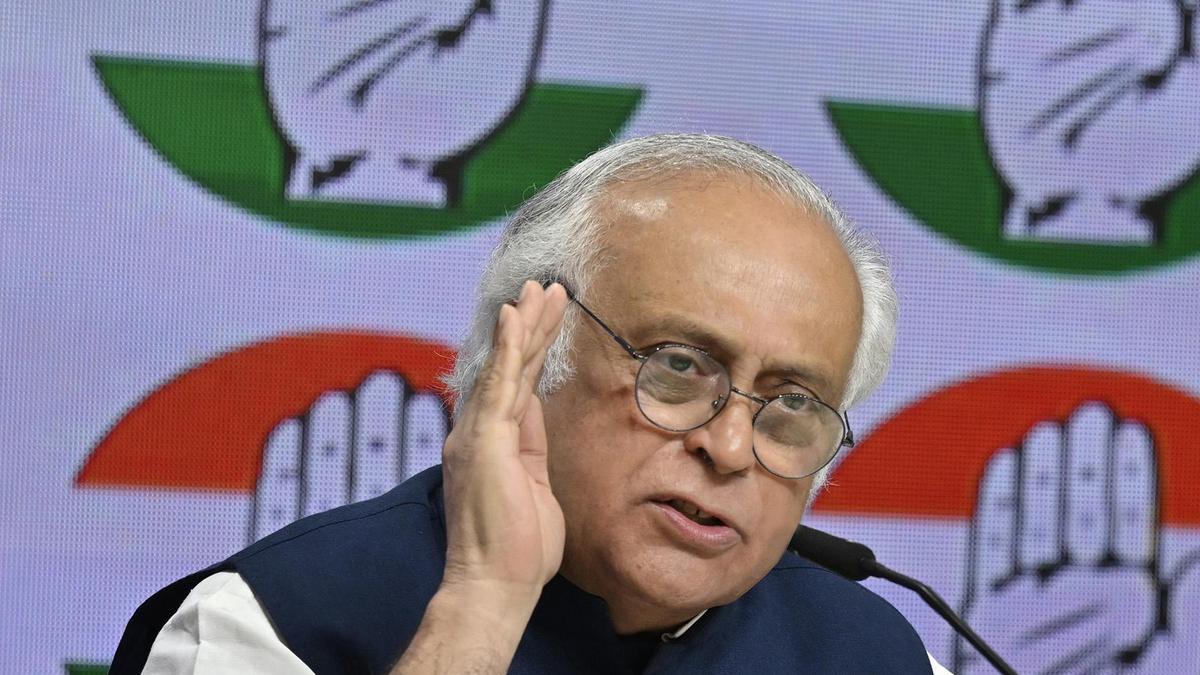
On Monday, November 9 2026, the Congress party criticized the Modi government for keeping the Monsoon session of Parliament unprorogued for a record 88 days. The opposition alleged that the delay was intended to give Home Minister Amit Shah time to manipulate a super‑tainted two‑thirds majority in the Lok Sabha to pass the delimitation bills, which it calls dangerous and destructive.
Congress president Mallikarjun Kharge has written to Prime Minister Narendra Modi four times in the past six months requesting an all‑party meeting on delimitation to discuss proposals transparently before any legislation is introduced. The Prime Minister has refused to convene such a meeting.
In a post on X, Congress general secretary in charge of communications Jairam Ramesh noted that it has been 88 days since Parliament was adjourned sine die on August 13 and has not yet been prorogued. He cited the 8th edition of the authoritative Practice and Procedure of Parliament, published in mid‑2024, which states that the typical gap between adjournment and prorogation is two to four days, with a maximum of 28 days recorded for the 2015 Monsoon Session. Union Minister of Parliamentary Affairs Kiren Rijiju had earlier written to Mr. Kharge on October 19, 2026, noting that the 2008 Monsoon Session had been kept unprorogued for 87 days.
Rijiju’s letter highlighted that the 87‑day gap in 2008 was agreed upon by all parties due to special circumstances. Ramesh argued that the current 88‑day gap is unprecedented and appears to serve the Home Minister’s agenda.
The Congress party reiterated that the opposition’s unity, which defeated the government’s design on April 17 2026, will prevail if the government repeats its “bulldozer tactics.”
The Monsoon session remains unprorogued, leaving open the possibility of an extended sitting of the existing session. An extended or special sitting requires a minimum notice of two days, while convening a fresh session requires at least 14 days. The government’s decision not to prorogue has fueled speculation about a short‑notice convening to consider a constitutional amendment linked to the Women’s Reservation Bill and delimitation.
Historical records show Parliament has been unprorogued for 87 days in 2008, 76 days in 1987, 54 days in 1989, 49 days in 2006 and 2013, and 41 days in 1963. In 2008, the Lok Sabha met on July 21 and 22 to discuss a no‑confidence motion against the UPA government, was then kept unprorogued, reconvened on October 17, and adjourned again on October 24 to meet on December 10.
The Congress has previously urged the government to prorogue both houses and hold an all‑party dialogue on delimitation. During the Budget session on April 17, the Modi government faced a setback when the Constitution amendment bill for women’s reservation, which involved delimitation, was defeated in the Lower House.
Frequently asked questions
How long has the Monsoon session remained unprorogued?
It has been 88 days since Parliament was adjourned sine die on August 13, 2026.
What is the typical gap between adjournment and prorogation according to the 8th edition of Practice and Procedure of Parliament?
The typical gap is two to four days, with a maximum of 28 days recorded for the 2015 Monsoon Session.
What was the outcome of the Constitution amendment bill for women’s reservation during the Budget session on April 17, 2026?
The bill was defeated in the Lower House.