Business & Finance
Vietnam Cuts Petrol Prices Again, Diesel and Mazut Also Decline
By Today News Hours Editorial Desk
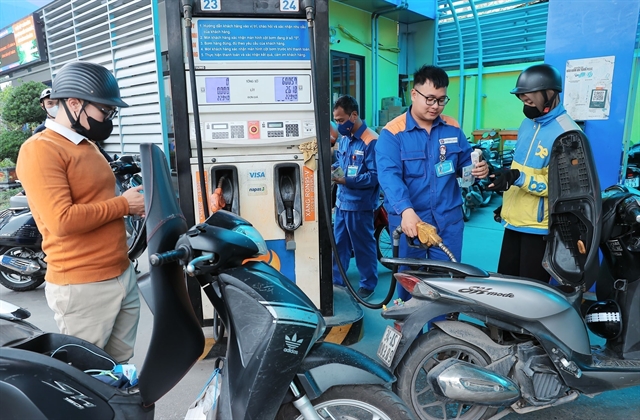
Retail petrol prices in Vietnam fell sharply on Thursday, with E5 RON 92 reduced by 2,305 VND (US$0.09) per litre and E10 RON 95‑III cut by 2,075 VND. The new prices took effect at 3 pm on November 5, bringing E5 RON 92 to a maximum of 20,898 VND per litre and E10 RON 95‑III to 21,156 VND per litre. Diesel prices edged down by 180 VND to 28,696 VND per litre, while mazut fell by 1,969 VND to 22,005 VND per kilogram. This is the third consecutive reduction in domestic petrol prices, while diesel has declined for two consecutive adjustments.
The petrol price stabilisation fund was used at 700 VND per litre of petrol. The fund had a balance of more than 196.3 billion VND as of June 30, up over 1.22 billion VND from the end of the previous quarter. During the second quarter, contributions to the fund totalled nearly 1.9 trillion VND, while spending amounted to over 873 billion VND.
On November 3, domestic petrol prices were cut by 1,020 VND per litre for E5 RON 92 and 928 VND for E10 RON 95‑III after the base prices fell by more than 10 percent from the previous adjustment. Diesel declined by 1,370 VND per litre, while mazut rose by 378 VND per kilogram.
Globally, oil prices continued to fall on Thursday for a fourth consecutive session amid expectations that the United States could pursue diplomatic efforts to end its conflict with Iran, easing concerns over potential disruptions to Middle Eastern oil supplies. Brent crude fell 0.85 percent to $93.82 a barrel, while US West Texas Intermediate (WTI) crude dropped 1.36 percent to $86.92, according to Reuters. Oil shipments through the Strait of Hormuz have recovered to near pre‑conflict levels, although transportation costs remain elevated. JPMorgan estimated that the global oil market moved into a supply surplus of around 1.1 million barrels per day in September, widening to 1.4 million barrels per day in October. However, the market outlook remains uncertain, with commercial oil inventories in major consuming countries also approaching their lowest levels in 15 years.
In Vietnam, the government has introduced measures to ease fuel costs through tax reductions. Under Resolution No. 45/2026/NQ‑CP, the special consumption tax rate on petrol has been reduced to zero per cent from November 1, 2026, through March 31, 2027. Fuel‑related tax and fee relief measures are estimated to total 64 trillion VND from the beginning of this year, with around 4 trillion VND expected to be used to reduce the special consumption tax on petrol to zero per cent during the final two months of the year. The petrol price cuts are also expected to ease inflationary pressure as Vietnam strives to achieve double‑digit growth for the full year. The country’s CPI rose 4.57 percent in January–October, compared with the target of 4.5 percent for the full year.
Frequently asked questions
When did the new petrol prices take effect?
At 3 pm on November 5.
By how much did diesel prices decrease?
Diesel prices edged down by 180 VND to 28,696 VND per litre.