World
Hong Kong's First Chief Executive After British Rule, Tung Chee-hwa, Dies at 89
By AP
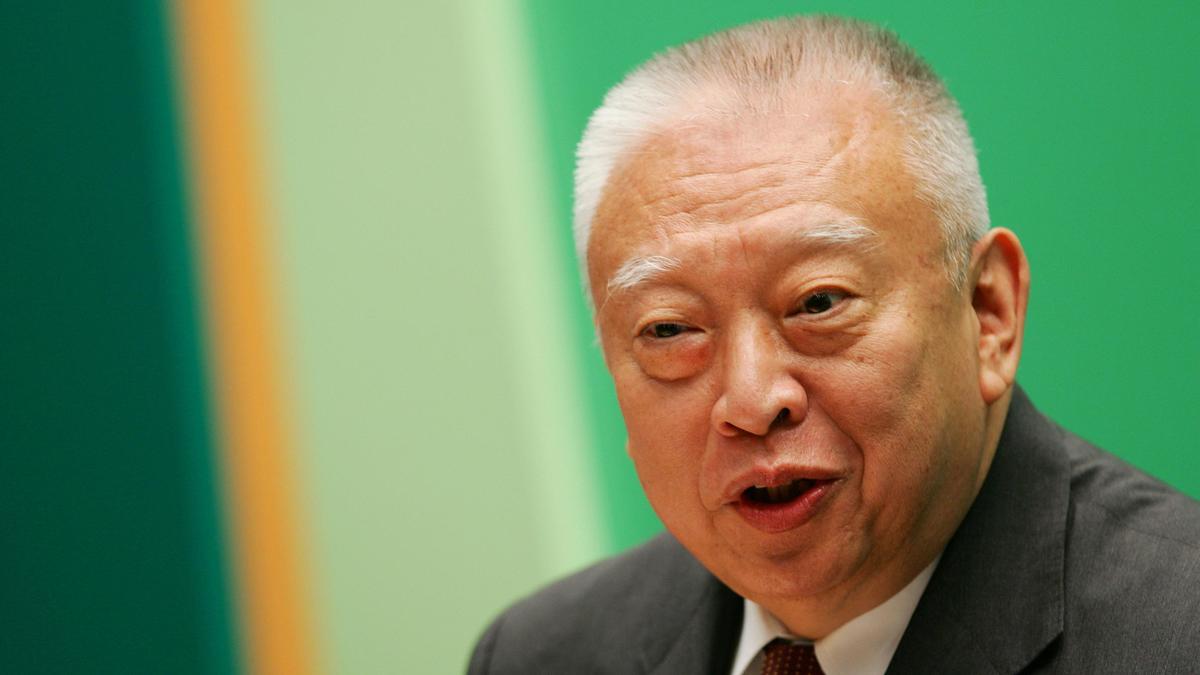
Tung Chee-hwa, who served as Hong Kong's first leader following the 1997 handover from British to Chinese rule, has died at age 89. His office announced that he passed away peacefully on Tuesday, September 8, 2026, surrounded by family members.
Before entering politics, Tung was a shipping tycoon with limited political background. In 1997, a panel of pro-Beijing elites selected him to lead Hong Kong as it transitioned from British colonial governance. Observers widely believed Beijing viewed him as a loyal figure who would follow the Communist Party's direction, a perception reinforced by the fact that Chinese state-run banks had helped rescue his family's shipping company, Orient Overseas Container Line, during a global downturn in the 1980s.
Tung's tenure began during a delicate period for the newly implemented "one country, two systems" framework, under which Hong Kong retained civil liberties and other features from its colonial past while Beijing held ultimate authority over political matters. Known for his intense work ethic, Tung earned the nickname "7-Eleven" for his long hours. However, as crises accumulated, his perceived indecisiveness and political missteps damaged his reputation, eventually earning him the less favorable nickname "Old Dumb Tung."
Soon after taking office in 1997, Hong Kong faced an outbreak of bird flu, marking the first known human cases of the virus. That same period, the Asian financial crisis battered the city's economy. Tung's handling of both crises drew significant criticism, compounded by his wariness of the media, which made it difficult to improve public perception. He also became known for policy blunders that drew ridicule.
Despite a difficult first term, the pro-Beijing electoral committee reelected Tung unopposed in 2002. The following year brought another major challenge when SARS struck Hong Kong, killing nearly 300 people and severely damaging the economy. Critics accused his administration of responding slowly and inadequately.
Later in 2003, Tung proposed anti-subversion legislation known as Article 23, which many viewed as a threat to civil liberties. The proposal sparked a street march involving an estimated half a million participants, prompting the government to eventually withdraw the bill.
In 2004, another large protest emerged, this time calling for direct elections of Hong Kong's chief executive and full legislature. Tung aligned with Beijing's leadership in rejecting the demand, and the demonstration became an annual tradition for pro-democracy activists in subsequent years. These protests suggested growing political division in Hong Kong and hinted that Tung was losing his grip on governance.
On March 10, 2005, Tung announced his resignation, attributing it to declining health rather than pressure from Beijing. He stated, "If I continue as chief executive, I won't be able to handle it." However, many were skeptical of this explanation, since no visible health issues had been apparent in the months leading up to his departure.
Tung was born in Shanghai on May 29, 1937. His family relocated to Hong Kong in 1947, two years before the Communist takeover of mainland China. He earned a marine engineering degree from the University of Liverpool in 1960 and subsequently worked for General Electric and his family's shipping business in the United States before returning to Hong Kong in 1969.
After leaving his position as chief executive, Tung established a think tank and remained a steadfast supporter of Beijing, including during the 2019 pro-democracy protests and the subsequent crackdown, which saw Beijing impose a national security law criminalizing subversion in Hong Kong. In September 2019, amid the height of the demonstrations, Tung was among 42 individuals awarded national medals and honors by Chinese leader Xi Jinping in Beijing, recognizing his contributions to implementing the "one country, two systems" policy.
Following the 2020 enactment of the national security law, the large-scale protests that once challenged Tung's leadership disappeared from Hong Kong's streets. In recent years, Tung had not made public appearances.