World
Twenty-Five Years After 9/11, Victims' Families Still Await Trial of Accused Mastermind
By Today News Hours Editorial Desk
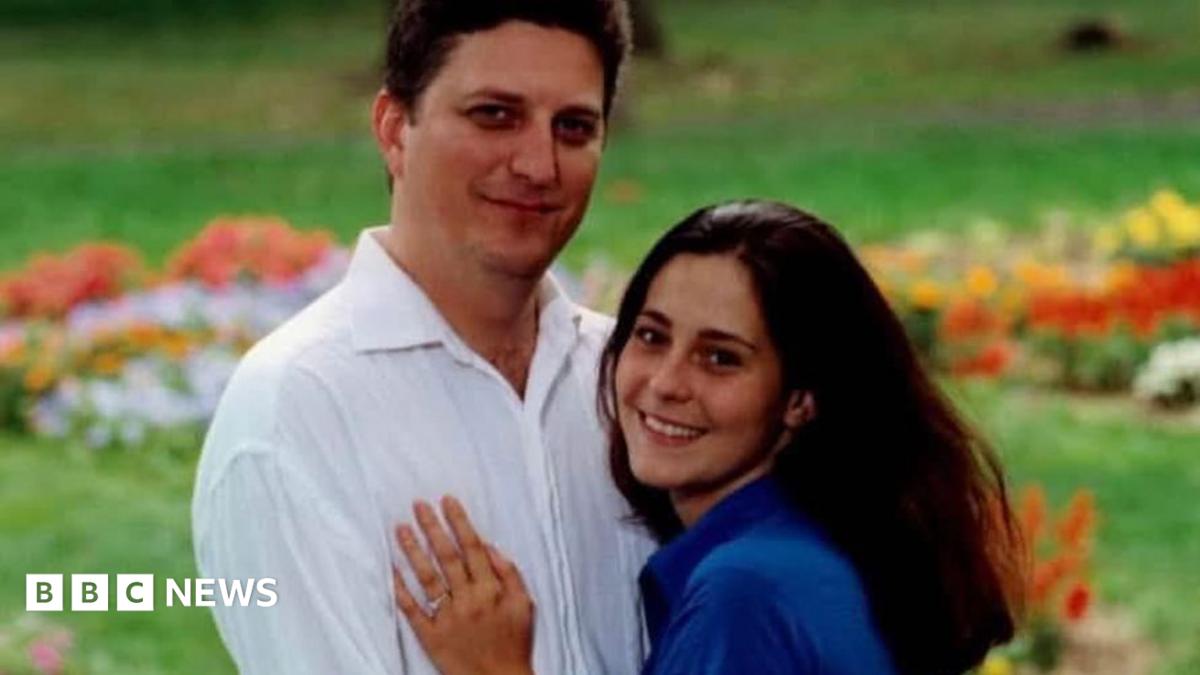
A quarter of a century after the September 11 attacks, families of the nearly 3,000 people killed say justice remains elusive as the trial of accused mastermind Khalid Sheikh Mohammed continues to be delayed.
Tom Resta lost his brother John and sister-in-law Sylvia, who was seven months pregnant, in the attacks. The couple, both traders, were working on the 92nd floor of the North Tower of the World Trade Center on 11 September 2001, when hijackers flew planes into the towers, the Pentagon, and a field in Pennsylvania, killing almost 3,000 people. Resta said the tragedy remains "almost constantly" on his mind, even 25 years later.
Resta has traveled to the US naval base at Guantanamo Bay four times to observe pre-trial hearings for Mohammed and his co-defendants, describing the process as "laborious and tedious." Mohammed, often referred to as KSM, has been held at Guantanamo for 20 years without conviction. The pre-trial proceedings have been overseen by five different military judges.
Last month, a trial date was finally set for June 2028. However, Resta said he expects further delays, and some relatives fear they may not live to see the trial take place. His father, who will turn 98 in November, is among those who doubt they will see justice served.
Stephan Gerhardt, whose younger brother Ralph died in the attacks, has made six trips to Guantanamo. He said convictions are essential for closure, though he wishes the case were already resolved. "I don't want them to pass away without being convicted, because that would be an injustice to all the family members," he said.
Mohammed faces charges including conspiracy and murder, with 2,976 victims named in the case. He is accused of devising the plan to fly hijacked planes into buildings and presenting it to al-Qaeda leader Osama bin Laden. He has previously admitted to planning the "9/11 operation from A to Z."
Shortly after the 2028 trial date was announced, a military judge ruled that confessions Mohammed made to FBI agents at Guantanamo could not be used at trial, citing "extraordinary physical and mental abuse" he suffered at CIA black sites before his transfer. Experts say years of litigation over the torture of Mohammed and his co-defendants have been the primary cause of the case's delays.
Kasey McCall-Smith, a professor of international law at the University of Edinburgh, said the defendants endured years of abuse, including waterboarding and stress positions, and that legal battles over this treatment have dominated proceedings. John Ryan, author of a book on the case, said the exclusion of the confessions removes what prosecutors considered their strongest evidence, though other evidence—such as intercepted calls and recordings—may still be used, pending further legal challenges.
The US government has previously acknowledged using "enhanced interrogation techniques" during the Bush administration, arguing they saved lives and did not constitute torture. President Barack Obama banned such methods in 2009.
Both Resta and Gerhardt traveled to Guantanamo in early 2025 when Mohammed and two co-defendants were expected to plead guilty under a deal that would spare them the death penalty. The plea agreement was paused at the last minute after the US government argued it would cause "irreparable" harm to deny the public a full trial. Legal disputes over the deal's validity continue.
Resta supported the plea deal as a way to secure convictions, saying the defendants should remain imprisoned regardless of the trial's outcome. However, Brett Eagleson, whose father Bruce died in the attacks, opposed the deal, saying he wanted a full trial to ensure transparency. Eagleson criticized the handling of the case as "a mess" and said he has stopped attending pre-trial hearings, describing his frustration with the US government's management of the process.
Eagleson also noted that while the anniversary remains deeply personal for victims' families, public awareness of the case has faded, with many assuming the matter was resolved after the deaths of Osama bin Laden and the end of US involvement in Iraq and Afghanistan.
Professor McCall-Smith said the extended pre-trial process is meant to determine what evidence can be used, which could make the eventual trial—expected to last about a year—move more efficiently once it begins.
As the 25th anniversary approaches, Gerhardt said he looks forward to the day the case is finally resolved. "It's a place I don't want to come back to. I want to live my life, enjoy my passions and my memories of Ralph," he said.