India
Tamil Nadu Faces Water Shortage as Monsoon Delivers Only Moderate Rainfall
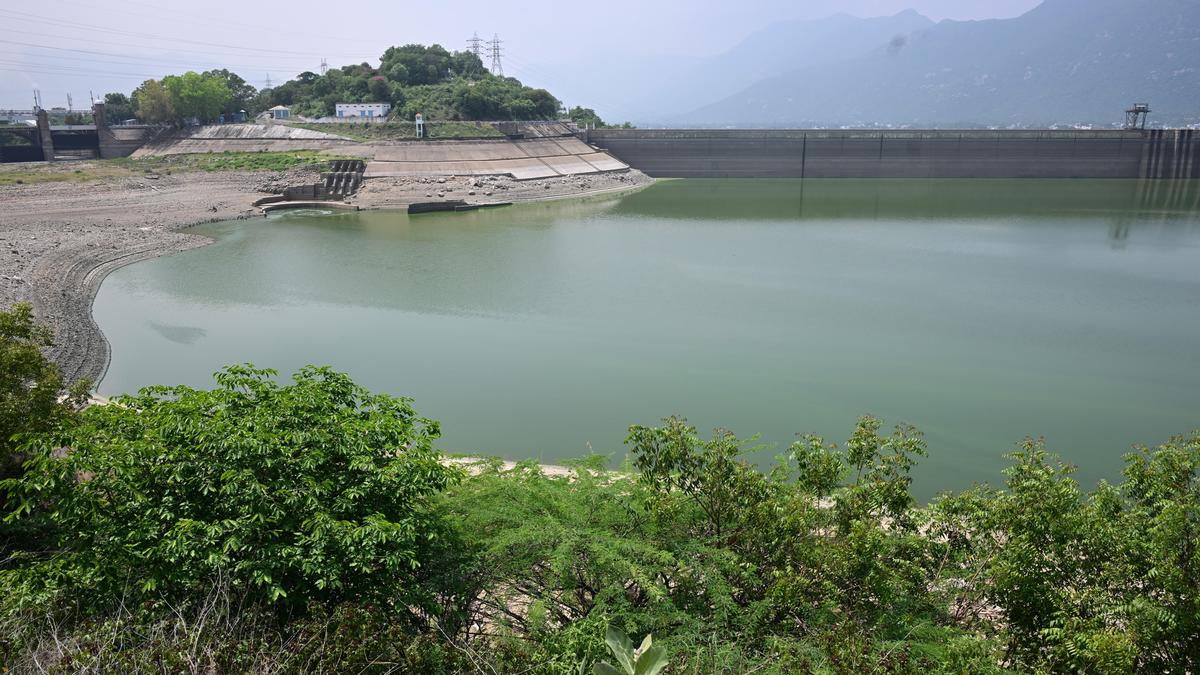
Tamil Nadu is likely to experience a water shortage and reduced rice output unless the Northeast monsoon delivers more rain. Currently, the 15 major irrigation reservoirs hold only about one‑third of their total capacity, compared with roughly 92% of capacity in the same period last year. The state’s largest dam, Mettur, contains about 23 tmcft, which is insufficient to sustain continuous water releases to farmers in the Cauvery delta for more than a week.
Rainfall during the Northeast monsoon has been moderate, with the state receiving about 240 mm, slightly above the anticipated 236 mm. A comfortable level would require at least 260 mm, most of which should fall in November. December typically accounts for only about 20% of the monsoon’s total rainfall.
The rainfall pattern observed so far aligns closely with the forecast from the Tamil Nadu Agricultural University (TNAU). In late September, TNAU predicted a total monsoon rainfall of 438 mm, just 1 % above the normal 434 mm. The Meteorological Department’s outlook at the start of October described the southern peninsular region as likely to receive normal rainfall (88‑112% of the Long Period Average). TNAU’s forecast was more specific, predicting normal rainfall for the core districts of the Cauvery delta—Thanjavur, Tiruvarur, Nagapattinam, and Mayiladuthurai.
Despite the limited water availability at Mettur and the expectation of subdued rainfall, farmers have planted paddy during the samba‑thaladi season over approximately 3.62 lakh hectares. About 50% of this area is under direct sowing, a method used during water shortages. In non‑delta areas, paddy coverage is about 1.3 lakh hectares less than last year, and the share of direct sowing has risen from 39% to 57% of total paddy area.
Rice production for 2025‑26 is projected at 77.5 lakh tonnes, about one lakh tonnes below the 79.07 lakh tonnes recorded in 2021‑22.
To protect crops in the Cauvery delta, the state government, during meetings of the Cauvery Water Regulation Committee (CWRC) and the Cauvery Water Management Authority (CWMA) on Friday, requested that Karnataka release approximately 20.7 tmcft, including a backlog of 16.9 tmcft. The Authority approved the Committee’s recommendation that Karnataka release 3.88 tmcft to Tamil Nadu at a flow of 3,000 cusecs per day for 15 days starting Saturday, November 7, 2026.
Frequently asked questions
How many major irrigation reservoirs in Tamil Nadu are at about one‑third capacity?
Fifteen major irrigation reservoirs hold only about one‑third of their total capacity.
What is the projected rice production for the 2025‑26 season?
Rice production for 2025‑26 is projected at 77.5 lakh tonnes.
How much water did the state request Karnataka to release?
The state requested Karnataka to release approximately 20.7 tmcft, including a backlog of 16.9 tmcft.