World
UK-Led Ban on Israeli Settlement Trade Sparks Diplomatic Rupture
By Today News Hours Editorial Desk
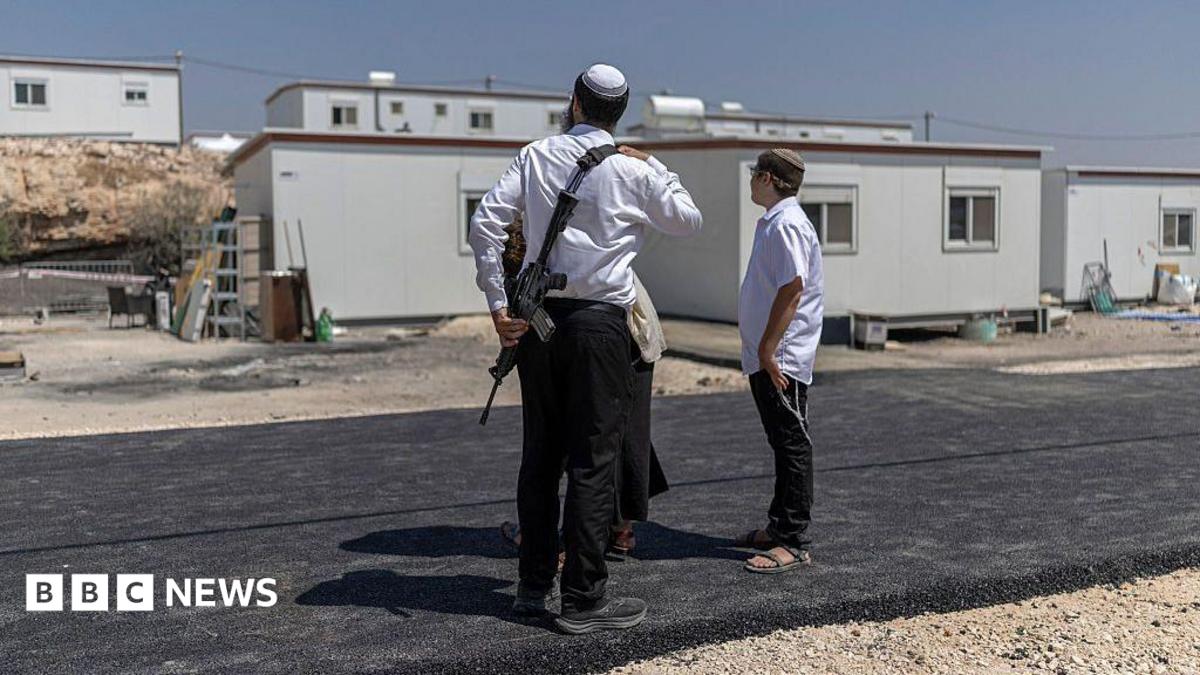
Israel's sharp reaction to Britain's decision to ban trade with Israeli settlements in the occupied West Bank underscores the significance of the moment. While the UK bore the brunt of Israel's anger, the involvement of 11 other countries—including France, Spain, and Canada—intensified the sense of outrage in Jerusalem. British officials had anticipated a hostile response to such a major policy shift on Israel-Palestine, but appeared surprised by how quickly and forcefully Israel reacted. Israel's countermeasures included closing the UK consulate in East Jerusalem, which serves the West Bank and liaises with the Palestinian Authority in Ramallah, and withdrawing British representatives from the International Gaza Support Centre, a body established last year to coordinate stabilization and relief efforts in Gaza. These actions signal how deeply troubled Israel is by the coordinated move. Although settlement-made products account for a relatively small share of Israel's exports, the political symbolism of targeting them carries considerable weight. For decades, Britain and other Western governments have viewed settlements in occupied Palestinian territory as illegal without moving to ban their goods. This changed after the UK endorsed the International Court of Justice's 2024 ruling that the entire occupation, including Israel's military presence, is unlawful. Foreign Secretary Ed Miliband stated that Britain's economic ties must now reflect that position, resulting in a ban not only on settlement products but also on companies providing construction, infrastructure, or financial services to settlements. The measures also restrict arms sales that "materially contribute to the occupation," going further than many had expected. Miliband's statement was notable not just for its substance but for its tone—personal and direct. Describing himself as a "proud British Jew... unwavering in my support for the state of Israel," he spoke with unusual candor, stating that "settler terrorism is rampant" and blaming it for the "ethnic cleansing" of Palestinians in parts of the West Bank, while accusing the Israeli government of turning "a blind eye" to the violence. Miliband described the move as a "reset" in British policy, though at times it appeared closer to a fundamental shift, leaving British-Israeli relations at their most strained point in decades. Israeli Foreign Minister Gideon Saar's forceful response may have been amplified by the tense political atmosphere ahead of an upcoming Israeli election, but analysts suggest most Israelis share his indignation. While many in Israel view the ideology of some settlers as extreme or embarrassing, this does not equate to agreement that the settlements—built on land seized during the 1967 Six-Day War—are illegal. Few in Israel are likely to endorse former Prime Minister Ehud Olmert's past accusation that current Prime Minister Benjamin Netanyahu has turned Israel into an international pariah. Yet growing global criticism, from protests at events like Eurovision to international arrest warrants against Israeli leaders and now these settlement-related sanctions, has fueled unease within Israel. Palestinians, meanwhile, welcomed the announcement as a step forward. The Palestinian foreign ministry praised the participating countries but called for "urgent, concrete measures" to end what it called Israel's "illegal settlement enterprise." In London, Palestinian ambassador Dr. Husam Zomlot described the UK's decision as "a turning point in the UK-Palestine relationship," saying Britain's "courageous steps" could help pave the way toward an independent Palestinian state based on 1967 borders, with East Jerusalem as its capital. However, Zomlot acknowledged that Israel's 59-year occupation remains largely unchanged, and prospects for Palestinian statehood remain slim. There is little indication that the actions of these 12 countries will significantly alter Israel's continued expansion in the West Bank. Historically, only the United States has wielded enough influence to affect such outcomes—as seen in 1991, when President George H.W. Bush and Secretary of State James Baker threatened to withhold $10 billion in loan guarantees from Israel unless Prime Minister Yitzhak Shamir pledged not to use the funds for settlement expansion. By contrast, former President Donald Trump has shown no inclination to restrain Netanyahu's settlement policies. While segments of Trump's political base have grown critical of Israel, U.S. Ambassador Mike Huckabee remains a strong Christian Zionist who shares the belief that the West Bank was divinely promised to the Jewish people. As a result, the UK and its partners now find themselves at odds not only with Israel but also with its principal ally in Washington.