World
China Invests $16.3 Billion in African Mineral Processing as U.S. Competition Rises
By Bhanu Pratap
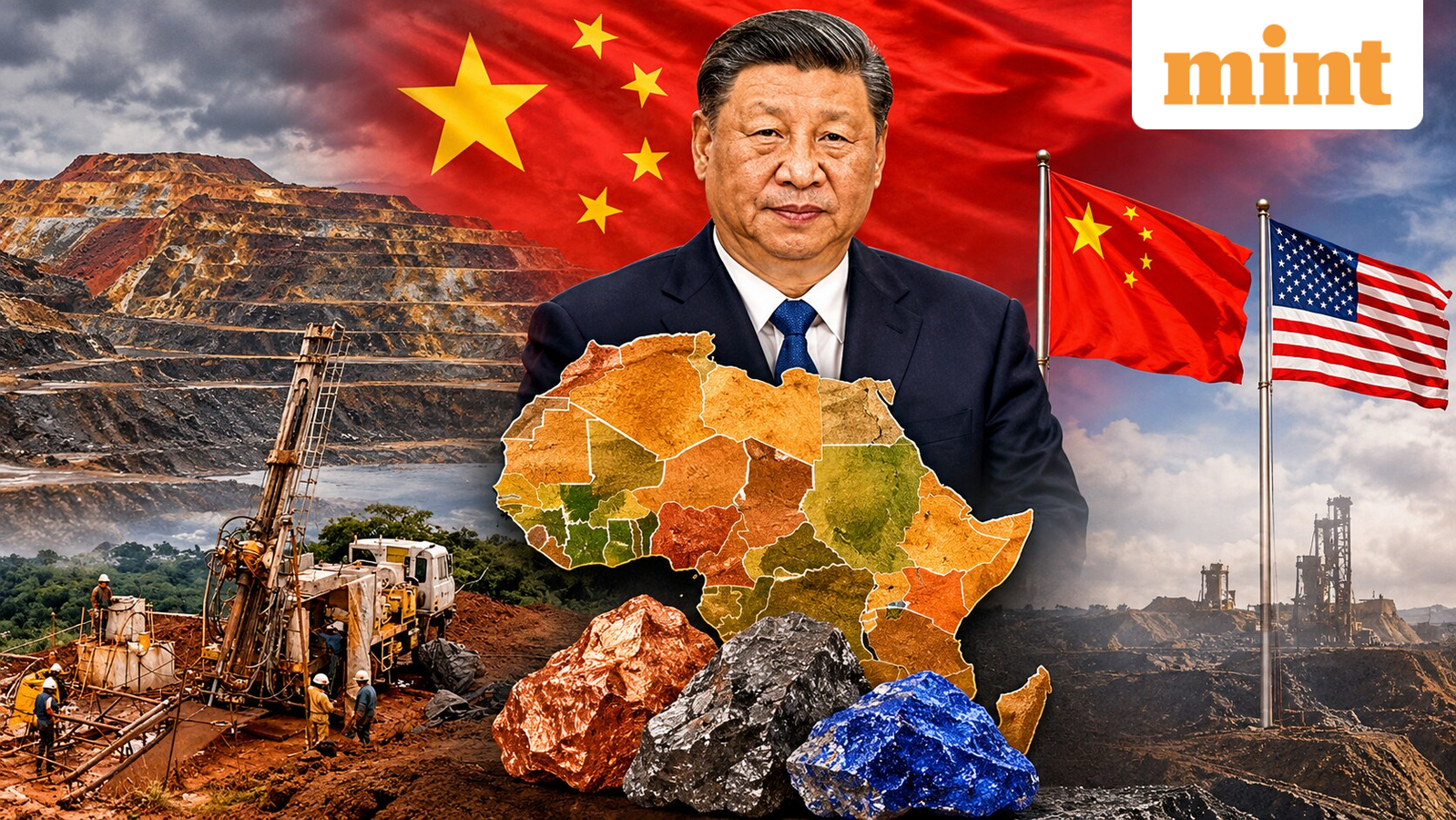
China is increasing its investment in Africa’s critical‑minerals sector, backing more than $16 billion of projects that focus on mineral processing and manufacturing. The move comes as Beijing seeks to strengthen its influence over resources that are vital to the global economy, such as copper, cobalt, iron ore and rare earths, which are essential for advanced manufacturing, clean‑energy technologies and defence. A report by Beijing‑based consultancy Development Reimagined, cited by the South China Morning Post, shows that Chinese investment in Africa is expanding beyond mining and extraction to include processing, refining and manufacturing. The report tracked $41.2 billion in Chinese investments across 32 mining, exploration and development projects in 15 African countries up to June 2026. Of those, 19 projects involved value addition—processing or manufacturing resources within Africa—attracting $16.3 billion. The scale of the investments illustrates Beijing’s ambition to extend its reach across the mineral supply chain rather than remain limited to securing raw materials. Africa supplies large amounts of copper, cobalt and iron ore. Several countries, including the Democratic Republic of Congo, Guinea and Zimbabwe, have introduced export restrictions or bans on certain raw minerals to encourage domestic processing and manufacturing. Chinese‑backed investments in these activities could help African economies retain a larger share of the value generated from their resources, create jobs and build industrial capacity. However, the report notes that processing and manufacturing projects account for a relatively limited share of overall Chinese investment, partly because some of the largest mining deals have limited or yet‑to‑be confirmed commitments to domestic processing. The $23 billion Simandou iron‑ore development in Guinea, described as the world’s largest project of its kind, illustrates the scale of China’s involvement in Africa’s mining sector. Whether such large investments will translate into lasting industrial benefits for host countries or primarily strengthen external players’ control over the supply chain remains a question. China’s expanding footprint comes as Washington seeks to reduce its dependence on concentrated critical‑mineral supply chains and secure access to alternative sources. In December 2025, the U.S. secured an agreement granting American companies preferential access to designated mining assets in the DRC. U.S.‑linked bidders are also competing for development rights at Kenya’s Mrima Hill, which contains significant deposits of rare earths and niobium. The growing contest has put African mineral resources at the centre of a wider strategic rivalry. Both powers are seeking access to materials that underpin industrial competitiveness, technological development and military capabilities. Chinese President Xi Jinping has framed Beijing’s expanding engagement as support for African countries’ efforts to develop their own industries. During a meeting with Botswana’s President Duma Boko last month, Xi offered support for mining development, financing and technology transfers. “Africa’s resources belong to Africa,” Xi said, warning that they should not be used for “geopolitical rivalry.” The remarks appeared to push back against Washington’s efforts to expand its access to African mineral assets. The intensifying competition could give African governments greater leverage to negotiate better mining agreements, attract investment and secure technology transfers. China’s $16.3 billion push may be presented as an opportunity for African industrialisation. Yet, as Beijing expands its presence across more stages of the critical‑minerals supply chain, the central question is whether Africa will gain greater control over its mineral wealth or simply become more deeply embedded in a supply chain shaped by Chinese interests.