Politics
Opportunity Party’s New Leader Qiulae Wong Could Hold the Key to New Zealand’s Post‑Election Power Balance
By IE Online
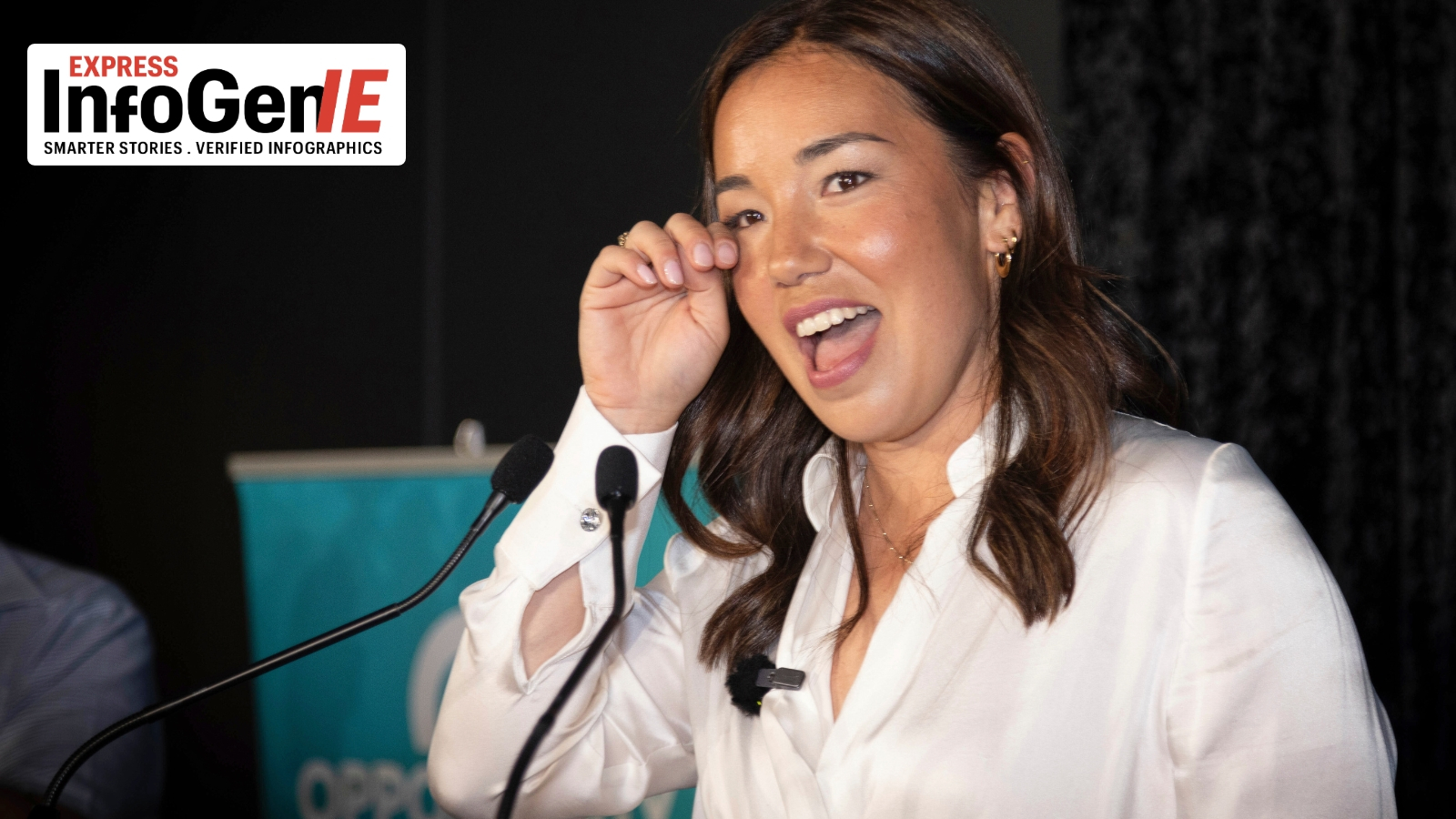
At 38, Qiulae Wong is a newcomer to electoral politics. After New Zealand’s closely contested general election, the leader of the Opportunity Party may play a crucial role in deciding who governs the country. With more than 95 percent of the votes counted on Saturday, Wong’s centrist party crossed the 5 percent threshold required to enter Parliament, securing an apparent seven seats. This breakthrough places her in a potentially influential position as Prime Minister Christopher Luxon’s ruling conservative coalition and the opposition Labour‑led bloc remain locked in a tight contest. The National Party, led by Luxon, and its coalition partners ACT and New Zealand First were projected to hold 67 seats in a 130‑seat Parliament, just one above the 66 required for a majority. The left‑wing bloc, led by Labour’s Chris Hipkins, was projected to have 56 seats, according to the Associated Press. The final outcome remains uncertain, as special votes—including ballots cast by New Zealanders living overseas—are still to be counted. These votes have historically favoured left‑leaning parties and could alter the balance of power. Wong has said she is willing to negotiate with either side if her party’s support becomes necessary to form a government. She has indicated that Opportunity would approach whichever major party wins the largest number of votes.
At the time of the election, Wong was working as a consultant at KPMG, advising businesses on sustainability and climate‑related issues. Though she has no previous experience in elected politics, she secured the leadership position. Born in Fiji and raised in Auckland, Wong studied law and politics before pursuing a career that included human rights, disability inclusion, ethical fashion and sustainable business. According to her official Opportunity Party biography, she spent about a decade overseas before returning to New Zealand with her husband and two daughters in 2022. She subsequently led the B Corp movement in New Zealand, helping businesses such as Kiwibank and Sharesies incorporate social and environmental considerations into their operations. She also worked with major international fashion brands, including Vivienne Westwood and Stella McCartney, on sustainability initiatives.
The Financial Times reported that Wong’s decision to enter politics was partly driven by frustration over the government’s retreat from climate‑related commitments and what she viewed as a lack of long‑term thinking in policymaking. Her rise has drawn comparisons with Australia’s teal independents, who made significant electoral gains in metropolitan constituencies in 2022 by attracting voters dissatisfied with the traditional political parties.
The Opportunity Party, founded about a decade ago, has struggled to establish itself electorally. Its earlier attempts to enter Parliament fell short of the required threshold. Its breakthrough in the November 7 election marks a significant change for the party. Wong has positioned Opportunity as a centrist alternative to the traditional political establishment, advocating a pragmatic approach that combines economic reform, environmental sustainability and long‑term policymaking. Its most prominent proposal is a major overhaul of New Zealand’s tax system. The party has proposed an annual land‑value tax of 1.75 percent on urban land and 0.5 percent on rural land. It argues that this would discourage land speculation and the practice of holding undeveloped land, while improving housing affordability. The revenue would help fund a universal Citizen’s Income of NZ$19,400 a year for adults, replacing several existing welfare payments.
In an explainer published by New Zealand broadcaster 1News in August, the party’s proposal was examined in detail, including its potential impact on income taxes, property owners and welfare recipients. Under the proposed system, the party argues that 70 percent of New Zealanders would be better off. Critics, however, have questioned whether the land tax could increase the financial burden on homeowners and landlords. Wong has also advocated stronger environmental protections, greater investment in innovation and a long‑term approach to energy security and economic development.
In an interview with interest.co.nz in July, she said Opportunity would not enter a governing arrangement simply to provide parliamentary numbers. The party would need to secure meaningful policy concessions and have the ability to influence the government’s agenda. She also indicated that the party could remain on the crossbenches or sit in opposition rather than accept a coalition agreement that compromised its core principles.
(With inputs from agencies)
Frequently asked questions
How many seats did the Opportunity Party secure in the election?
The Opportunity Party secured an apparent seven seats in Parliament.
What land value tax does the Opportunity Party propose?
An annual land‑value tax of 1.75 percent on urban land and 0.5 percent on rural land.
What was Qiulae Wong’s professional background before politics?
She worked as a consultant at KPMG on sustainability and climate issues, led New Zealand’s B Corp movement, and collaborated with brands like Vivienne Westwood and Stella McCartney on sustainability initiatives.