World
Sudan’s War, Climate Crisis and Poverty Drive Rising Child Malnutrition
By Fatima Edam
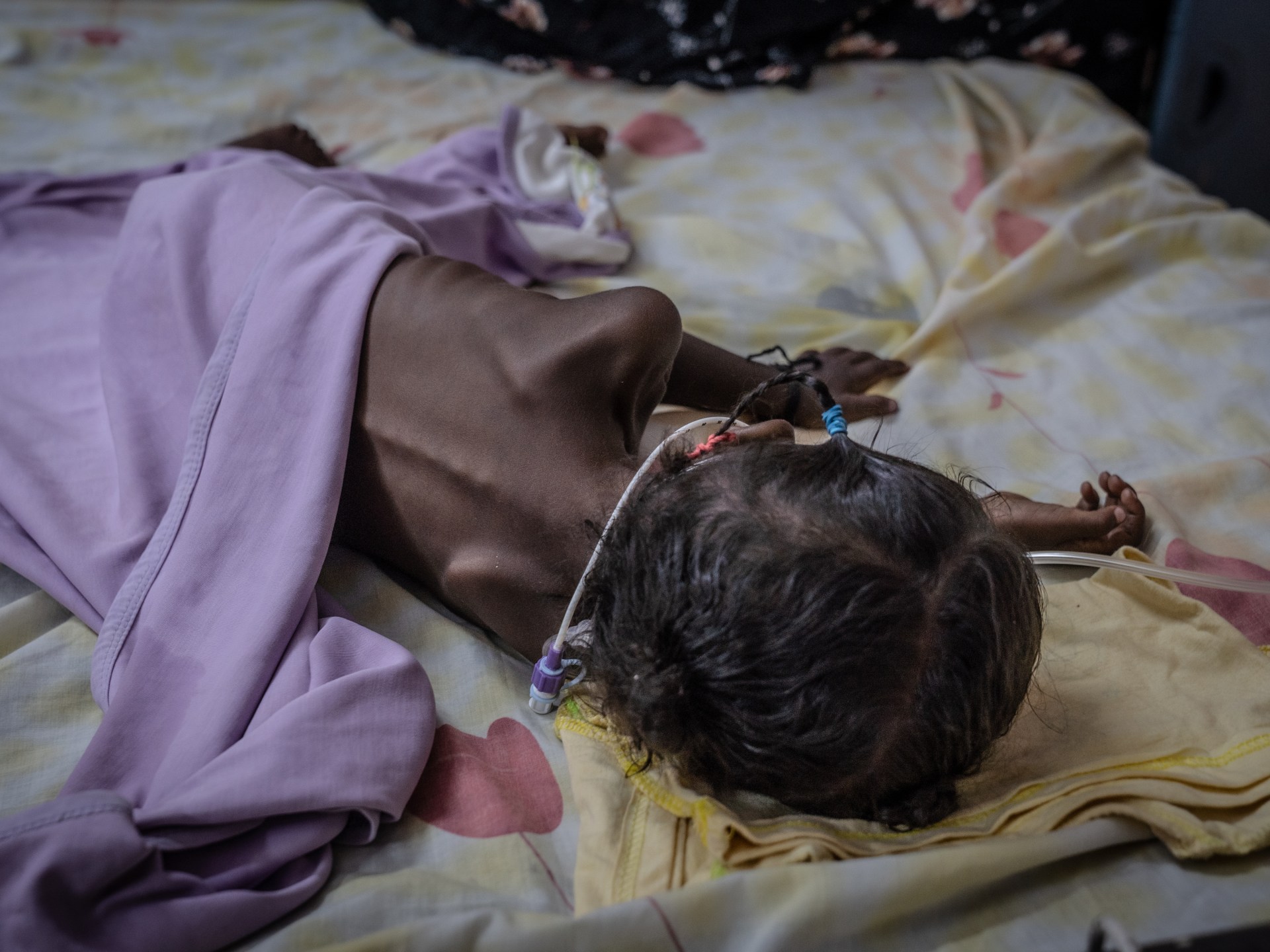
After a two‑and‑a‑half‑hour drive from al‑Lalouba, Layla Ali reached Port Sudan to seek help for her five‑year‑old son Adam, who was severely malnourished with ribs visibly protruding. Adam had stopped eating two weeks earlier and became too ill to move. Ali’s fear of treatment costs delayed his hospital visit until his condition worsened. She spent five days in the Port Sudan Teaching Hospital, where doctors explained appropriate foods for his age and needed nutrients.
Adam’s case reflects a broader crisis. Since the civil war began in April 2023 between the Sudanese Armed Forces (SAF) and the Rapid Support Forces (RSF), the Integrated Food Security Phase Classification (IPC) projects 825,000 children under five will suffer severe acute malnutrition in 2026, a 7 % rise from 2025. UNICEF and partners treated 174,700 children nationwide in the first half of the year. The hospital recorded 433 malnutrition cases from January to August.
Nutrition counsellor Maryam Gadalsid noted that children are often admitted in overcrowded conditions—three per bed in the 17‑bed malnutrition unit—raising disease‑spread risks. While therapeutic milk and other supplies are free with WHO and UNICEF support, intravenous fluids and medication remain costly for families amid the war‑driven economic crisis. She also warned that poor nutrition among pregnant women, displacement, rising fly and mosquito populations, and winter conditions increase disease risk for malnourished children.
The situation is worst in western Sudan’s Darfur, an RSF stronghold that has endured two decades of conflict. In North Darfur, UNICEF reported at least 40,000 malnutrition cases between January and May 2025, after the RSF besieged el‑Fasher. The city fell to the RSF in October, with accusations of civilian killings.
In Blue Nile State, the al‑Karama 3 displacement camp in al‑Damazin saw malnutrition cases rise from 1,800 in September to 2,116 in November, over a quarter of the camp’s children, 1,760 of whom are under five. The camp hosts more than 7,600 children under ten among nearly 4,000 displaced families. Sabri Adam, deputy head of the camp’s committee, said families arrived in dire conditions, with limited humanitarian aid and health monitoring. The camp received cash assistance of 620,000 Sudanese pounds (about $60) per eligible household from the Red Crescent earlier this month.
The IPC warns of a growing famine risk in Greater Darfur and Greater Kordofan, driven by conflict, mass displacement, severe drought and inadequate humanitarian funding. El Nino has reduced rainfall during the rainy season, affecting roughly half the country. Nearly two‑thirds of farmland in North Darfur and about half in South Darfur and Kordofan have poor vegetation growth, threatening harvests and raising prices.
Dr. Ahmed Youssef, paediatric director at the Port Sudan Teaching Hospital, said war, displacement, limited nutrition awareness and accessibility, especially in rural villages, fuel the malnutrition surge. Many rural families rely on flour and milk, with little meat. He emphasized the need for basic nutrition education and the challenges of reaching remote villages. Food contamination, unreliable electricity and lack of refrigeration also hinder safe food storage, leading families to seek hospital care only when malnutrition is advanced due to financial hardship or limited education.
Frequently asked questions
How many children under five are projected to suffer severe acute malnutrition in Sudan by 2026?
The Integrated Food Security Phase Classification projects 825,000 children under five will suffer severe acute malnutrition in 2026, a 7 % rise from 2025.
How many children were treated by UNICEF and partners in the first half of 2023?
UNICEF and partners treated 174,700 children nationwide in the first half of the year.
What is the malnutrition case count recorded in Port Sudan Teaching Hospital from January to August?
The hospital recorded 433 malnutrition cases from January to August.