Business & Finance
Air Canada 767 Glides to Safe Landing on Race Track After Fuel Miscalculation
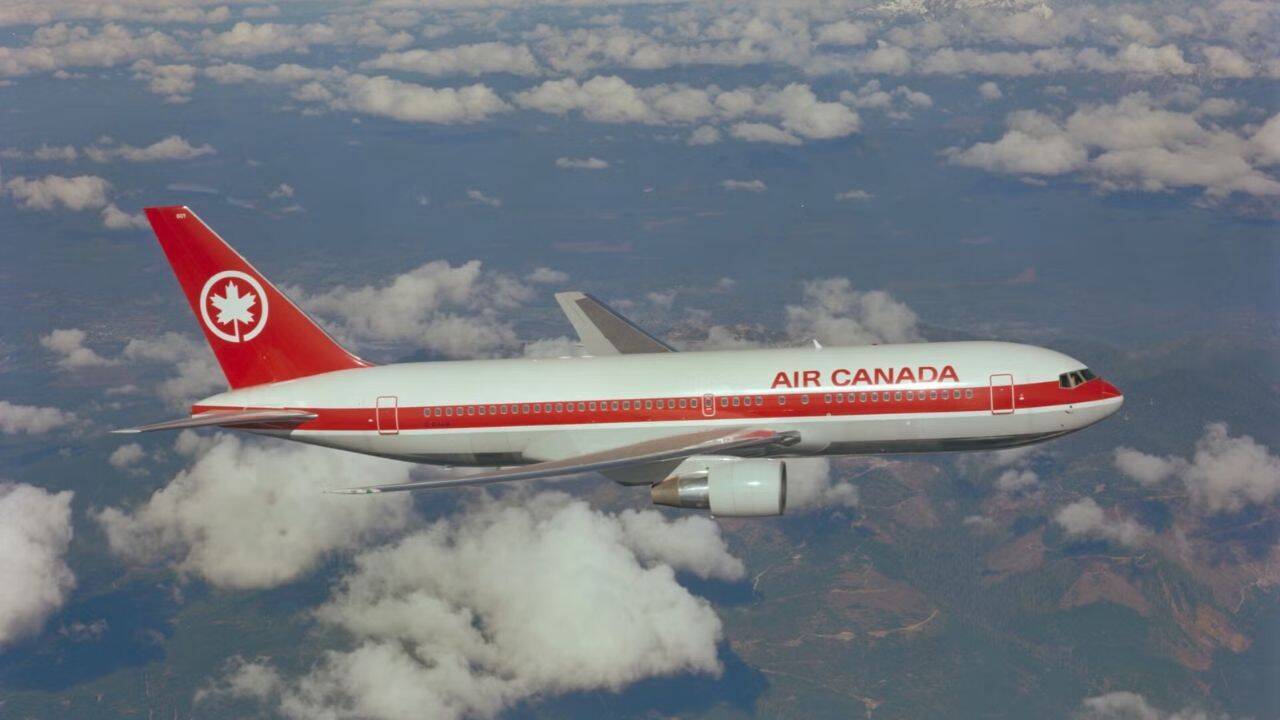
An Air Canada Boeing 767 carrying 61 passengers and eight crew members ran out of fuel at 41,000 feet over Manitoba on 23 July 1983. The loss of fuel was caused by a conversion error on the ground in Montreal, where ground staff mistakenly used the pound‑to‑kilogram conversion factor instead of the correct kilogram factor. As a result, the aircraft departed with only 22,300 pounds (10,100 kg) of fuel, about 45 percent of the 49,200 pounds (22,300 kg) required for the flight to Edmonton.
While over Red Lake, Ontario, the pilots received low‑fuel‑pressure warnings and later lost both Pratt & Whitney JT9D engines. With engine power gone, the aircraft’s main generators failed, leaving only battery‑powered emergency instruments. A ram air turbine provided minimal hydraulic pressure for control surfaces.
Unable to reach Winnipeg, First Officer Maurice Quintal suggested diverting to the former Royal Canadian Air Force Station Gimli. The crew was unaware that the closed base had been converted into the Gimli Motorsports Park, with part of the runway used for a sports‑car event. Captain Robert Pearson, an experienced glider pilot, guided the powerless aircraft toward the dragstrip. He used a forward slip to increase drag and lose altitude, then steered the plane onto the runway.
The crew lowered the landing gear manually; the main gear locked, but the nose gear did not. The aircraft touched down on the dragstrip, burst two tires, and the nose scraped the concrete and a steel guardrail, which helped keep the plane straight. It stopped within 3,000 feet of touchdown. A small fire near the nose was extinguished by race‑track staff.
Passengers exited via emergency slides, which were at steep angles due to the collapsed nose. Only minor cuts, scrapes, and sprains were reported. All 69 people on board survived.
The Canadian Aviation Safety Board cited procedural failures, training gaps, and the use of both metric and imperial measurements as contributing factors. The damaged Boeing 767, registration C‑GAUN, was repaired on site and returned to service, flying for another 25 years before retirement in 2008.
Frequently asked questions
How many passengers and crew were on board?
61 passengers and eight crew members.
What caused the fuel miscalculation?
Ground staff mistakenly used the pound‑to‑kilogram conversion factor instead of the correct kilogram factor.
Where did the aircraft land?
It landed on the former Royal Canadian Air Force Station Gimli runway, now a dragstrip at Gimli Motorsports Park.