Business & Finance
Minister Siow: Air India Stake Poses No Risk to SIA’s Core Operations
By Benjamin Lim
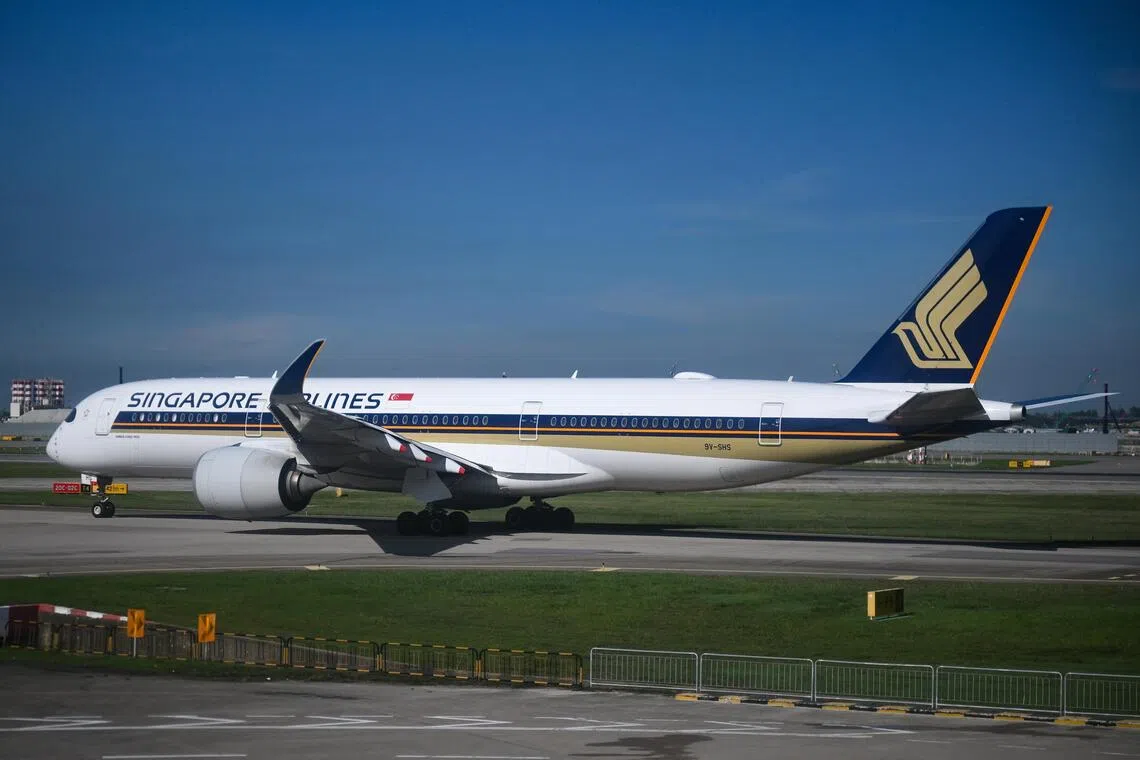
Singapore’s Transport Minister Jeffrey Siow said on Sept 8 that Singapore Airlines’ (SIA) investment in Air India does not compromise the carrier’s ability to serve Singapore, stressing that losses from the Indian airline remain separate from SIA’s own finances.
SIA holds a 25.1 per cent stake in Air India, but Siow clarified that the Indian carrier’s financial troubles do not automatically transfer to SIA as liabilities. He added that SIA is under no obligation to meet Air India’s request for fresh capital.
Air India, India’s second-largest airline, reportedly sought about US$1.5 billion (S$1.9 billion) in new equity from its owners—Tata Sons and SIA—in August, following a record annual loss. Air India and its low-cost arm, Air India Express, together reported losses of US$2.33 billion for the fiscal year ending in March, more than double the previous year’s figure.
Siow said it is up to SIA’s board and management, not the government, to determine whether further investment in Air India makes commercial sense for the airline and its shareholders. He was responding to a parliamentary question from Workers’ Party MP Kenneth Tiong (Aljunied GRC), who asked whether SIA’s overseas investment losses had been evaluated against its capacity to maintain essential air services, and whether such losses could trigger Section 67B of the Civil Aviation Authority of Singapore Act—a provision requiring SIA to report major disruptions to essential transport services.
Siow explained that Section 67B is not a financial disclosure requirement and that losses from a foreign associate alone do not necessarily meet its threshold. He said the key question is whether such losses meaningfully limit resources available for SIA’s fleet, maintenance, or network operations in Singapore. “That is a judgment based on facts, and we are nowhere close to this scenario,” he said.
SIA’s stake in Air India stems from the 2024 merger of Vistara—its joint venture with Tata Sons—into Air India, which is majority-owned by the Tata Group. Since the merger, SIA’s share in Air India has been its biggest financial drag, contributing to a $945.2 million loss for the joint venture in the fiscal year ended March 31, 2026 (FY2026).
Despite this, Siow highlighted SIA’s overall financial strength, noting record revenues of $20.5 billion and a 39 per cent increase in operating profit for FY2026. However, SIA posted a net loss of $76 million in the first quarter of FY2027—a detail Tiong raised in his follow-up remarks.
Tiong noted that other national airlines had managed to recover from losses more quickly, while SIA continued to be weighed down by its Air India investment. He also pointed to potential future challenges in India, including a proposed policy change that could allow the operators of New Delhi and Mumbai airports—key Air India hubs—to launch their own airlines, intensifying competition.
Tiong questioned whether the government had set limits on SIA’s future investments in Air India, and whether it would approve the use of national reserves if SIA sought support, as it did during the Covid-19 pandemic through Temasek’s $8.8 billion recapitalisation of SIA. He argued that the risks were significant given SIA’s minority stake in Air India and likened Parliament’s oversight role to that of a “risk team” for SIA’s board.
“I support SIA’s ability to make its own decisions, but I do not support further cash infusions from Temasek to stand behind a decision that, on these facts, reasonable members of the public are questioning,” Tiong said, adding that Singaporeans, as SIA’s ultimate stakeholders through the reserves, deserved clarity on where the limits lie.
In response, Siow questioned whether Tiong was suggesting SIA should withdraw from India altogether, describing it as one of the world’s fastest-growing aviation markets. He noted that finding a buyer or fair price for SIA’s stake would also be difficult. “It’s easy to criticise, but I suspect it is much harder for the member to tell us what SIA should do,” he said.
Siow referenced an earlier WP motion by Tiong and Jamus Lim (Sengkang GRC) calling for greater focus on small and medium enterprises over multinational firms in driving Singapore’s economy. He said it was equally vital for Temasek-linked companies like SIA to stay globally competitive, which sometimes means entering difficult markets and enduring short-term setbacks. “We cannot have it both ways. We cannot tell our companies to go out and compete, and then treat every tough year abroad as proof that they should stay home,” he said.
He added that Temasek’s pandemic-era support for SIA—comprising $15 billion in equity and bonds—was intended to sustain the broader aviation sector, and that this investment had ultimately yielded good returns. “The government does not judge Temasek on any single holding,” Siow said, noting that its $500 billion portfolio inevitably includes investments of varying risk and performance. “Some will look worse than others on any given day, and that’s what investing is.”
Siow further stated that Tiong’s remarks implied SIA’s investment decisions were not purely commercial, or that Singaporeans somehow owed Air India support—claims he said had no basis. He reiterated the government’s stance that discussions about SIA’s investment in Air India should not be used to stir racial sentiments for political purposes, a concern Tiong clarified was never his intention.