World
Russia’s Territorial Gains in Ukraine Plummet as Diesel Sales Stall
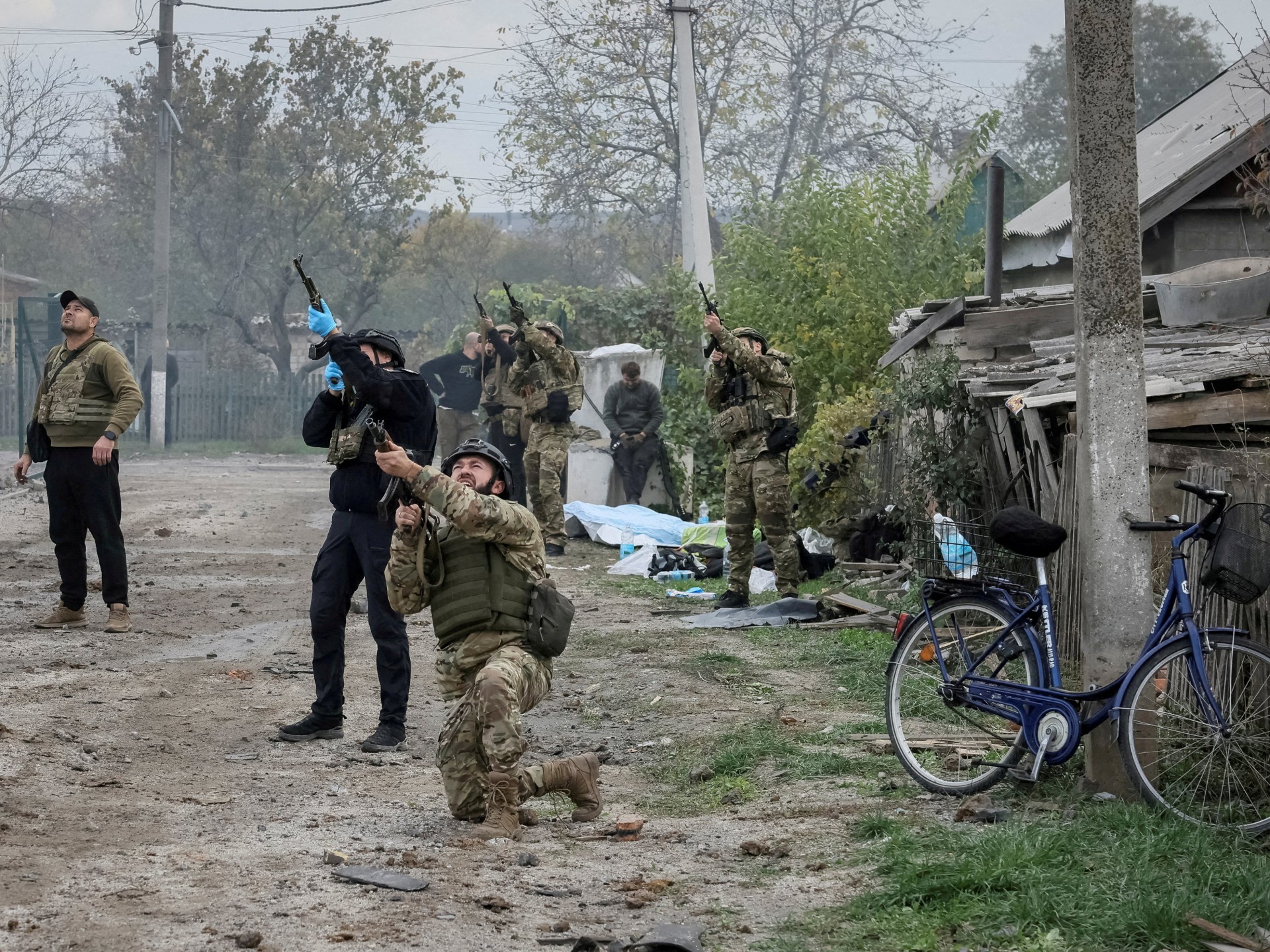
Russia’s advances on Ukrainian territory have nearly stalled this year, according to independent observers and Kyiv’s military. In the first ten months of 2026, Russian forces seized 117.38 sq km (45.32 sq miles), a sharp decline from 5,304 sq km (2,047.95 sq miles) in 2025 and 3,604 sq km (1,391.31 sq miles) in 2024, according to the Institute for the Study of War. The daily gain rate is now 0.38 sq km (0.15 sq miles), compared with 13.25 sq km (5.12 sq miles) in 2025 and 9.9 sq km (3.82 sq miles) in 2024.
Russian casualties have risen sharply. Ukraine’s General Staff estimates that 381,300 Russian personnel have been killed or seriously wounded from 1 January to 31 October. Monthly loss records have broken the entire war’s previous highs: 42,860 in July, 46,230 in September and 54,400 in October, exceeding Russia’s recruitment capacity of 24,000‑30,000 per month.
While Russia lost firm control of some areas in April and May, it expanded infiltration zones. However, in September and October it lost both firmly controlled and infiltrated territory, according to ISW.
President Volodymyr Zelenskyy and Prime Minister Denys Shmyhal have cited these trends as justification for intensified long‑range strikes on energy infrastructure. Civilians have been killed in such attacks, leading Ukrainians to view Moscow’s strategy as psychological warfare.
During the week ending 6 November, Russia launched 2,346 drones and more than 80 missiles across Ukraine, peaking on 3 November with 370 drones and 76 missiles. The attacks caused widespread blackouts as winter approaches. In Komyshuvakha, Zaporizhzhia, at least 50 people were killed when a drone strike hit a resilience centre that distributed humanitarian aid.
The attack occurred the day a six‑day ceasefire ended in Oleshky, Kherson, where 800 residents were evacuated during the longest observed ceasefire. Russian reporter Vladimir Romanov was arrested after reporting on the evacuation.
Ukraine has resumed daily attacks on Russian refineries, hitting eight in seven days. Russian Deputy Prime Minister Alexander Novak said three refineries were hit on 30 October, with additional strikes on 31 October and 1 November. The strikes aim to deprive Russia of energy revenue and undermine a deal reached on 9 October between President Putin and former President Trump, in which the U.S. invited Russia to sell 1.8 million tonnes of diesel to the global market.
The Kremlin has reportedly loaded four tankers with diesel in hopes of selling it to the U.S., but buyers have been reluctant due to legal risks. The Financial Times reported the shipments, a claim the Kremlin dismissed as fake news. U.S. Senator Richard Blumenthal warned a Greek shipping company not to offload the cargo in the U.S., citing the Lindsey Graham Act, which restricts the purchase of Russian oil. U.S. courts have struck down many of Trump’s executive orders in his first two years in office.
Frequently asked questions
How much territory did Russia seize in Ukraine in 2026?
In the first ten months of 2026, Russian forces seized 117.38 sq km (45.32 sq miles).
What is the daily gain rate of Russian forces in 2026?
The daily gain rate is now 0.38 sq km (0.15 sq miles).
How many Russian casualties have been reported?
Ukraine’s General Staff estimates that 381,300 Russian personnel have been killed or seriously wounded from 1 January to 31 October.