World
Israel Revokes Teacher Permits, Expands Israeli Curriculum in East Jerusalem Schools
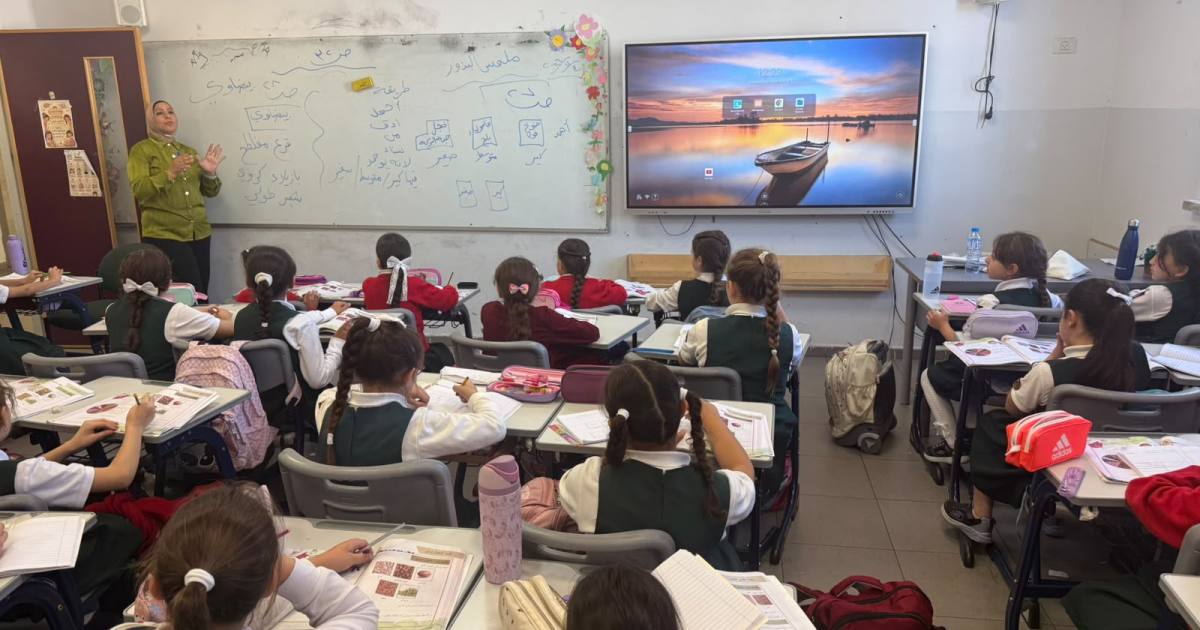
Jamal Shalabi, a 66‑year‑old chemistry teacher from el‑Bireh in the West Bank, has taught in East Jerusalem since 1998, commuting daily through Israeli checkpoints. He was recently informed that he is one of 180 Palestinian teachers whose travel permits to enter East Jerusalem will be revoked when they expire at the end of the 2026‑27 academic year. The revocation of entry permits is a key restriction imposed by Israel on schools in East Jerusalem, a territory it claims as part of a unified Jerusalem but that is internationally regarded as occupied Palestinian territory. Earlier this year, permit issuance was delayed until September 15, two weeks after the school year began, and a similar delay occurred in January. These delays triggered school strikes in East Jerusalem as teachers and students protested the restrictions. Shalabi explained that even when permits are approved, they are highly restrictive: they can only be used during specific hours, teachers cannot leave the school premises, and they are limited to the workplace. Since the Gaza war in 2023, teachers have been unable to visit Al‑Aqsa Mosque for prayers or accompany students on field trips, and they were barred from entering Jerusalem for an entire week during the Jewish holiday of Sukkot.
The permit restrictions accompany broader measures affecting Palestinian education in East Jerusalem. A government plan approved by the Israeli cabinet claims to reduce socioeconomic gaps but also aims to increase the number of Palestinian students studying the Israeli curriculum. Funding for new schools is conditioned on adopting the Israeli curriculum, and teacher training programs are aligned with the Israeli education system. Ir Amim, an Israeli human rights organisation, warned that these policies undermine Palestinian educational autonomy and national identity. The organisation also highlighted a law that bans teachers with degrees from Palestinian institutions, likely worsening the existing teacher shortage. According to Ir Amim, about half of the education budget allocated under the plan is directed toward expanding the Israeli curriculum. Adoption of the curriculum is also a prerequisite for opening new state‑funded schools, creating pressure on schools and parents.
The number of Palestinian students in East Jerusalem studying the Israeli curriculum has risen sharply: from a few hundred 15 years ago to more than 10,000 by 2020, almost 20,000 by 2024, and over 27,000 the following year, according to figures cited by Ir Amim. Palestinian officials estimate that more than 45,000 students—about 38 % of the city’s student population—will be studying the Israeli curriculum in the 2026‑27 academic year.
A principal of an East Jerusalem school, who asked to remain anonymous, told Al Jazeera that the expansion of the Israeli curriculum is the culmination of years of policies aimed at controlling education in the city. He described the policy as an unprecedented threat to Palestinian education, noting that it extends beyond official schools to private and community‑based schools. The principal said the curriculum replaces Palestinian history, geography, and national identity with a distorted version supervised by the municipality. Schools that refuse to introduce Israeli curriculum classes face loss of funding, financial support, and operating licences. The principal also cited a five‑year plan to promote the “Israelisation” of Palestinian education, which includes rigorous oversight, on‑site inspections, classroom monitoring, and searches of students’ bags to confiscate Palestinian textbooks. He added that Israeli authorities intervene in appointing school principals and teachers, revoke licences of non‑compliant staff, and target students for personal social media posts or opinions, using disciplinary committees and police summonses to intimidate staff and students.
Al Jazeera has requested a response from Israeli authorities but has not yet received one.
Classroom shortage remains a critical issue. Ir Amim calculates a deficit of 2,283 classrooms in East Jerusalem. Even if the Jerusalem Municipality’s plans to build new classrooms are fully implemented, a shortfall of about 1,100 classrooms is projected to persist by 2032. The municipality estimates the current shortage at about 1,500 classrooms, a figure Ir Amim disputes as based on outdated data. Ramadan Awad, spokesperson for the Union of Parents’ Committees for Jerusalem Schools, told Al Jazeera that some classrooms hold as many as 42 students. He explained that the shortage creates challenges beyond space: cramped rooms make it difficult for teachers to engage with individual students or monitor academic progress. Some schools are renting any available building, including residential apartments or commercial properties, to convert into schools, but such spaces often lack essential features such as open courtyards, laboratories, and rooms for extracurricular activities.