Politics
2026 Midterms Yield Historic Firsts Across Senate, House and Governor’s Offices
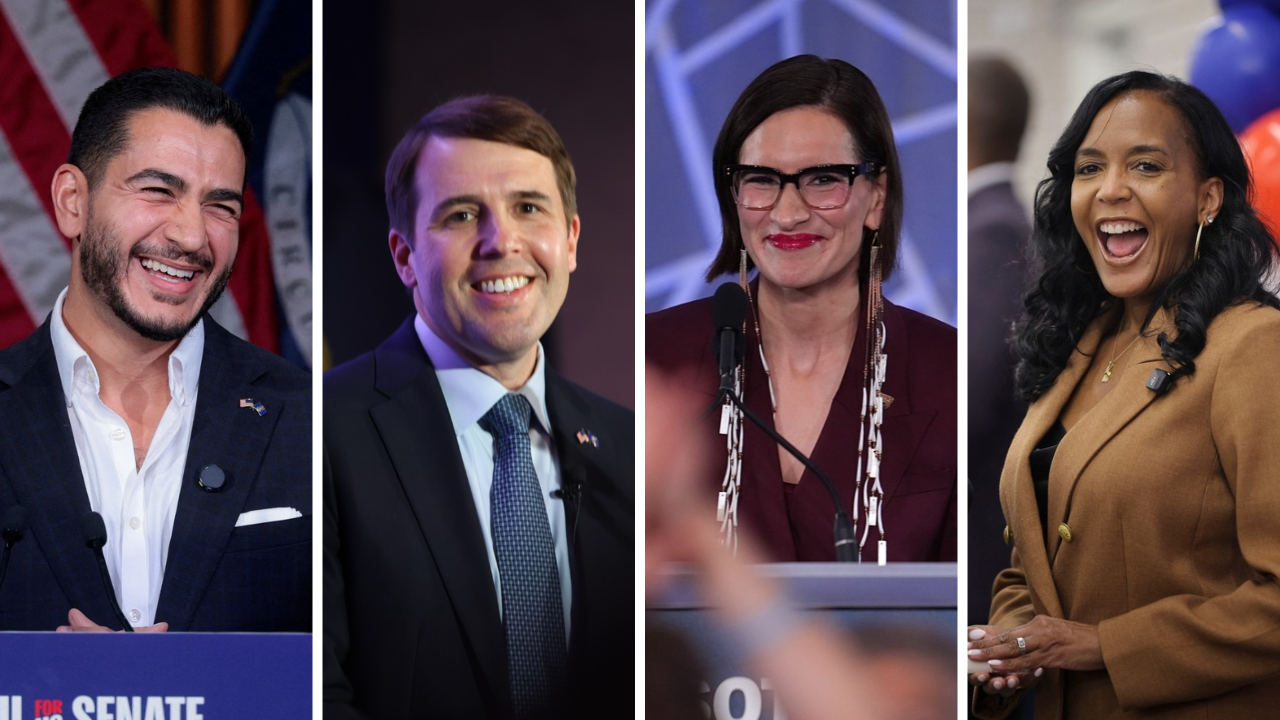
The 2026 midterm elections produced a record number of political firsts. In the Senate, Abdul El‑Sayed of Michigan became the first Muslim elected to the chamber after defeating Republican Mike Rogers. Chris Pappas of New Hampshire became the first openly gay man elected to the Senate, defeating Republican John Sununu. Peggy Flanagan of Minnesota, a member of the White Earth Nation and former lieutenant governor, became the first Native American woman in the Senate. Juliana Stratton’s win in Illinois will make three Black women—Stratton, Angela Alsobrooks of Maryland and Lisa Blunt Rochester of Delaware—serve together for the first time. Annie Andrews of South Carolina became the state’s first woman senator and its first Democratic woman senator. Julia Letlow of Louisiana became the first Republican woman to hold a Senate seat from that state. Scott Colom of Mississippi became the first Black senator from Mississippi since Reconstruction.
In the governor’s race, Keisha Lance Bottoms of Georgia became the first Black woman elected governor in U.S. history, defeating Republican Rick Jackson. Byron Donalds of Florida became the state’s first Black governor. Deb Haaland of New Mexico became the first Native American woman governor. Gina Hinojosa of Texas became the first Latina governor of Texas, ending a 31‑year Republican hold. Xavier Becerra of California became the first Latino elected governor of California. David Crowley of Wisconsin became the state’s first Black governor. Aaron Ford of Nevada became the first Black governor west of the Mississippi River. Amy Acton of Ohio became the first woman elected governor of Ohio and the first Jewish governor in the state’s history. Amy Klobuchar of Minnesota became the first woman elected governor of Minnesota. Marsha Blackburn of Tennessee became the first woman elected governor of Tennessee.
For the first time, five Black governors will serve simultaneously: Bottoms (Georgia), Donalds (Florida), Crowley (Wisconsin), Ford (Nevada) and Wes Moore (Maryland). Amy Acton also became the first governor-elect to publicly speak about surviving childhood sexual abuse.
The Democratic Party won 102 women’s House seats, breaking its own record of 95 and setting a new benchmark for female representation. The election also marked the first time that both California and Texas will have Latino governors at the same time. Four states—Georgia, Minnesota, Ohio and Tennessee—elected women governors for the first time, bringing the total number of women governors in the country to 17, nearly one‑third of all states. New Mexico elected an all‑women‑of‑color gubernatorial ticket, with Deb Haaland and Lieutenant Governor‑elect Stephanie Garcia Richard.
These results reflect a significant expansion of diversity in American political leadership, challenging longstanding assumptions about who can hold public office.
Frequently asked questions
Who became the first Muslim elected to the U.S. Senate in 2026?
Abdul El‑Sayed of Michigan.
Which governor became the first Black woman elected governor in U.S. history?
Keisha Lance Bottoms of Georgia.
How many women were elected to the U.S. House of Representatives in 2026?
102 women.