Technology
Instagram Users Turn to ChatGPT to Create AI-Generated 1980s-Style Portraits
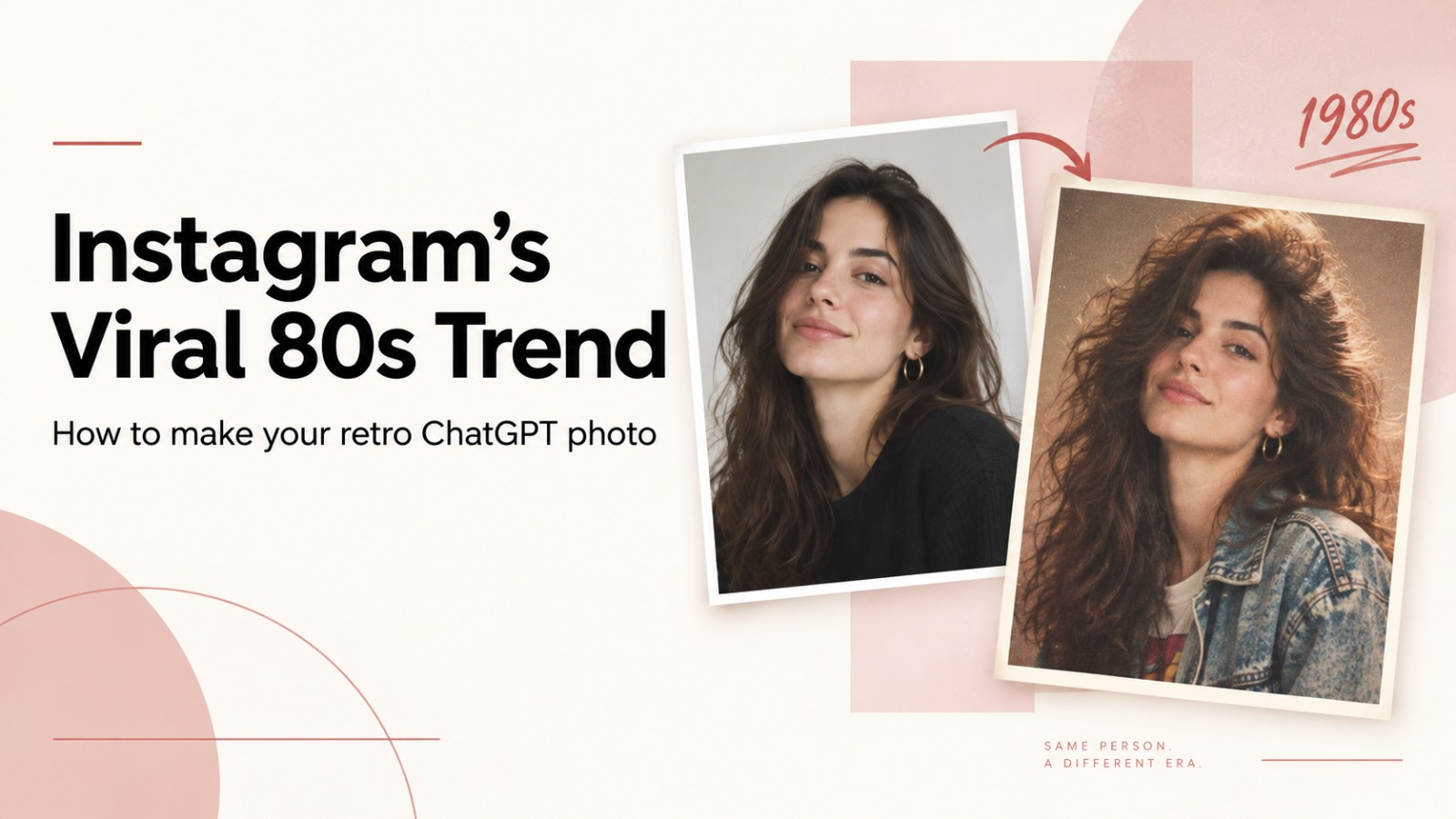
A new AI-driven photo trend is spreading across Instagram, with users generating portraits designed to resemble photographs taken in the 1980s. Rather than applying a vintage filter to an existing image, people are uploading their photos to ChatGPT and asking the tool to reconstruct the entire scene, including hairstyle, clothing, accessories, background and photographic texture, to match the decade.
The trend is spreading partly because users share their prompts through Instagram Stories, often paired with the platform's "Add Yours" sticker, encouraging others to create their own versions.
The resulting images vary widely in style. Some resemble glamorous Bollywood portraits, while others look like formal studio photographs, grainy film stills, vintage magazine covers or old family snapshots. Common stylistic elements include warm lighting, stronger colours, soft-focus effects and faded textures.
For Indian-inspired portraits, styling often reflects recognisable elements of the era. Women are pictured in colourful sarees, voluminous hairstyles and statement jewellery, while men's portraits may feature loose or tailored shirts, high-waisted trousers, moustaches and styled hair.
A key part of the trend is ensuring the image looks like it could plausibly have been taken in the 1980s rather than appearing as a modern selfie with an aging filter. Prompts shared by users often request analogue-style film grain, faded colours, soft focus and natural skin texture, while explicitly excluding smartphones, modern clothing, contemporary vehicles and other present-day objects.
Another common instruction is to preserve the subject's recognisable facial features, skin tone and overall identity while altering the surrounding visual elements. Some prompts specifically ask the AI not to alter facial structure or shape, ensuring the final image remains identifiable as the original person, even as their clothing, hairstyle and setting change.
Users are also becoming increasingly specific with their requests. Instead of a general instruction to "make this look like the 1980s," people are specifying particular styles such as Indian studio portraits, Bollywood looks, vintage wedding photos, disco themes or magazine-style shoots. Suggested settings include arcades, gyms, beaches or birthday parties, along with specific accessories, hairstyles and moustaches.
The process for creating these images is relatively simple. Users upload a clear photograph, ideally front-facing or slightly angled with the face visible, though professional photos are not required. They then describe the desired transformation, including clothing, hairstyle, accessories, setting, lighting and texture. If the first result isn't satisfactory, users can refine the image further rather than starting over, adjusting individual details until the desired period-appropriate look is achieved.
Despite the convincing results, users are advised to closely examine the final images, as AI-generated portraits can introduce errors in facial details, jewellery, clothing patterns or background text. It is recommended that such images not be presented as authentic archival photographs. Privacy concerns are also noted, with advice against using photos containing sensitive documents, private locations, or images of other people without their consent.
The trend reflects a broader interest in imagined personal history, offering users a way to visualize an alternate version of themselves from a decade they may only know through media, fashion or old family photos. With a single image, a detailed prompt and a few rounds of refinement, users can place a recognisable face into a completely different visual era.