India
Jailed Scholar Sharjeel Imam Sparks Debate Over Muslim Representation in India
By Nadim Asrar
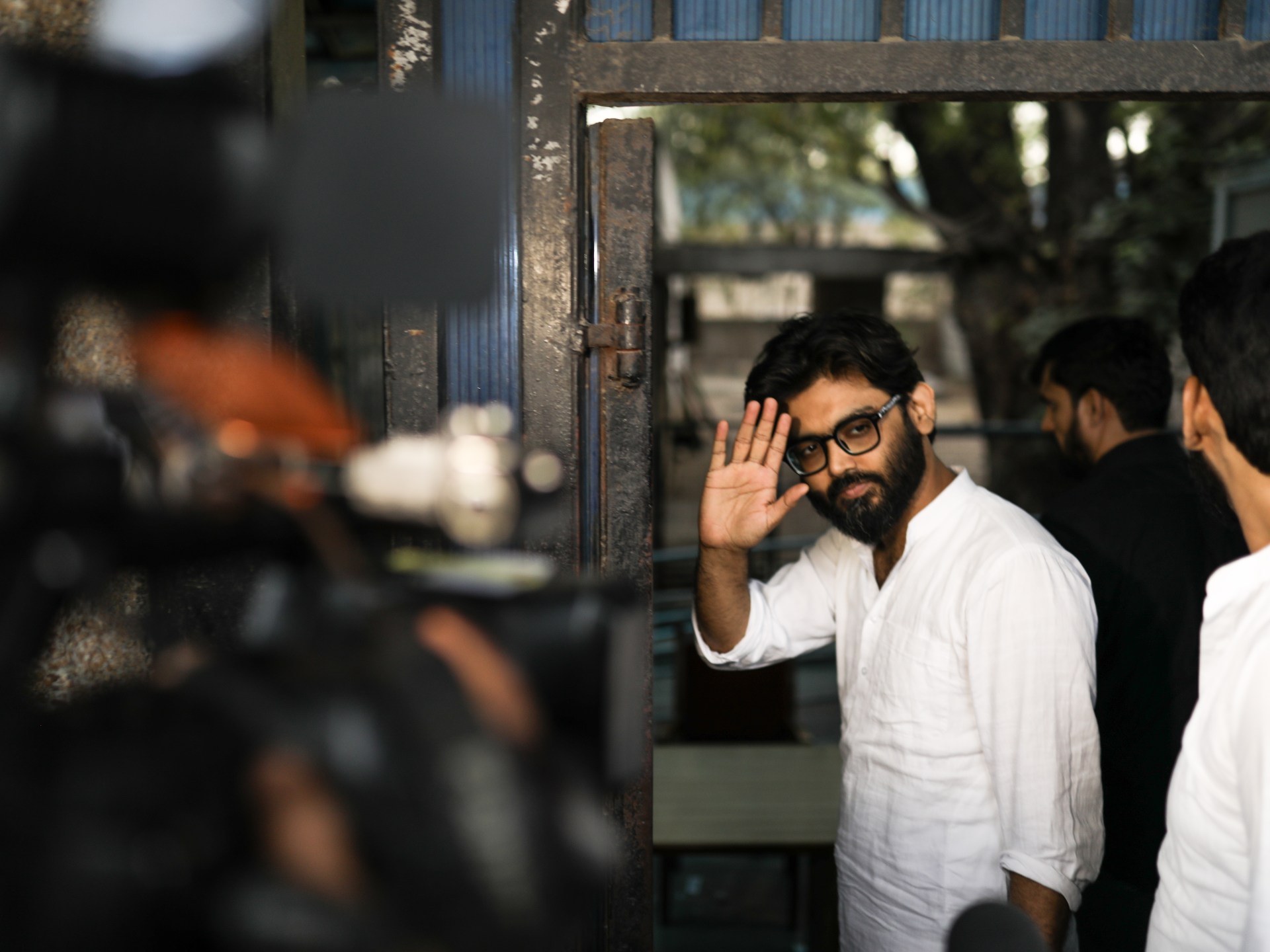
Sharjeel Imam, a 38‑year‑old Muslim scholar from Bihar, gave a lengthy interview to The Quint from his New Delhi prison cell on September 29. In the interview, Imam questioned India’s national identity and its treatment of the country’s Muslim minority, which makes up about 14 percent of India’s 1.4 billion population. He said there are roughly 210 million Muslims in India and that the nation’s constitution, according to him, centralises power and promotes a form of secularism that is “particularly Islamophobic and parochial.” Imam argued that democracy is used to deny Muslims political representation and rights.
Imam earned a computer‑science degree from IIT Bombay and worked as a software engineer before pursuing a PhD in political history of Indian Muslims at Jawaharlal Nehru University (JNU). In 2019, the Narendra Modi government passed the Citizenship Amendment Act (CAA), which fast‑tracks citizenship for non‑Muslim refugees from neighbouring countries. The United Nations described the CAA as “fundamentally discriminatory” against Muslims. The law sparked nationwide protests, most notably a week‑long sit‑in at Shaheen Bagh in New Delhi. Imam was a chief organiser of that sit‑in and was arrested in January 2020 on charges of inciting violence. He was later charged with rioting, murder, attempted murder, sedition, and “promoting enmity on grounds of religion” under several laws, including a stringent anti‑terror law.
Nearly a dozen Muslim students and activists, including JNU scholar Umar Khalid, were also arrested and remain in jail without trial. Rights groups have called their continued incarceration a “gross abuse of power” and a “glaring example of judicial oversight.”
In his interview, Imam criticised Mahatma Gandhi as a “fascist” for making the Congress party an “essentially Hindu party” and accused Jawaharlal Nehru of “falsehood and mythmaking” in his book *The Discovery of India*. He also accused the RSS, founded in 1925, of attempting to turn a secular India into an ethnic Hindu state. Imam said secular and Hindutva frameworks share the same core ideas of centralisation and denial of power sharing.
Legal scholar Mohd Zeeshan Ahmad responded in The Quint, saying Imam raises serious historical and ideological questions but that equating secularism with Hindutva is unpersuasive. He warned that Imam’s language risks portraying Muslims as a homogeneous bloc and obscures internal differences.
Irfan Ahmad, a professor at Ibn Khaldun University in Istanbul, told Al Jazeera that Imam is right to question whether Congress and the BJP differ in their approach to secularism. He argued that Indian nationalism has always contained an “ethno‑racist‑Hindu” element and that the difference between the two parties is similar to that between Republicans and Democrats in the United States.
Imam suggested that India adopt “constitutional republicanism” with decentralised power and community rights. He argued that the 1947 partition, which created Pakistan, was forced by the Congress and that Muhammad Ali Jinnah and Muhammad Iqbal were democratic leaders who foresaw the marginalisation of Muslims under a first‑past‑the‑post system.
Critics of Imam’s views include a columnist who calls him an “Islamist agenda” demanding a “Pakistan within India.” Political analyst Asim Ali described Imam’s imprisonment as “Kafkaesque” and questioned the distortion of historical facts in Imam’s account.
Umar Khalid, a left‑wing activist also jailed in New Delhi, is often compared to Imam. Khalid does not reject the Indian constitution and frequently cites Gandhi’s non‑violent resistance. He has received international support, including from New York City Mayor Zohran Mamdan and the Ireland‑based human‑rights organisation Front Line Defenders.
Irfan Ahmad noted that global figures tend to speak for Khalid but remain silent about Imam, who uses an Islamic vocabulary in his politics. He warned that the current regime may suppress voices like Imam’s.
The interview and the surrounding debate highlight ongoing tensions over Muslim representation, secularism, and nationalism in India.