India
Agnipath Scheme Revamp to Trigger Periodic Financial Reviews, Officials Say
By Rahul Singh
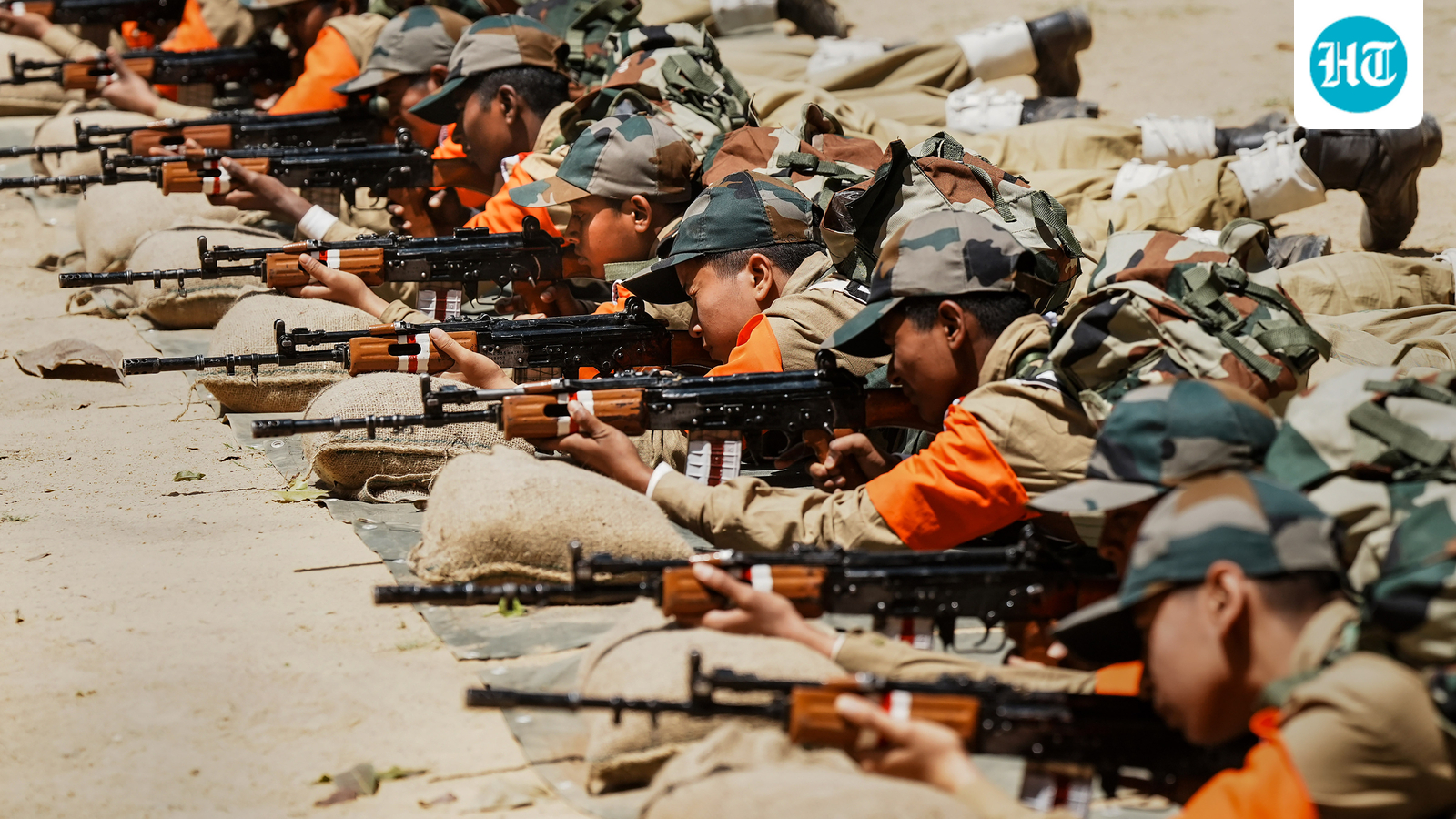
The revamped Agnipath recruitment model, which guarantees full‑term military service to all Agniveers, will undergo periodic financial reviews, an official aware of the matter said on Thursday. The scheme, approved by the Centre on Wednesday, allows Agniveers who do not qualify for the initial four‑year service to continue in uniform for two additional years at higher salaries. After the extended period, they can enrol as regular soldiers, becoming eligible for pensions, gratuities and other benefits such as medical and canteen facilities. All Agniveers will become permanent after the two‑year extension, subject to eligibility criteria and individual consent.
The officials said higher salaries and future pension and gratuity payouts are expected to increase government expenditure, but funding will not be a constraint. One official added that the higher outgo would be partly offset by savings in training costs, as the reset eliminates the need for additional training and keeps expenditure in check. "In any case, national security comes above fiscal considerations," the official said.
The financial implications will be reviewed periodically, a second official said.
The move comes weeks before the three services are set to release 75% of Agniveers from the first batch, retaining only the 25% selected on merit for another 15 years under the earlier provisions. Crucial assembly elections are scheduled early next year in five states, including Uttar Pradesh, Uttarakhand and Punjab, which contribute substantial numbers to the forces.
Chief of Defence Staff General N.S. Raja Subramani, speaking at a joint cabinet briefing with Union Minister Ashwini Vaishnaw on Wednesday, said the government’s focus is on boosting the armed forces’ operational efficiency, meeting organisational requirements and fulfilling the aspirations of Agniveers. "I want to say only one thing about the budget. As far as the Indian defence forces and the government are concerned, there has never been any shortage, and the primary aspect has been the operational efficiency and the ability of the armed forces to be fully ready at all times. There is no issue there," he said.
Managing a burgeoning wages and pension bill was a key feature of the original scheme introduced in June 2022. The government allocated ₹17,396 crore for the Agnipath scheme in the defence budget for 2026‑27, a 58% jump over the ₹11,039 crore estimate for 2025‑26. The 2024‑25 outlay for the scheme across the three services was ₹7,471 crore. The army’s share in this year’s budget for the scheme is ₹15,173 crore, the navy’s ₹1,150 crore, and the air force’s ₹1,072 crore.
The defence budget for 2026‑27 includes a pension outlay of ₹1.71 lakh crore, up from ₹1.60 lakh crore in 2025‑26. In February, India increased its defence spending by more than 15% following Operation Sindoor, setting aside ₹7.85 lakh crore for the sector in the Union Budget for 2026‑27. This included a capital outlay of ₹2.19 lakh crore to boost capabilities with new weapons and systems, including fighter planes, transport aircraft, helicopters, warships, submarines, artillery guns, smart weapons, missiles, rockets and various unmanned systems. The defence budget accounts for 14.67% of overall government expenditure, the highest among ministries.
If the scheme had remained unchanged, around 18,300 Agniveers would have been discharged from the three services by year‑end. The first batch comprised about 19,000 Agniveers in the Army, 2,850 in the IAF and 2,550 in the Navy, according to official data.
Frequently asked questions
How long can Agniveers who do not qualify for the initial four‑year service extend their service?
They can continue in uniform for two additional years at higher salaries.
What is the budget allocation for the Agnipath scheme in the 2026‑27 defence budget?
₹17,396 crore.
What is the projected increase in pension outlay for the defence budget in 2026‑27?
₹1.71 lakh crore, up from ₹1.60 lakh crore in 2025‑26.