Sports
Australia’s Cape Town Collapse Highlights Need for Selectors to Rethink Batting Lineup
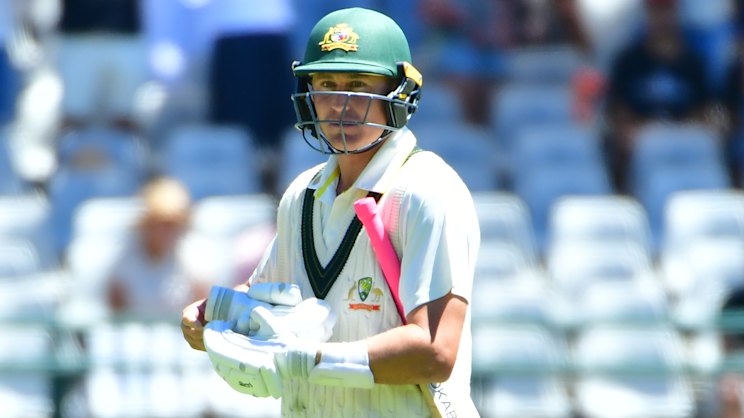
Australia’s 111‑run collapse in the fourth innings at Newlands was a stark reminder that the team’s batting has been underperforming for some time. The loss, which came after a substantial first‑innings lead, exposed a lack of resilience in the middle order and raised questions about the selectors’ reliance on experienced first‑class players who appear reliable on paper but lack the grit needed in Test cricket.
Pat Cummins has defended the side as a very good one, but the failure to trouble South Africa at crucial moments suggests otherwise. The Proteas’ strategy in the second innings was to let short balls go and force Australians to bowl to them, yet the Australian batting did not carry its weight. The scoreboard, which shows a 111‑run total, leaves little room for interpretation.
The decision to bowl first on a good Cape Town pitch was widely criticized, and Kagiso Rabada’s run‑through of the top order was seen as a major factor in the collapse. The subsequent batting on a surface that historically helps spin late added to the double whammy. Australia had beaten South Africa without Rabada in Durban, but the toss and pitch conditions proved decisive.
Selectors have long patched the batting with seasoned first‑class players, resulting in a middle order heavy with age and short on resilience. Names such as Michael Hussey and Adam Gilchrist are often cited in defense of this approach, but both were blocked by the national lineup and could not build a selection policy around them.
Matt Renshaw’s 369 runs at 61.5 in the tour’s first Test was the best news, yet his journey to the top has been fraught with setbacks. He made his debut at 20, scored 184 against Pakistan, was dropped three times, and only returned to the side nine years later. His performance in Durban, where he scored 190 off 397 balls, demonstrated his ability to build an innings when given the chance.
Renshaw’s case highlights the need to give players a clear path to the top of the order. While he batted at five in Durban, his game is built for opening. The identity of his partner is the next problem. Travis Head thrives at home on pace and bounce but struggles on slower pitches overseas. Cameron Green’s footwork also raises concerns, especially against spin.
The selectors must also address the decline of older players such as Marnus Labuschagne, who may be experiencing an elite performance decline. A pragmatic approach would be to drop him for the summer and return him to domestic cricket, removing the pressure of video analysis and endless tinkering.
Looking ahead, Cricket Australia could tie funding and academy resources to the development of young players in the top four states. Players such as Oliver Davies, Sam Konstas, and Campbell Kellaway show promise and could help rebuild the batting lineup.
The collapse at Newlands was not only a failure of talent but also of a system that fears risk and relies on domestic veterans while first‑class cricket decays. If Cricket Australia and the states take this as a wake‑up call, it could set the country on the right path for the future.
Frequently asked questions
What was the score of Australia's collapse at Newlands?
Australia collapsed for 111 runs in the fourth innings at Newlands.
Who was identified as a major factor in the collapse?
Kagiso Rabada’s run‑through of the top order was seen as a major factor.
Which player had the best performance in the tour's first Test?
Matt Renshaw scored 369 runs at 61.5 in the tour’s first Test.