India
Delhi Air Quality Worsens, Stubble Burning Drives Pollution to Severe Levels
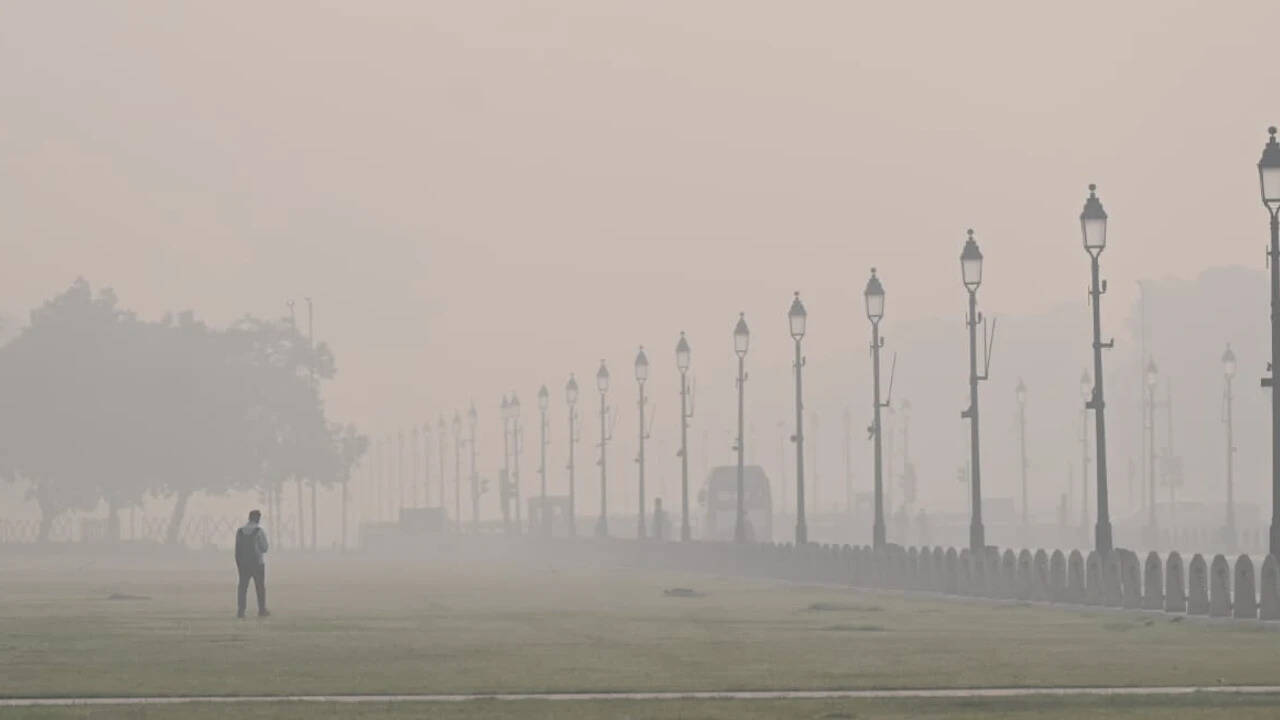
Delhi’s air quality deteriorated further on Wednesday, moving closer to the severe category. Local emission sources accounted for 31% of the pollution, while external sources contributed 69%. Stubble burning’s share rose sharply to 16.2% from 8.2% on Tuesday. The air quality index (AQI) reached 377 at 4 pm, up from 350 the day before. Pollution monitoring agencies expect levels to rise to severe by Friday.
IITM’s forecast indicates that the share of pollution from stubble burning in neighboring states is set to increase, with Decision Support System models predicting a rise to 20% by Friday—surpassing vehicular pollution, which has so far dominated the city’s emission inventory.
The Commission for Air Quality Management (CAQM) issued show‑cause notices to district commissioners and SSPs of five Punjab districts—Barnala, Bathinda, Fazilka, Jalandhar and Faridkot—over stubble burning on Wednesday. Notices were also sent to Gurdaspur and Kapurthala districts on Tuesday.
The Air Quality Early Warning System by IITM projects that the air quality will remain in the very poor category on Thursday and will enter the severe category for about six days starting Friday.
Under Delhi government’s new anti‑pollution framework, private construction has been banned from November 1 to January 31, with a blanket ban between December 10 and January 20. The framework also prohibits entry of non‑Delhi‑registered BS‑IV or below vehicles under GRAP‑II. Despite these restrictions, AQI in many city areas has already reached severe levels.
Areas that slipped into severe levels include IIT Delhi (AQI 455), Jahangirpuri (449), Punjabi Bagh (446), Mundka (439), Vivek Vihar (436), DTU (434), Rohini (432), Narela and Alipur (429), Sonia Vihar (427), Pusa (426), RK Puram (424), Bawana (417), Dr Karni Singh Shooting Range, Siri Fort, North Campus and Patparganj (412), and ITO (411).
Anumita Roychowdhury, executive director of CSE, said, “While transport remains the top local polluter, the spike has been intensified by regional farm fires surging during the last few days, pushing stubble smoke’s contribution to over 8 to 11%. Trapped local emissions and weather stagnation drive this crisis, with farm fires acting as a serious add‑on.”
The city’s sky was hazy and partly cloudy on Wednesday, with the Meteorological Department expecting shallow fog and mist on Thursday morning. The maximum temperature at Safdarjung base station was 29.8 °C, slightly below normal, compared with 29.1 °C the day before. The minimum temperature was 16.1 °C, slightly above normal, versus 16.4 °C the previous day. Temperatures are expected to hover between 27–29 °C and 14–17 °C on Thursday.
Frequently asked questions
What was Delhi's AQI at 4 pm on Wednesday?
The AQI reached 377 at 4 pm.
Which districts in Punjab received show‑cause notices for stubble burning?
Barnala, Bathinda, Fazilka, Jalandhar, Faridkot, Gurdaspur, and Kapurthala.
Which Delhi areas reached severe AQI levels on Wednesday?
IIT Delhi (455), Jahangirpuri (449), Punjabi Bagh (446), Mundka (439), Vivek Vihar (436), DTU (434), Rohini (432), Narela and Alipur (429), Sonia Vihar (427), Pusa (426), RK Puram (424), Bawana (417), Dr Karni Singh Shooting Range, Siri Fort, North Campus and Patparganj (412), and ITO (411).