Sports
F1 Teams Adapt Cooling Systems for Mexico City’s High Altitude
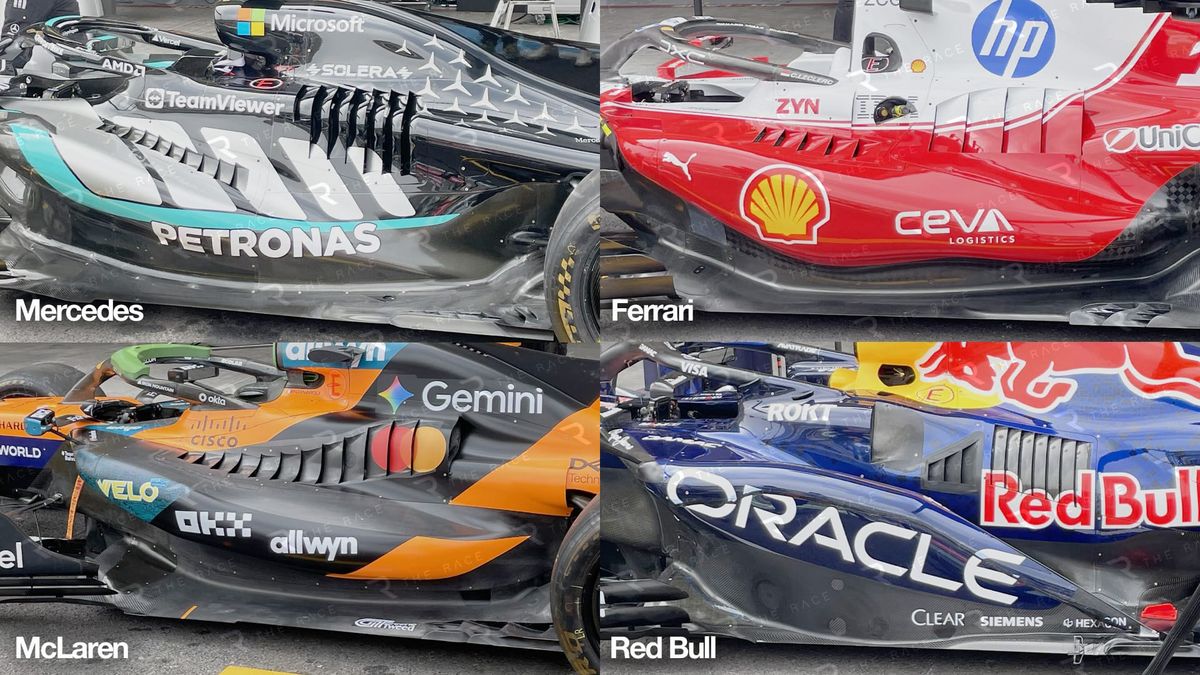
The Mexico City circuit is unique in Formula 1 because its 2,240‑meter altitude means the air is about 25 % less dense. This reduces downforce and drag, allowing higher top speeds but also requiring longer braking distances that generate more heat. Turbocharged engines must work harder, keeping power output similar while the heat rejection remains high, so cars need roughly 25 % more cooling. The high‑energy layout also increases heat in the battery pack and control systems.
Teams cannot easily change the inlet area, which is part of the side‑impact structure, so they focus on cooling exits. At the rear, McLaren has raised the section above the exhaust outlet to enlarge the exit area. Mercedes, which ran a spec‑two outlet at Austin, has kept a triangular opening by lifting the upper engine cover, especially in the centre. Ferrari has enlarged the side exits, while Red Bull’s rear outlets remain largely unchanged.
The most critical cooling changes are in the side‑pod and engine‑cover louvre outlets. These affect airflow and overall efficiency. Mercedes and Ferrari use two well‑defined louvre positions, typically where the internal radiator flow is weakest. McLaren’s design places the louvres in a more aesthetically pleasing arrangement that still meets cooling needs. Red Bull appears to have made the fewest adjustments, possibly because it was over‑cooled at other races.
Brake cooling is also a challenge, as overheating can only be mitigated by reducing usage, which forces more lifting and coasting. Determining which team has achieved the best balance of cooling and aerodynamic efficiency will only become clear after the race.
Frequently asked questions
How does Mexico City's altitude affect F1 cars?
The 2,240‑meter altitude means the air is about 25 % less dense, reducing downforce and drag, allowing higher top speeds but requiring longer braking distances that generate more heat.
What cooling changes did McLaren implement for the Mexico City race?
McLaren raised the section above the exhaust outlet to enlarge the exit area at the rear.
Which team made the fewest cooling adjustments for Mexico City?
Red Bull’s rear outlets remain largely unchanged, indicating the fewest adjustments.