World
Settlers Expand on Hebron Rooftops, Threatening Palestinian Businesses
By Mosab Shawer
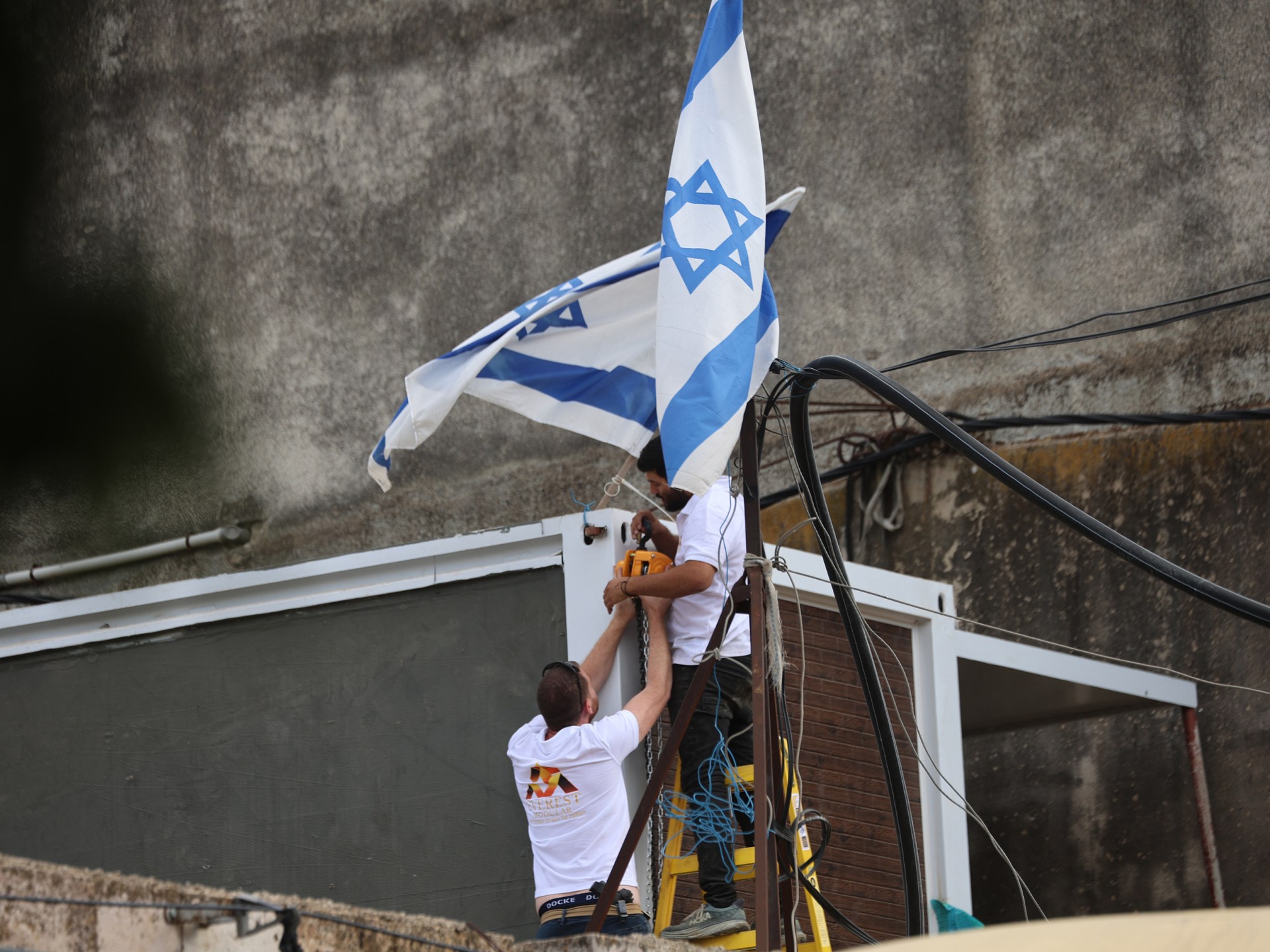
Hebron’s Old City has seen a growing Israeli settler presence since 1978, with about 500 settlers living there despite the area’s illegal status under international law. In recent months, settlers have erected prefabricated structures on the rooftops of commercial buildings, including a new outpost that will house 20 settler units. The expansion has raised concerns that the Palestinian character of the Old City could be altered.
Yusef al‑Khatib, 65, inherited a tailoring shop from his father and has worked there for nearly 60 years. He says the shop is his livelihood and that it has enabled him to raise his children and provide them with an education. Al‑Khatib noted that the new rooftop settlement above his shop creates uncertainty about the future of his business.
Bader al‑Daour al‑Tamimi, who runs a shop with four children attending university, has seen settlers take over the rooftop above his shop. He fears that he may lose access to his shop and the only source of income for his family. He said, “Shop owners have come to expect that they may not be able to open their shops the following day, because of the constant threats from settlers and soldiers.”
Adel Mustafa al‑Shuyukhi, 67, also inherited a shop in the Old City and has worked there for about 50 years. He described the shop as part of his family’s history and said he wants his children to continue running it after he dies. He added, “Despite all the restrictions, we are standing firm and do not want to leave our shops.”
Issa Amro, 46, anti‑settlement activist and founder of Youth Against Settlements, places the current expansion in the context of the 1994 Ibrahimi Mosque massacre and the 1997 Hebron Protocol, which divided the city into H1 (80 % under Palestinian Authority control) and H2 (20 % under Israeli security control). He noted that settlers now occupy areas that were previously closed to Palestinians, including the Old Municipality building and commercial rooftops, and that Israeli flags on settler buildings are seen as an attack on Palestinian identity.
The expansion of settler outposts and the replacement of Arabic street names with Hebrew ones are part of a broader effort that activists say aims to empty the area of its Palestinian residents and expand the settlement presence.
Frequently asked questions
How many settlers live in Hebron’s Old City?
About 500 settlers live there, despite the area’s illegal status under international law.
What is the new settler outpost in Hebron’s Old City?
The new outpost will house 20 settler units on prefabricated rooftop structures.
What does the 1997 Hebron Protocol say about the city's division?
It divided the city into H1, where 80% is under Palestinian Authority control, and H2, where 20% is under Israeli security control.