World
Bedouin Shepherd’s Stone Throw Uncovers Dead Sea Scrolls
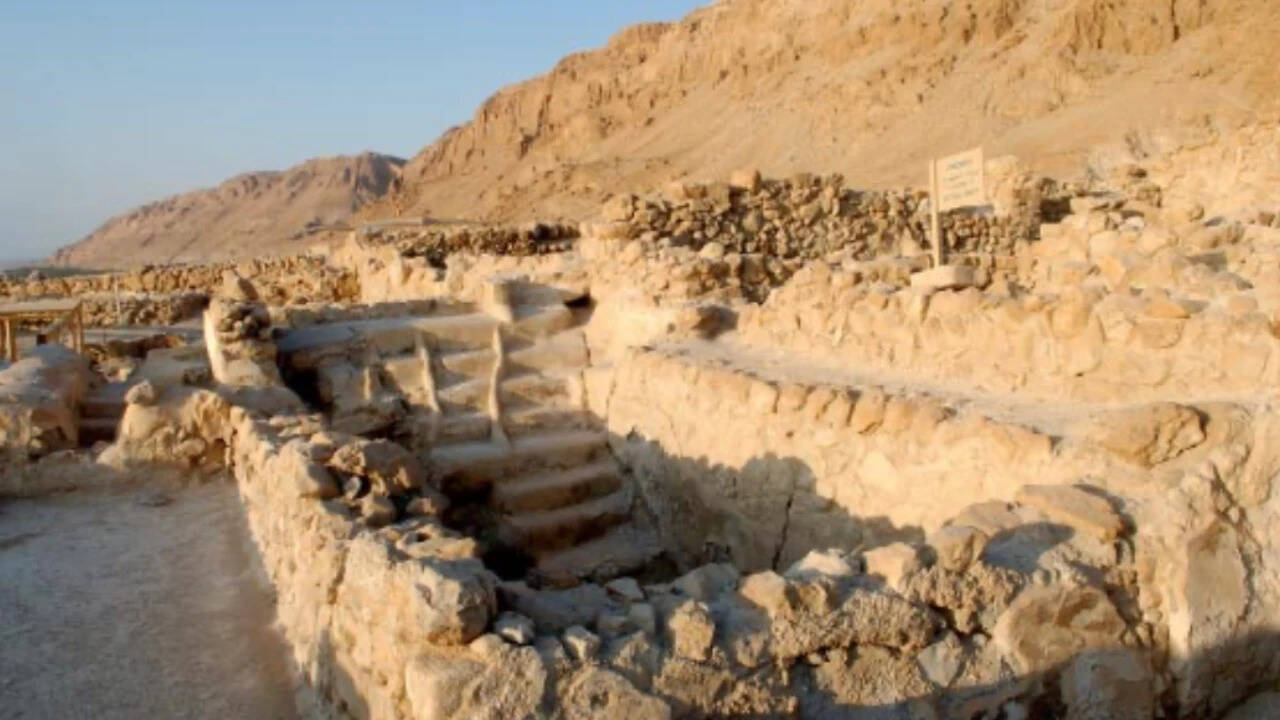
In 1947, a Bedouin shepherd named Mohammed edh‑Dhib was searching for a stray animal near the cliffs of the Judean Desert close to Qumran when he threw a stone into a cave. The stone struck a pottery jar, producing a sound that made him curious. The incident led to the discovery of a collection of ancient manuscripts that had been hidden for centuries, giving scholars a glimpse into the religious life and history preserved in the scrolls.
The manuscripts, later known as the Dead Sea Scrolls, were first found in a cave that yielded seven nearly complete scrolls. They passed through local hands before their historical significance was recognised. Between 1947 and 1956, researchers uncovered manuscripts and fragments in 11 caves in the area, producing thousands of fragments that revealed details about the manuscripts’ materials and production.
The scrolls are primarily written in Hebrew, with some in Aramaic and Greek. They include copies of biblical books, prayers, hymns, religious interpretations and other writings associated with Jewish communities of the period. Some texts are among the oldest surviving copies of books that later formed part of the Hebrew Bible.
Dating from the third century BCE to the first century CE, the scrolls provide insight into the religious ideas, practices and disagreements of the Second Temple period. They have helped scholars examine the development of biblical literature and the historical setting in which early Christianity emerged.
Archaeologist Roland de Vaux, who excavated the nearby settlement of Qumran, associated the site with a Jewish religious community often identified as the Essenes, though the precise relationship between the settlement, the caves and the groups that produced or collected the texts remains debated.
The dry conditions of the Judean Desert preserved the manuscripts for nearly two millennia, although many were recovered only as fragments. Researchers have painstakingly pieced together different sections to interpret them as a whole.
Sites near the Dead Sea, including Masada, Ein Gedi and Qumran, have also yielded ancient manuscripts and fragments. The Dead Sea Scrolls were exhibited by the Library of Congress in 1993, bringing their significance to a wider audience. The accidental discovery has provided insights not only into what was written nearly 2,000 years ago but also into the local arts, communities and crafts involved in their creation.
Frequently asked questions
Who discovered the Dead Sea Scrolls?
Bedouin shepherd Mohammed edh‑Dhib discovered them in 1947 when he threw a stone into a cave near Qumran.
In what languages are the Dead Sea Scrolls written?
The scrolls are primarily written in Hebrew, with some in Aramaic and Greek.
What time period do the Dead Sea Scrolls date from?
They date from the third century BCE to the first century CE.