India
Odisha Weaver Spends 30 Days on Each Patta Saree, Trains 200 Women to Earn Rs 10,000 Monthly
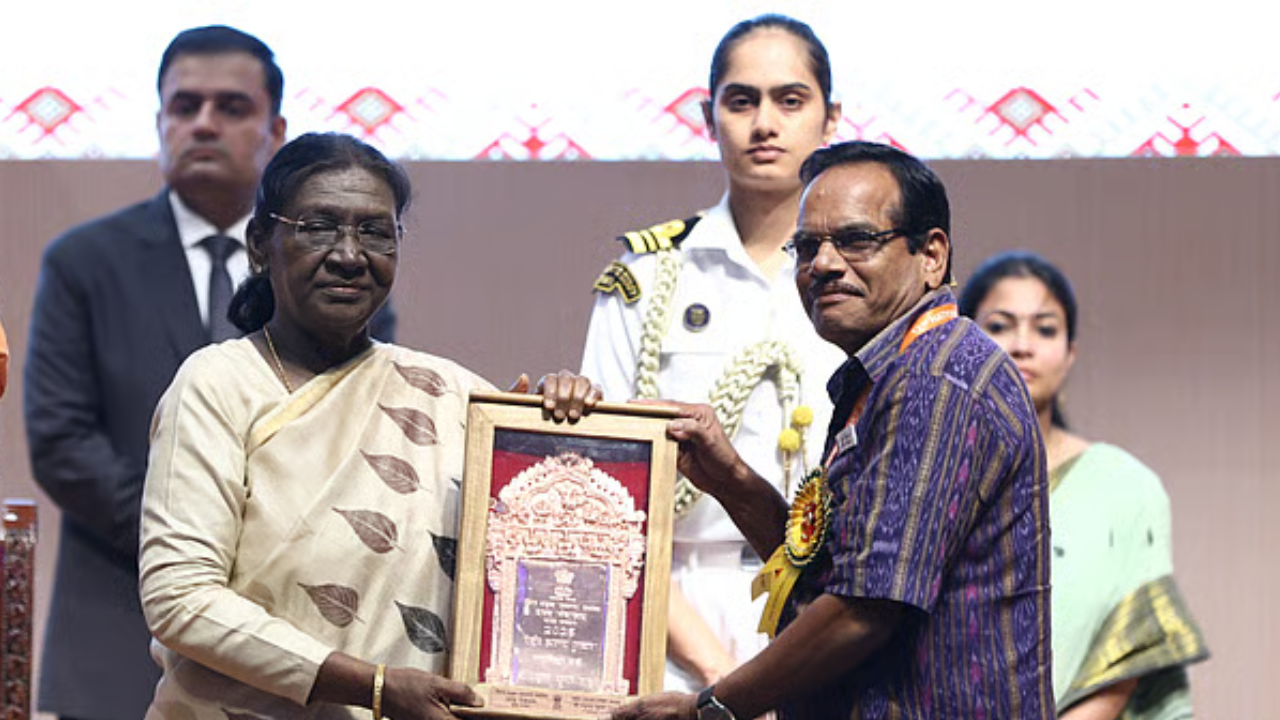
Prafulla Kumar Sahoo, 59, from Dodunda Singipur village in Odisha’s Jagatsinghpur district, spends about 30 days to weave a single‑count Patta saree, including preparation. The craft uses fine cotton yarn, hand‑inserted weft threads, and traditional motifs such as geometric designs and temple borders. Sahoo has practiced the technique for nearly 45 years and has also trained more than 200 unemployed women and young people in basic weaving and jalla dobby techniques. Some of his trainees now earn between Rs 10,000 and Rs 12,000 a month.
Sahoo’s work has been recognised with the National Handloom Award 2025, presented by President Droupadi Murmu in August 2026, and the Tantakruti Award from Odisha Chief Minister Mohan Charan Majhi in 2025.
The Patta saree, made from 80s single‑count cotton yarn, measures 6.20 metres in length (including the blouse piece) and 1.22 metres wide. It takes about 30 days to complete and is priced at Rs 12,599.
Sahoo is associated with the Netaji Weavers Cooperative Society Ltd in Dodunda Singipur, which supplies raw materials and purchases finished products. The cooperative sells the sarees and shirting to organisations such as the State Agency for Development of Handloom Clusters, Boyanika and Sambalpuri Bastralaya, allowing artisans to work without investing in yarn.
Sahoo earns roughly Rs 20,000 to Rs 25,000 a month from weaving and about Rs 20,000 from training. His training programmes, lasting six months, cover basic weaving and jalla dobby techniques and have reached villages across Jagatsinghpur, Boudh, Nabarangpur, Koraput, Gunupur, Athagarh, Dhenkanal and Kendrapara.
Rupashree Behera of Odisso village, who joined Sahoo’s programme, now earns between Rs 10,000 and Rs 12,000 a month after learning to weave sarees and shirting in various designs.
Sahoo stresses that awards alone cannot secure the future of traditional weaving. He calls for more training opportunities, exhibitions, public awareness and stronger market connections to help artisans earn better and attract younger people to the craft.