India
Family‑Specific License Plates Become a Tradition in Kolhapur Village
By Sunanda Mehta, Pavan Khengre
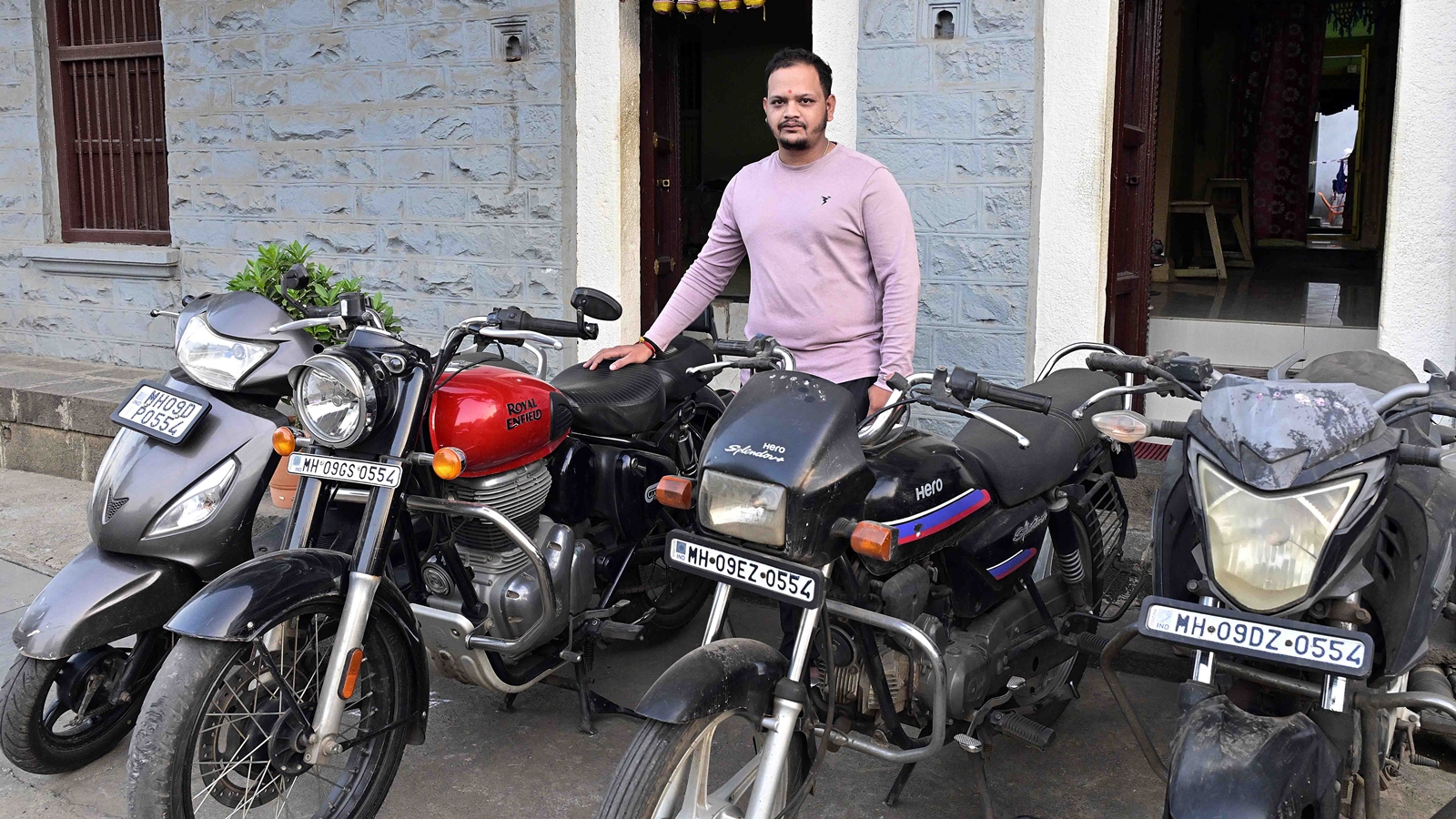
In Prayag Chikhali, a village in Maharashtra’s Kolhapur district, most of the 1,900 households have chosen special registration numbers for their vehicles. The practice began in 1990 when local farmer and politician Pandurang Yadav selected the number 7777 for his first vehicle and continued to use it for all his cars and two‑wheelers. Neighbours soon followed, and today about 75 % of residents have adopted the trend.
Shivtej Shankar Yadav (27) and his family own eight vehicles—six motorcycles, one scooter and one car—all bearing the number 0554. Yadav says the digits resemble his initials, SSY, when written in a certain way. Neighbor Sajrao Salunke, who runs a hair‑cutting salon, has three two‑wheelers with the number 1314, which sums to 9, his lucky number. The Dalvi family, a farming household, owns 11 vehicles, including a car and an electric scooter, all marked 8282; the patriarch, 72, chose the number for its rhythmic sound in Marathi.
Other families follow similar patterns. Baburao Patil (45), who runs a jaggery business, owns four two‑wheelers with the number 7000, citing the luck of 7. Sarpanch Rohit Patil (33) has three vehicles with 3500, a number his grandfather chose 30 years ago. Patil, a clerk at Kolhapur’s Gokul Dairy, says the number is both an identity and a lucky charm.
The village’s vehicle fleet is estimated at 3,000–4,000. Residents book the desired number with the Regional Transport Office (RTO) before purchasing a vehicle. Special or “VIP” numbers carry an extra fee, and people in Chikhali are willing to spend between Rs 5,000 and Rs 50,000 for their chosen plates.
The Kolhapur RTO holds regular auctions for special numbers. Deputy Regional Transport Officer Manoj Gajannan Otari reports that the new car series received 345 applications on its first day, while two‑wheeler applications are much higher. When multiple applicants seek the same number, the RTO invites demand drafts and awards the number to the highest bidder, opening the envelope in front of all applicants for transparency. Auctions are more frequent during Dussehra and Diwali, when new series are announced. Otari notes that numbers containing 9 or summing to 9 are popular because Kolhapur registrations begin with MH09.
Sanjeev Bhor, an RTO officer, observes that in cities people often choose numbers like 1 or 1000, whereas in Prayag Chikhali residents prioritize family numbers, turning them into a status symbol. Many villagers now also match their mobile phone numbers to the last four digits of their vehicle plates. For example, the sarpanch’s mobile ends with 3500, the same as his vehicles.
The trend, rooted in family identity and perceived luck, has become a defining feature of Prayag Chikhali, with the village known for its branded numbers.