World
France’s Recent Unrest Reflects Historical Pattern of Social Violence
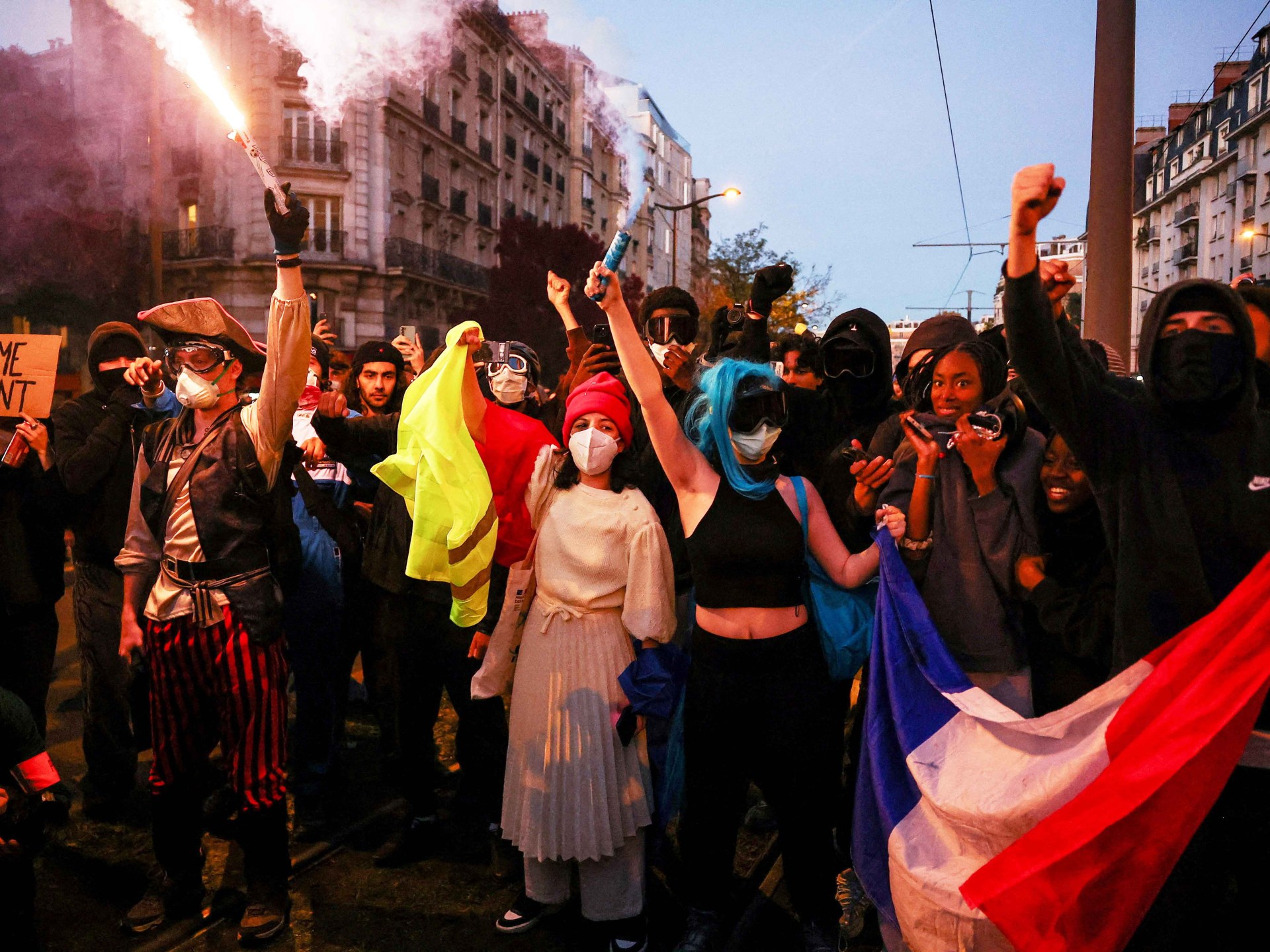
For several weeks, international media have focused on images of burning buildings and damaged shopping streets in France, labeling the country as ‘burning’ and in turmoil. The violence reported is part of a broader student movement demanding better educational conditions. The term ‘violence’ is often used indiscriminately to describe broken shop windows, police injuries to demonstrators, cars set on fire, or shots fired at crowds, conflating material damage, attacks on people, revolt, and repression. Brazilian archbishop Dom Helder Camara distinguished three types of violence: injustice, revolt, and repression. The author adds a fourth: inequality, discrimination, social humiliation and precarious life, arguing that a social order can be violent even when it appears tranquil.
French history shows how revolts, the injustices that fuel them, and the repressions that answer them are closely intertwined. The storming of the Bastille on 14 July 1789 was an armed insurrection against an oppressive absolute monarchy, with the defenders firing on the assailants and killing about 100 people. After the Bastille’s capitulation, the governor was killed and his head paraded on a pike. In the following weeks, peasants invaded aristocratic properties, ransacked them and burned property deeds that recorded feudal rights. Three years later, on 10 August 1792, revolutionaries stormed the royal residence at the Tuileries Palace, leading to the deaths of hundreds of Swiss Guards. In September, amid panic over foreign invasion, armed groups executed more than 1,000 prisoners, including Catholic priests and criminals arrested for common crimes.
Throughout the 19th century, similar forces—fear and anger against those in power—continued to fuel collective violence. In February 1831, an anti‑clerical crowd sacked the archbishop’s palace in Paris. In 1871, after France’s defeat in the Franco‑Prussian War, thousands of disaffected Parisians rebelled and established the Paris Commune, taking hostages to pressure the Versailles government. The killing of the hostages occurred during “Bloody Week,” when the Versailles army massacred Parisians by the thousands.
Social violence has also manifested in labour mobilisations. On 26 January 1886, in Decazeville, engineer Jules Watrin, deputy director of the local mines, was beaten, thrown from a window and killed by a crowd of miners angry over bad working conditions. His name gave rise to the term “watrinade.” In 1903, a textile strike in Armentières degenerated into shop ransacking; in 1906, in Limoges, demonstrators forced open factory gates and destroyed porcelain. In 1968, a student protest for better university conditions triggered a society‑wide mobilisation, drawing in millions of workers who went on strike. Barricades in the Latin Quarter of Paris were accompanied by overturned or torched cars, thrown cobblestones and Molotov cocktails. In Nantes, the director of Sud Aviation was held captive in his factory for several days.
Later waves of labour protests followed deindustrialisation. In 1979, steelworkers in Longwy and Denain, facing massive job cuts, mobilised, leaving broken doors, scattered files, vehicles set on fire and smashed shop windows. In 2009, after the announcement of the closure of the Continental plant in Clairoix, employees ransacked the subprefecture of Compiegne. In 2015, at Air France, two executives were attacked during a demonstration against job cuts. In 2016, protests against labour law reforms saw storefronts smashed and police vehicles attacked. Two years later, the “yellow vests” demonstrations over economic grievances brought unprecedented visibility to such actions, including the defacing of the Arc de Triomphe and shop looting in December 2018.
Farmers and fishermen have also staged spectacular protests targeting state representatives and public buildings. In 1994, a fishermen’s demonstration over a sector crisis turned into clashes with law enforcement and caused a fire that devastated the Parliament of Brittany. In 1999, farmers ransacked the office of Environment Minister Dominique Voynet.
Not all collective violence occurs within organised protest movements. Some erupts after tragic events, crystallising accumulated anger and social tensions. In 2005, after the deaths of Zyed Benna and Bouna Traore, protests in working‑class neighbourhoods of Paris resulted in thousands of vehicles being set on fire and attacks on public buildings. In 2023, after the death of Nahel Merzouk, killed by a police officer in Nanterre, a suburb of Paris, vehicles and shops were attacked.
This long history shows that popular violence is neither new nor uniform. Acts of violence can have different aims, from burning feudal property archives to sabotaging a factory machine, to ransacking a police prefecture or setting fire to a shop. Material destruction often serves as a political language directed at symbols of a power deemed deaf or unjust. The most spectacular acts are usually carried out by a minority and cannot by themselves define largely peaceful mobilisations. The practices of demonstrators should not obscure the violence that runs through society. To claim that violence today suddenly erupted in a formerly peaceful France is to misunderstand an essential part of its political and social history. The views expressed in this article are the author’s own and do not necessarily reflect Al Jazeera’s editorial stance.