World
Oman Calls for Gulf‑Wide Non‑Aggression Pact to Stabilise Region
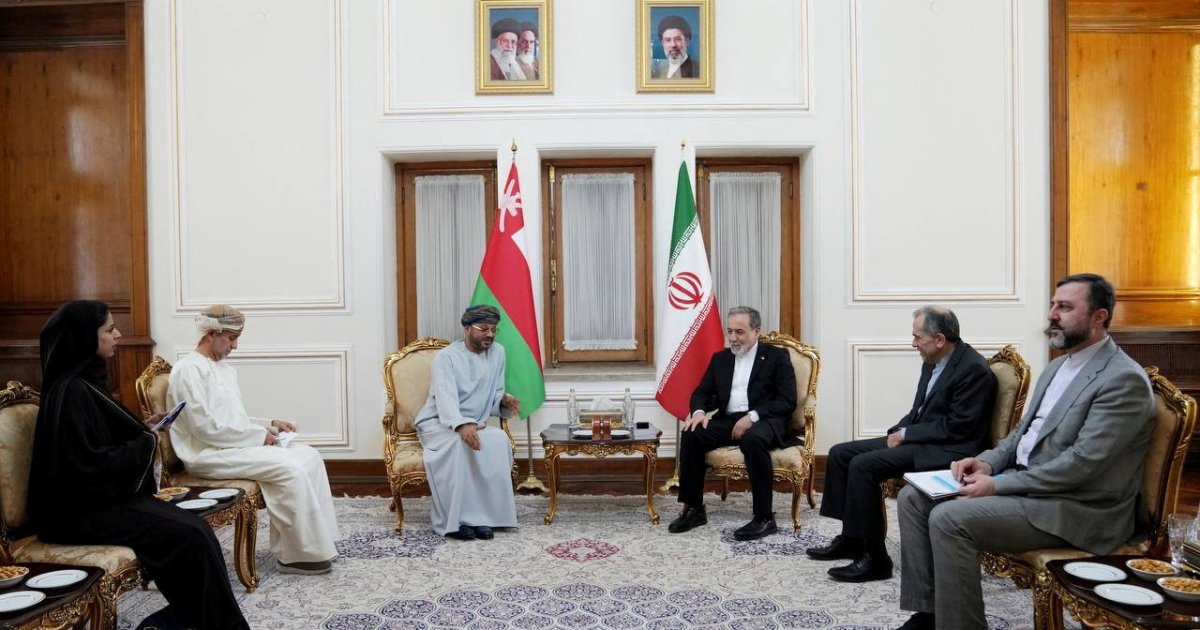
Oman’s Foreign Minister, Sayyid Badr Albusaidi, urged a non‑aggression pact among all eight Gulf littoral states – the six Gulf Cooperation Council members plus Iraq and Iran – in a lecture at Cambridge University. He said such an agreement is essential for an inclusive regional security architecture, though he acknowledged it would be difficult to achieve.
Albusaidi noted that the idea of a Gulf security arrangement dates back to a 1976 meeting in Muscat where all eight states discussed collective security after Britain’s withdrawal. Subsequent events, including the Iranian Revolution, the Soviet invasion of Afghanistan, and the Iran–Iraq war, led to defensive arrangements that later hardened into exclusion, especially towards Iran.
The proposal was revived in 2019 when Iranian Foreign Minister Javad Zarif suggested a regional non‑aggression pact during a visit to Baghdad, a proposal endorsed by Russian Foreign Minister Sergey Lavrov. In September 2019, Iranian President Hassan Rouhani launched the Hormuz Peace Endeavour (HOPE) at the UN General Assembly, envisioning a pact among Hormuz states. Gulf reactions were largely dismissive, citing Iranian support for armed groups.
In May 2024, the Financial Times reported that Saudi Arabia was discussing a non‑aggression framework with Iran, modeled on the Helsinki process between the US and Russia. This month, Qatar’s defence minister called for GCC–Iran dialogue, joined by Turkey and Pakistan, toward a non‑aggression agreement.
Oman’s unique position as a mediator, having hosted US‑Iran talks in 2025 and February 2026, gives it access that few others have. Albusaidi said a pact must bind Iran as much as other signatories, requiring observable conduct, reciprocal restraint, and consequences for violations. Minimum commitments would include prohibitions on the threat or use of force, interference in internal affairs, attacks on civilian infrastructure, support for armed groups, and protection of navigation.
Negotiations could adopt a gradual approach, first identifying shared interests such as territorial security, functioning ports, reliable energy exports, civilian protection, and uninterrupted trade. Initial measures might involve military hotlines, rules for maritime encounters, notification of exercises, and rapid communication after attacks. Protecting energy facilities, desalination plants, and commercial shipping would provide an early test of compliance.
Albusaidi acknowledged that any wider framework must respect international navigation rights and that armed groups would be the hardest issue to resolve. Governments would need to refrain from directing or materially supporting cross‑border attacks, and the pact would require procedures for establishing evidence and corrective action.
A regional pact would not resolve every conflict involving the Gulf, as the United States and Israel remain outside it and Yemen’s war involves actors beyond the Gulf arrangement’s reach. However, the framework could make it harder for such conflicts to become wars among its signatories.
The credibility of a pact would depend on changing conduct: fewer attacks, functioning crisis channels, and demonstrable respect for sovereignty. The first achievement would be modest but consequential: establishing that disagreement does not entitle a state to endanger another’s security.
The views expressed in this article are the author’s own and do not necessarily reflect Al Jazeera’s editorial stance.
Frequently asked questions
Which states are part of the proposed Gulf‑wide non‑aggression pact?
The six Gulf Cooperation Council members plus Iraq and Iran.
What historical events influenced Gulf security arrangements?
The Iranian Revolution, the Soviet invasion of Afghanistan, and the Iran–Iraq war.
What minimum commitments are included in the pact?
Prohibitions on threatening or using force, interfering in internal affairs, attacking civilian infrastructure, supporting armed groups, and protecting navigation.