World
Iran Vows Continued Resistance as Gulf Tensions Escalate Over Hormuz Blockade and Houthi Attacks on Saudi Arabia
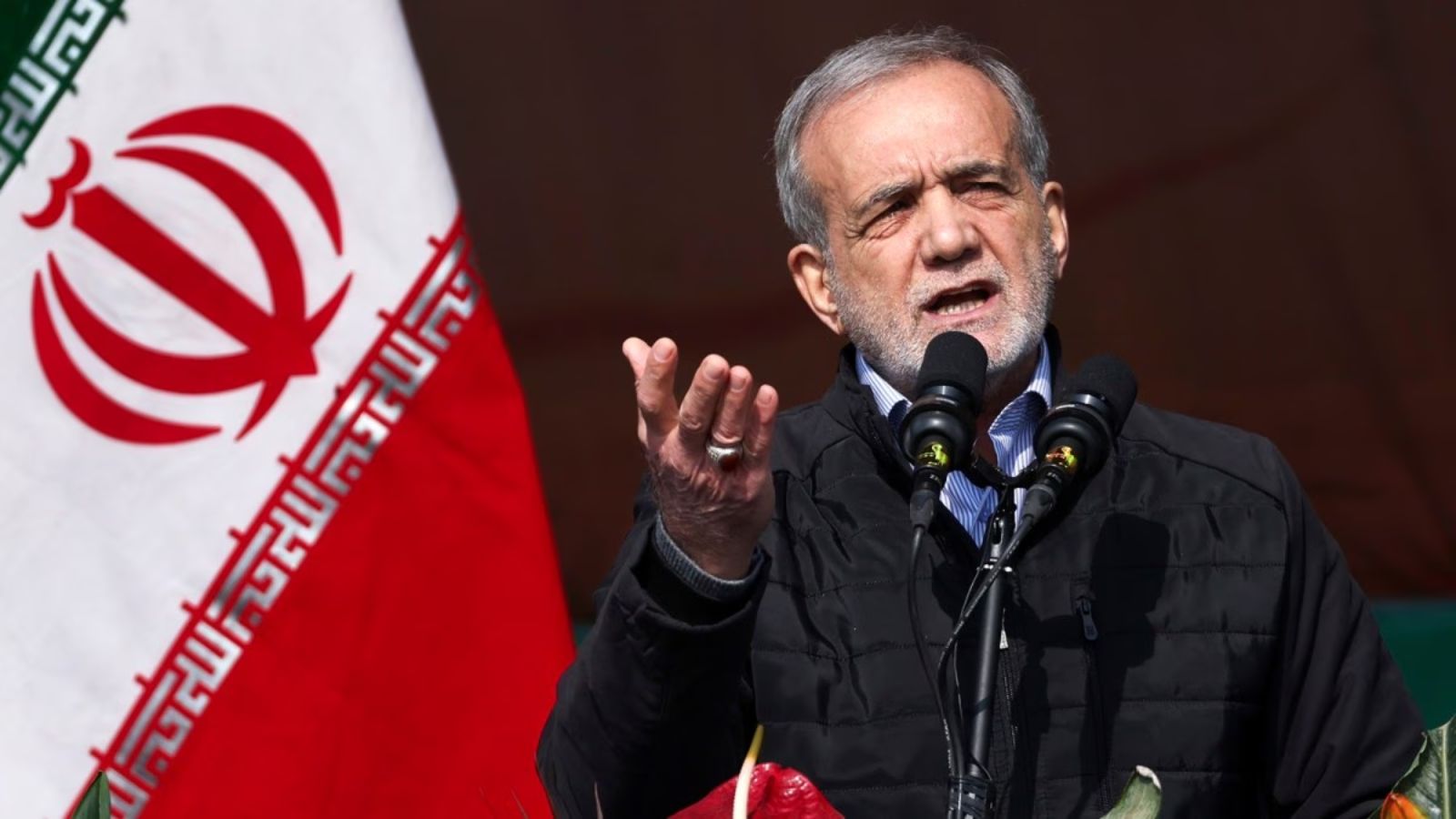
Iranian President Masoud Pezeshkian declared on Tuesday that Tehran will continue resisting what he called foreign aggression until those responsible show regret, emphasizing that Iran will remain a defender of its people's rights. In a post on social media platform X, Pezeshkian stated that while the Islamic Republic has consistently opposed war and prioritized regional security through avoiding conflict, it has nonetheless defended itself boldly against aggression and will continue this resistance with strength.
The statement comes amid escalating tensions in the Persian Gulf region. Mohsen Rezaei, secretary of Iran's Supreme National Security Council, said Tehran's recent missile launches served as a clear warning to Washington, noting that Iran's military posture toward US warships and bases has been fundamentally recalibrated. Rezaei also warned that US economic sanctions would be met with a maritime exclusion zone extending across the Persian Gulf.
Shipping data from Kpler showed vessel traffic through the Strait of Hormuz fell 28 percent last week, dropping to 77 ships. The US Central Command reported that its forces have redirected 94 commercial vessels, disabled three, and boarded two since mid-July as part of enforcement actions related to sanctions against Iran. The USS George H.W. Bush has been supporting these enforcement operations in the Arabian Sea.
Separately, Iran raised gasoline prices for its heaviest consumers on Tuesday, marking the second such increase since December, as the country's economy continues to struggle under the weight of war and sanctions. Officials said the additional revenue would be redirected to households, though residents report the change is worsening an already difficult cost-of-living situation.
In Saudi Arabia, the Iran-aligned Houthi rebels in Yemen claimed responsibility for what they called a broad operation targeting energy facilities belonging to Saudi oil company Aramco in the southern part of the country. A Houthi military spokesperson said the attack involved drones and ballistic missiles but did not disclose the extent of damage. The group also launched a separate drone and missile attack targeting King Khalid Air Base in southern Saudi Arabia.
The Saudi-led coalition in Yemen reported that 73 people, including women and children, were injured in Houthi attacks on the cities of Abha, Khamis Mushait, Najran, and Jazan. A coalition spokesperson said the strikes targeted civilian and economic sites and vowed a firm response.
The Gulf Cooperation Council condemned the Houthi attacks, describing them as an extremist criminal approach that threatens regional security and stability. The council said the repeated strikes demonstrate the group's hostile intentions and rejection of peace efforts in Yemen.
Iran's Foreign Ministry spokesperson Esmaeil Baqaei criticized Canada after its foreign and finance ministers issued a joint statement condemning Tehran and urging it to end destabilizing activities in the Middle East. Baqaei accused Canadian officials of appeasing the United States and displaying strategic confusion, despite what he characterized as Washington's disregard for Canadian sovereignty.
In other developments, Baqaei said Iran's relationship with India remains longstanding and that the two countries would discuss issues including the Chabahar port during an upcoming BRICS meeting.
Elsewhere, Russia resumed airstrikes on Kyiv early Tuesday shortly after US peace negotiators departed, striking the Ukrainian capital with ballistic missiles and injuring six people, according to Mayor Vitali Klitschko. A five-story apartment building and a three-story residential block were damaged by falling debris, and people were reported trapped in one building as fires broke out across the city.
In Crimea, two people were killed and another injured in a Ukrainian attack, according to Sergei Aksyonov, the Moscow-appointed governor of the peninsula, which Russia annexed from Ukraine in 2014.
In France, three paintings were stolen from the Renoir Museum in Cagnes-sur-Mer on the French Riviera early Tuesday after thieves broke in shortly before 6 a.m., according to local mayor Bryan Masson. Police who spotted the suspects gave chase, forcing them to abandon one of four stolen paintings before escaping with the remaining three. The museum, located in the former mansion of Impressionist painter Pierre-Auguste Renoir, opened in 1960 and houses 13 of his works alongside sculptures, furniture, and photographs.
In the UK, Labour MP Emily Thornberry, who chairs the Foreign Affairs Committee, called on the government to challenge Israel's plans to expand settlements in the occupied West Bank, warning the move could threaten prospects for a Palestinian state. She cited sanctions imposed after Russia's 2014 annexation of Crimea as a precedent for distinguishing between Israeli and West Bank goods.
The Eiffel Tower closed Monday following a staff protest after female employees were reportedly asked to limit interactions during a private weekend visit by a delegation linked to the Bochasanwasi Akshar Purushottam Swaminarayan Sanstha, a Hindu religious organization. A local trade union condemned what it called workplace instructions that sidelined and rendered invisible female employees based on gender, prompting an investigation by Paris authorities.
In US politics, a national survey by Asian and Pacific Islander American Vote found that despite political fatigue, Indian-American voters are leaning toward Democratic candidates ahead of November midterm elections for 435 congressional seats and 35 Senate seats. More than 90 percent of registered Asian American and Pacific Islander voters surveyed said they planned to vote, with 66 percent of Indian-American respondents indicating support for Democratic candidates in both congressional and Senate races, despite reporting limited outreach from either major party.