World
Bosnian Electrician’s Bear Rescue Turns Home Into Wildlife Sanctuary
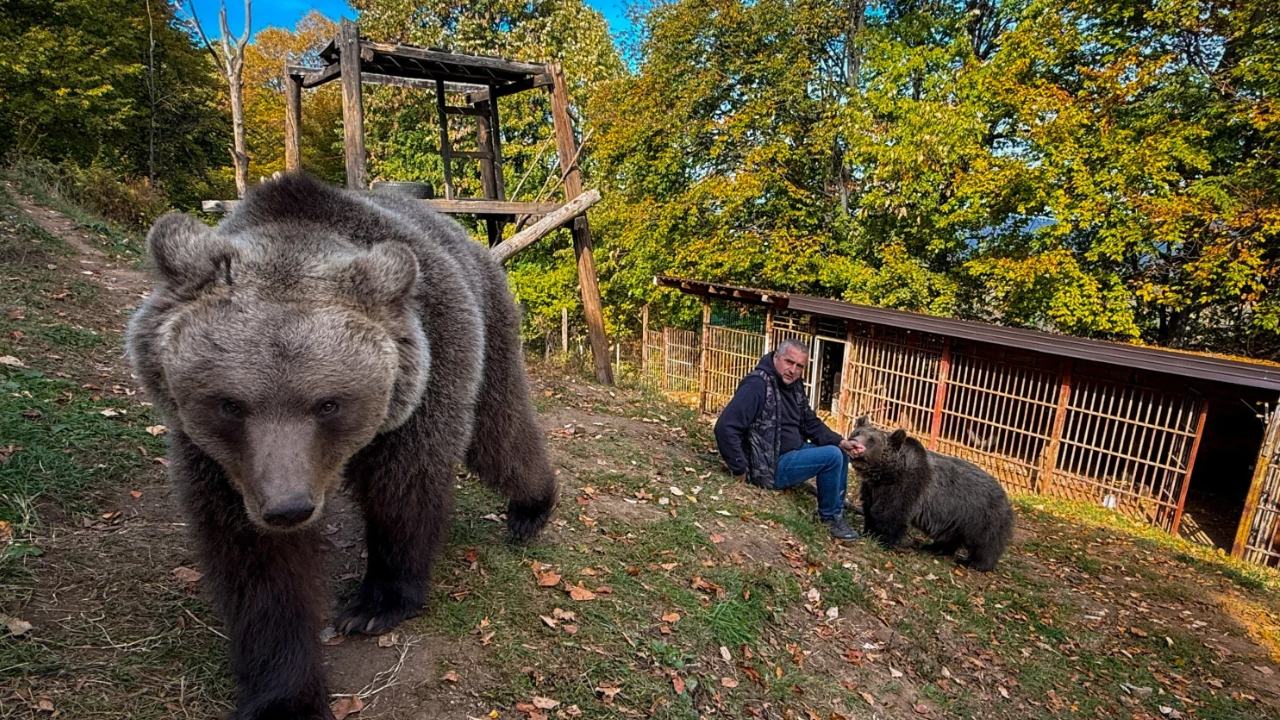
In 2019, Petar Tubic, an electrician on Mount Ozren in Bosnia and Herzegovina, found a two‑kilogram bear cub alone in the forest. He brought the cub, later named Masa, into his home, feeding her milk and fruit and helping her regain strength. Over the next six years, Masa grew into a 150‑kilogram adult bear that still seeks the affection she received as a cub, sometimes attempting to climb onto Tubic’s lap. The interactions can be playful, but the bear’s size makes them potentially dangerous; Tubic has suffered bruises and torn clothing during such encounters.
Tubic’s property has expanded beyond Masa to include another female bear, Ljubica, and a variety of other animals such as wolves, deer, and raccoons. The site, known as Naša Maša, has become a refuge for rescued wildlife and a local attraction for visitors interested in the unusual relationships between humans and animals.
Tubic lives with his wife, Milica, and their nine‑year‑old daughter, Eva. While he works as an electrician, his interests also include hiking, caving, and paragliding. The bears’ future remains uncertain; Tubic has considered releasing them into the wild but worries that their close contact with humans may make it unsafe for them to survive independently.
An Associated Press report published on October 24, 2026, and coverage by Reuters Connect have highlighted the bond between Tubic and the bears, as well as the challenges of caring for wild animals rescued at a young age. The story underscores the lasting responsibilities that accompany such rescues and the need for careful management of powerful wild animals raised around people.
Frequently asked questions
What is the name of the bear rescued by Petar Tubic?
Masa.
What other animals live at Naša Maša?
Another female bear named Ljubica, wolves, deer, and raccoons.
What are the future plans for the bears?
Tubic has considered releasing them into the wild but worries that their close contact with humans may make it unsafe for them to survive independently.