Politics
Opposition Unanimously Calls for Removal of Chief Election Commissioner in Mock Session
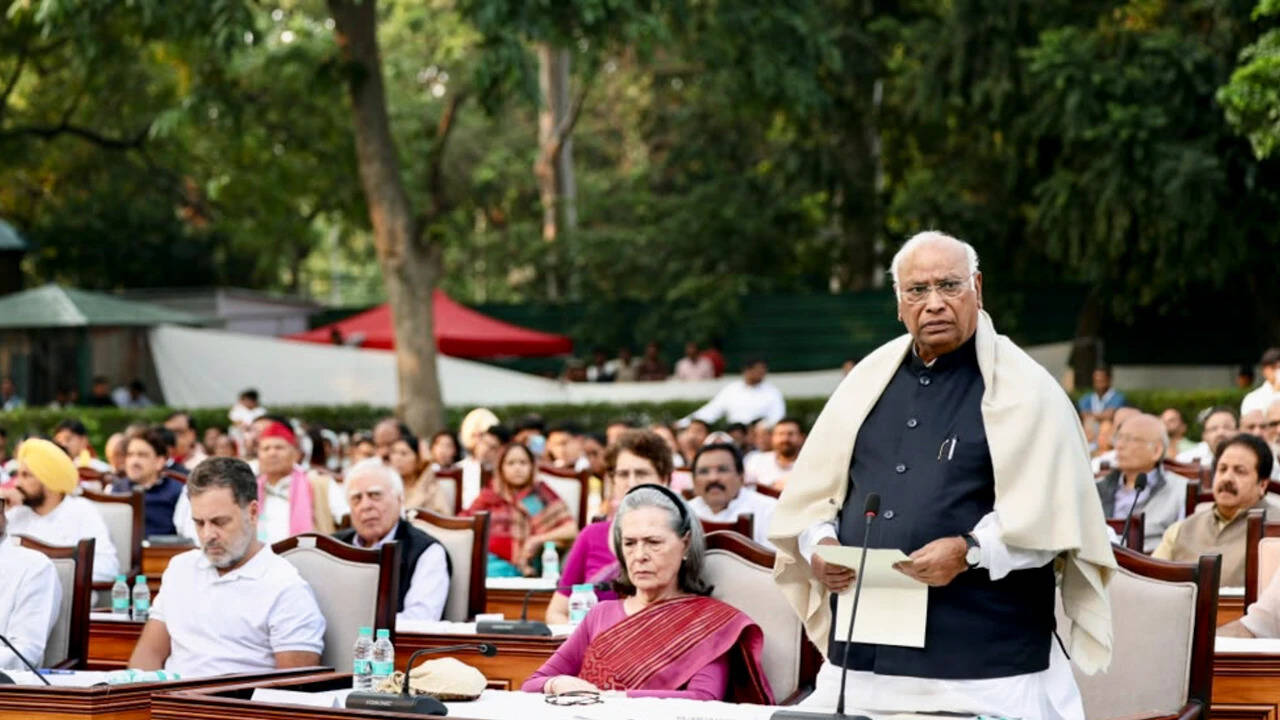
In a mock Parliament held at the residence of Congress president Mallikarjun Kharge, opposition members unanimously passed a resolution to remove Chief Election Commissioner Gyanesh Kumar over alleged irregularities in the Special Intensive Revision (SIR) of electoral rolls. Former Lok Sabha Speaker Meira Kumar presided over the proceedings, and several MPs and activists supported the motion. Kharge moved the resolution, accusing Kumar of centralising control over electoral rolls and acting on the instructions of Prime Minister Narendra Modi and Union Home Minister Amit Shah. He also claimed that the SIR was launched to eliminate voters opposed to the Bharatiya Janata Party.
"The proposal we are bringing today is to safeguard the dignity of a constitutional institution. We have no personal enmity with the CEC. Our intention is that the Election Commission should function impartially in keeping with the spirit of the Constitution," Kharge said. "The trust of the common man in it should remain intact. No one sitting in Delhi should be able to wrongly delete the voting rights of weaker sections, women, and youth using a computer," he added.
Opposition leader Rahul Gandhi delivered the closing remarks, describing the event as a political weapon targeting the CEC, Modi and Shah. "This looks like a meeting of Lok Sabha MPs, Rajya Sabha MPs, and common citizens. But actually, this is a political weapon," Gandhi said.
The resolution was passed by voice vote in the mock session. However, the same motion would face a far more difficult path in the real Parliament. Article 324(5) of the Constitution states that the Chief Election Commissioner can be removed only "in like manner and on the like grounds as a judge of the Supreme Court." The removal requires a majority vote from both Houses, following the procedure for removing a Supreme Court judge. That procedure involves an address by each House, supported by a majority of the total membership and a two‑thirds majority of members present and voting, on grounds of proved misbehaviour or incapacity. The motion must be admitted by the presiding officer, followed by an inquiry, and then passed by the required majorities in both Houses before an address is made to the President, who issues the removal order.
This is not the first time the opposition has sought the CEC’s removal. On April 7, Lok Sabha Speaker Om Birla and Rajya Sabha Chairperson CP Radhakrishnan rejected a notice signed by 130 Lok Sabha members and 63 Rajya Sabha members that sought the CEC’s removal over alleged partisanship and arbitrariness in the SIR.
Rohitashwa Ranjan is a digital journalist with The Times of India, where he analyses Indian politics, elections and party dynamics.
Frequently asked questions
Who moved the resolution to remove the Chief Election Commissioner?
Mallikarjun Kharge, Congress president, moved the resolution.
What is required to remove the Chief Election Commissioner according to Article 324(5)?
Removal requires a majority vote from both Houses, following the procedure for removing a Supreme Court judge: an address by each House, a majority of the total membership and a two‑thirds majority of members present and voting on grounds of proved misbehaviour or incapacity, an inquiry, and then an address to the President.
When did the opposition previously seek the CEC’s removal?
On April 7, Lok Sabha Speaker Om Birla and Rajya Sabha Chairperson CP Radhakrishnan rejected a notice signed by 130 Lok Sabha members and 63 Rajya Sabha members that sought the CEC’s removal.