World
Singapore to Boost Prime Minister's Pay by $1.1 Million, Making Him World's Highest-Paid Leader
By Today News Hours Editorial Desk
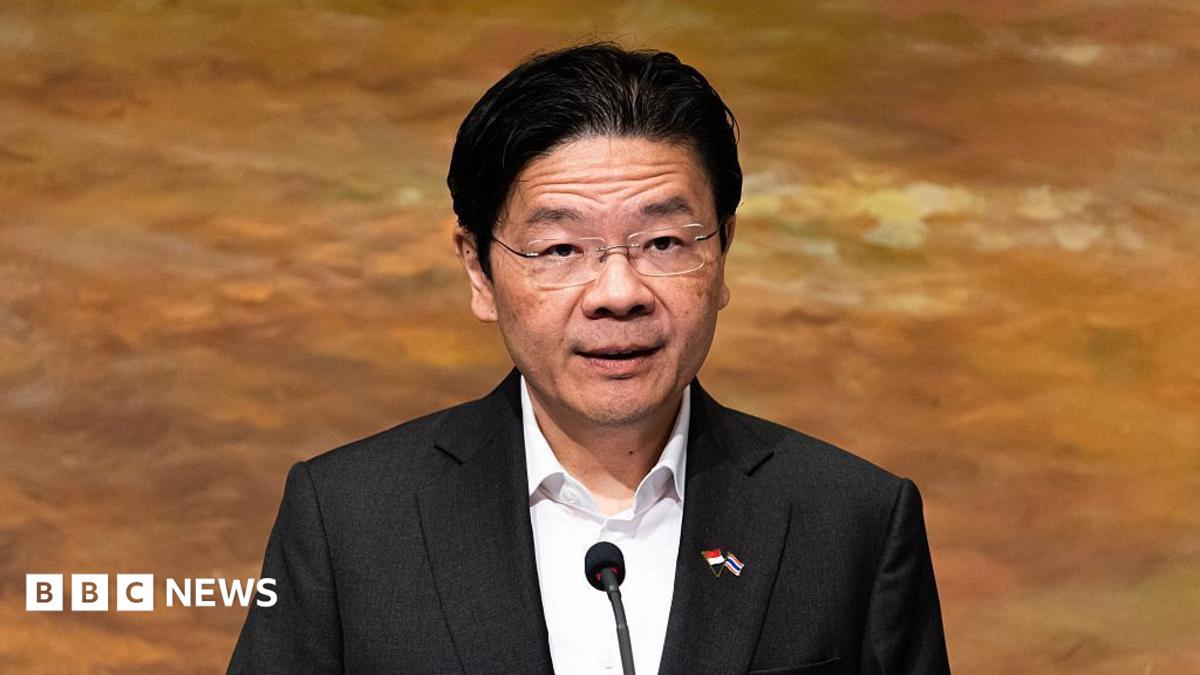
Singapore's government has announced plans to increase the annual salaries of its ministers and other officeholders, including Prime Minister Lawrence Wong, who already holds the title of the world's highest-paid political leader. Under the new pay scheme, Wong's annual compensation will rise by 1.4 million Singapore dollars, equivalent to about $1.1 million or £818,000. He has pledged to donate this increase to charity over the next five years.
Wong stated that raising ministerial pay is essential to attract top talent to government service. The administration has long argued that offering competitive salaries to ministers helps prevent corruption. However, the announcement has drawn criticism from citizens concerned about job security and the rising cost of living.
Even before the increase takes effect, Wong's current salary of S$2.2 million already surpasses that of other world leaders. With the raise, his pay will climb by more than 60% to S$3.6 million. For comparison, Hong Kong's chief executive John Lee earns roughly $719,000 annually, Switzerland's president Guy Parmelin makes about $606,000, US President Donald Trump earns $400,000, and British Prime Minister Andy Burnham receives $230,000.
Speaking on Tuesday, Wong acknowledged that ministerial salaries have faced public scrutiny, especially given that Singapore's median monthly income stands at S$5,775. He explained that he has struggled to persuade business leaders and senior civil servants to enter politics due to the pay gap. While the government cannot match private sector salaries, he said it aims to avoid making the financial sacrifice "unnecessarily high" for those willing to serve. He expressed hope that the new pay structure would help him and future prime ministers attract capable individuals to build a strong governing team.
Under the current system, ministers receive a base salary of about S$1.1 million, which will rise to approximately S$1.2 million. Wong noted that many ministers could ultimately earn up to S$1.35 million by the end of the current government term, as part of their compensation is tied to performance metrics such as unemployment rates, income growth, and GDP growth.
The issue of high ministerial pay has historically been contentious for the ruling People's Action Party (PAP), which has governed Singapore since independence. During the 2011 general election, the PAP recorded its lowest vote share in decades, partly due to public frustration over ministerial salaries and immigration policies. In response, the government cut ministers' pay the following year. Wong's predecessor, Lee Hsien Loong, similarly donated his salary increase to charity for several years starting in 2007.
Singapore has consistently ranked near the top of Transparency International's Corruption Perceptions Index, which the government cites as evidence that high ministerial pay reduces the risk of bribery. Still, given the significant gap between ministers' salaries and the national median income, the policy remains controversial. Following Tuesday's announcement, many social media users criticized the timing as "tone deaf," pointing to ongoing concerns about layoffs, job prospects for new graduates, and inflation. Singapore's retrenchment rate reached its highest level in more than five years during the last quarter, according to government data. However, some supporters defended the pay raise as necessary to ensure the country is led by top-tier talent.