Business & Finance
Job Hunting as Spectacle: Companies Turn Hiring Into Live Competitions
By Today News Hours Editorial Desk
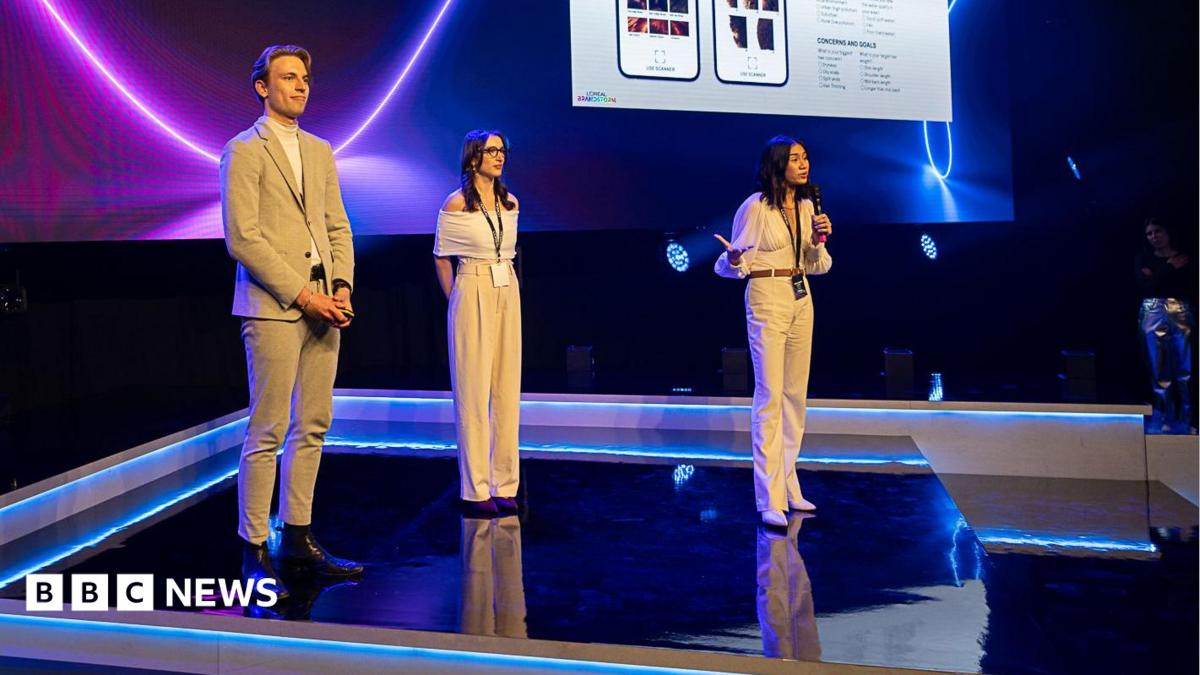
Yumi Liberman stood on a stage in London in 2024, facing a panel of judges and an audience of 300 people. Instead of singing or dancing, she and two friends were there to pitch a business idea, competing for a chance at a full-time job with cosmetics company L'Oreal.
"It reminded me of when I used to do competitive sports growing up and the pressure would get heavy," said Liberman, now 24. "But somehow you just get into flow mode."
She and her friends had advanced to the UK final of Brandstorm, an international competition organized by L'Oreal in which young people present product and business concepts. Their pitch for a haircare app won them the UK title, and they went on to place third in that year's global final in Paris.
Although only the winning team automatically received full-time job offers, Liberman impressed senior L'Oreal executives enough to be offered a spot in the company's marketing management traineeship program, which leads to a permanent position upon completion.
Companies are increasingly turning recruitment into competitions resembling televised talent shows, using job offers as prizes to generate publicity. But opinions differ on whether this approach benefits or disadvantages young job seekers.
Youth unemployment currently exceeds the general unemployment rate in many countries. In the UK, for instance, the jobless rate among young adults stands at 16.2%, compared with an overall rate of 4.9%. Competitions such as L'Oreal's can offer a path to employment, though most applicants do not win. This year, 380,000 people worldwide applied for Brandstorm, a 58% increase from 240,000 applicants the previous year, and the vast majority received no prize.
L'Oreal told the BBC that Brandstorm helps the company reach a broader pool of potential recruits, including people who might not otherwise have considered applying to work there.
While Liberman said she appreciated the structured format of the competition, others who have gone through similar hiring contests have been more critical.
Melissa Alcruz, who now works in marketing for a real estate company in New York City, previously held a similar role at MTV. While there, she took part in an internal competition for a promotion, informally called a "bake-off," in which candidates developed sponsorship and marketing campaigns and then presented them to a panel of seven people.
"This is intimidating, even for a seasoned professional. I ultimately got the job, but even though I won I disliked the process," Alcruz said. She noted that she was already working full-time at the company and was expected to complete substantial additional projects for the competition outside of work hours. MTV's parent company, Paramount Skydance Corporation, has been contacted for comment.
Katrina Collier, a former recruitment consultant who is now an author, speaker, and recruiter trainer, expressed concern that competition-based hiring processes—which can require candidates to invest significant unpaid time—may create what she calls "economic discrimination."
"Not everyone can take time, possibly months, to participate in the challenges for the chance to secure one of a limited number of roles," she said. "Does that mean only people from financially strong backgrounds proceed? Is that leaving talented applicants who don't have the bank of mum or dad, for example, unable to take part?"
Jamie Kohn, senior director for talent acquisition at research firm Gartner, believes competition-based hiring is likely to continue because it allows employers to evaluate candidates more effectively than traditional interviews. However, she cautioned that organizations must be mindful of how much time and effort they demand from applicants. "They should focus on providing feedback so candidates build their capabilities even if they are not selected," she said.
Psychologist Amanda Potter raised concerns that competition-style recruitment tends to favor extroverted personalities, potentially disadvantaging quieter candidates. "Does this approach encourage all types of people to apply, or would certain types of people avoid these assessment methods?" she asked. "This could result in an organization full of ambitious, competitive people who want to win, possibly to the detriment of others."
Liberman, who lives with severe dyslexia, said she believes a conventional recruitment process with standard assessments would have been more difficult for her to navigate. The competition format allowed her to move directly into her chosen career field after university, avoiding a period of unemployment that many of her peers have experienced. "I have a lot of friends coming from extremely reputable backgrounds, extremely educated people who have applied to over 1,000 jobs, and have been jobless," she said.