Technology
Arm CEO Predicts AI Will Cure Cancer and Power Humanoid Robots Within Years
By Faisal Islam
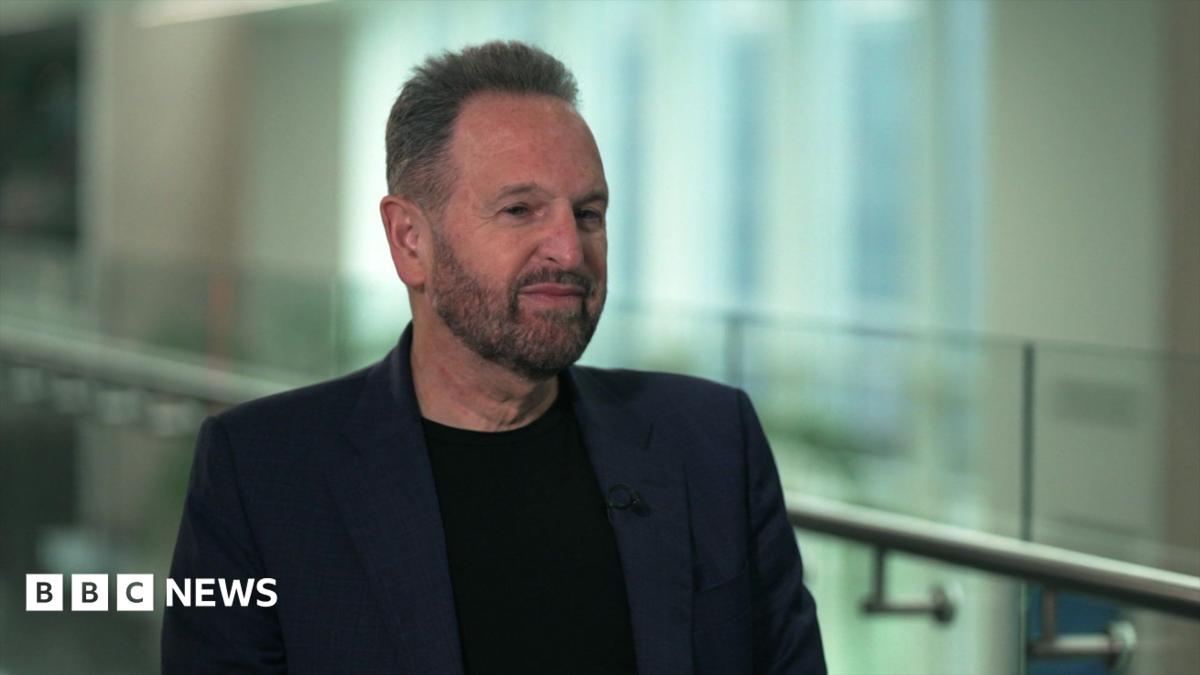
Rene Haas, chief executive of Cambridge-based chip designer Arm Holdings, has said he believes artificial intelligence will help find a cure for cancer within our lifetimes, a task he says is currently too complex for both humans and existing computer systems to solve alone.
Speaking to the BBC's Big Boss Interview podcast, Haas explained that modelling how a DNA marker is affected by cancer remains an extremely complex challenge, but predicted that as AI models improve and computing power increases, such problems will eventually be solved.
Haas, who left the board of pharmaceutical company AstraZeneca in April, also holds a senior position at Softbank, Arm's Japan-based majority owner, which has invested in a range of technology firms including OpenAI.
Professor Chris Bakal of the Institute of Cancer Research in London, who also serves as CEO of Sentinal4D, offered a different perspective, arguing that the key issue is not whether AI is used in medical research, but what data it is trained on. He said his lab trains AI using data generated directly from patient samples rather than material taken from the internet, adding that progress in medical AI will depend on access to the right measurements rather than the size of computing infrastructure. He said this approach could significantly shorten the time needed to develop new treatments.
In the wider interview, Haas discussed the future of robotics, saying Arm-designed chips would increasingly power self-learning humanoid robots capable of working in manufacturing, cleaning, security, construction and repair within the next decade. He said AI would allow robots to be reprogrammed for multiple tasks rather than performing a single fixed function.
On concerns about job losses linked to AI adoption, Haas said predictions of widespread job elimination were exaggerated, arguing that new opportunities created by the technology would offset losses. He also dismissed worries about a potential downturn in AI company valuations, citing sustained long-term demand for the technology.
Arm's chip designs are now used in roughly half of the world's AI data centres, according to Haas. The company has also begun producing its own chips, including the Arm AGI chip developed at the request of Meta, which Haas said has generated more than $2 billion in demand since its launch in March.
Despite this demand, Haas said a shortage of chip manufacturing capacity is limiting the expansion of AI infrastructure, including plans for large-scale, multi-gigawatt data centres in France and the United States, as well as proposals to place data centres in space. He said more chip factories, or fabs, would be needed to support such projects.
Haas said he did not believe it made sense for the UK to build its own chip fabrication plants, citing the high cost, need for specialised labour, and reliance on natural resources, noting that an established global manufacturing ecosystem, centred on Taiwan's TSMC, already exists. This comes despite UK government discussions with industry about potentially developing domestic chip manufacturing capability.
Addressing criticism over Arm's 2016 sale to Japanese investors and its listing on New York's Nasdaq rather than the London Stock Exchange, Haas said half of Arm's global workforce remains based in the UK, and that the company continues to be the largest employer in Cambridge.