World
US, South Korea and Japan Reaffirm Commitment to North Korea’s Full Denuclearisation
By AFP
On Saturday, October 31, 2026, the United States, South Korea and Japan reiterated their determination to achieve the complete denuclearisation of North Korea. The statement came after the three countries met on the sidelines of a Group of 20 (G20) meeting in Atlanta, Georgia, on Friday, October 30. U.S. Secretary of State Marco Rubio, South Korean Foreign Minister Cho Hyun and Japanese Foreign Minister Toshimitsu Motegi said they were resolutely committed to North Korea’s full denuclearisation and pledged full implementation of United Nations Security Council resolutions that ban revenue support for the country’s nuclear and ballistic missile programmes.
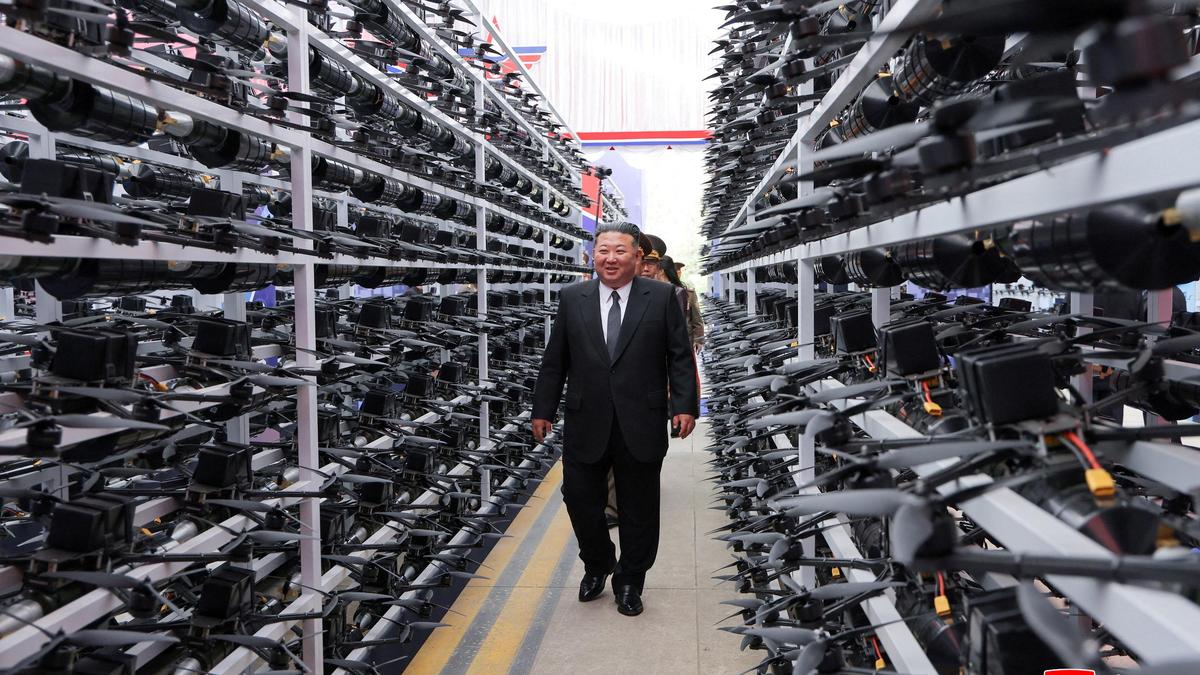
North Korea, which is backed by Russia and China, has declared its nuclear arsenal permanent and irreversible in law. Despite long‑running UN sanctions, the regime continues to reject disarmament. Speculation has grown about a possible meeting between U.S. President Donald Trump and North Korean leader Kim Jong Un at next month’s APEC summit in China, where Trump has repeatedly reached out to Pyongyang for nuclear talks and has scaled back joint military drills with South Korea.
Trump’s approach has diverged from traditional U.S. policy, as he has acknowledged that North Korea is “sort of a nuclear power” and expressed a willingness to meet with Kim. The North Korean regime may have communicated its stance on a potential Trump meeting to Beijing during a recent visit to the Chinese border city of Dandong. South Korea’s President Lee Jae‑Myung, who has offered talks without preconditions, suggested in September that Washington seek a freeze rather than immediate elimination of North Korea’s nuclear programme in exchange for sanctions relief.
Critics warn that such an approach could tacitly accept North Korea as a nuclear‑armed state while allowing it to gain sanctions relief without relinquishing its arsenal. Analysts note that China may also be moving toward tacit acceptance, citing the omission of North Korean denuclearisation from statements issued after Kim met Chinese President Xi Jinping in June.
On Saturday, a group of nations monitoring sanctions implementation against North Korea issued a joint statement condemning the sanctions, stating that the “stereotyped sanctions racket of the U.S. and the West can neither influence the position of the DPRK as a nuclear weapons state.”
Frequently asked questions
When did the U.S., South Korea, and Japan reaffirm their commitment to North Korea's denuclearisation?
On Saturday, October 31, 2026.
Which officials made the statement about denuclearisation?
U.S. Secretary of State Marco Rubio, South Korean Foreign Minister Cho Hyun, and Japanese Foreign Minister Toshimitsu Motegi.
What did the three countries pledge regarding UN Security Council resolutions?
They pledged full implementation of UN Security Council resolutions that ban revenue support for North Korea's nuclear and ballistic missile programmes.