India
Nashik Kumbh to Cost ₹34,732 Crore, Aim for Permanent Infrastructure and Economic Boost
By Yogesh Joshi, Ranjan Dasgupta
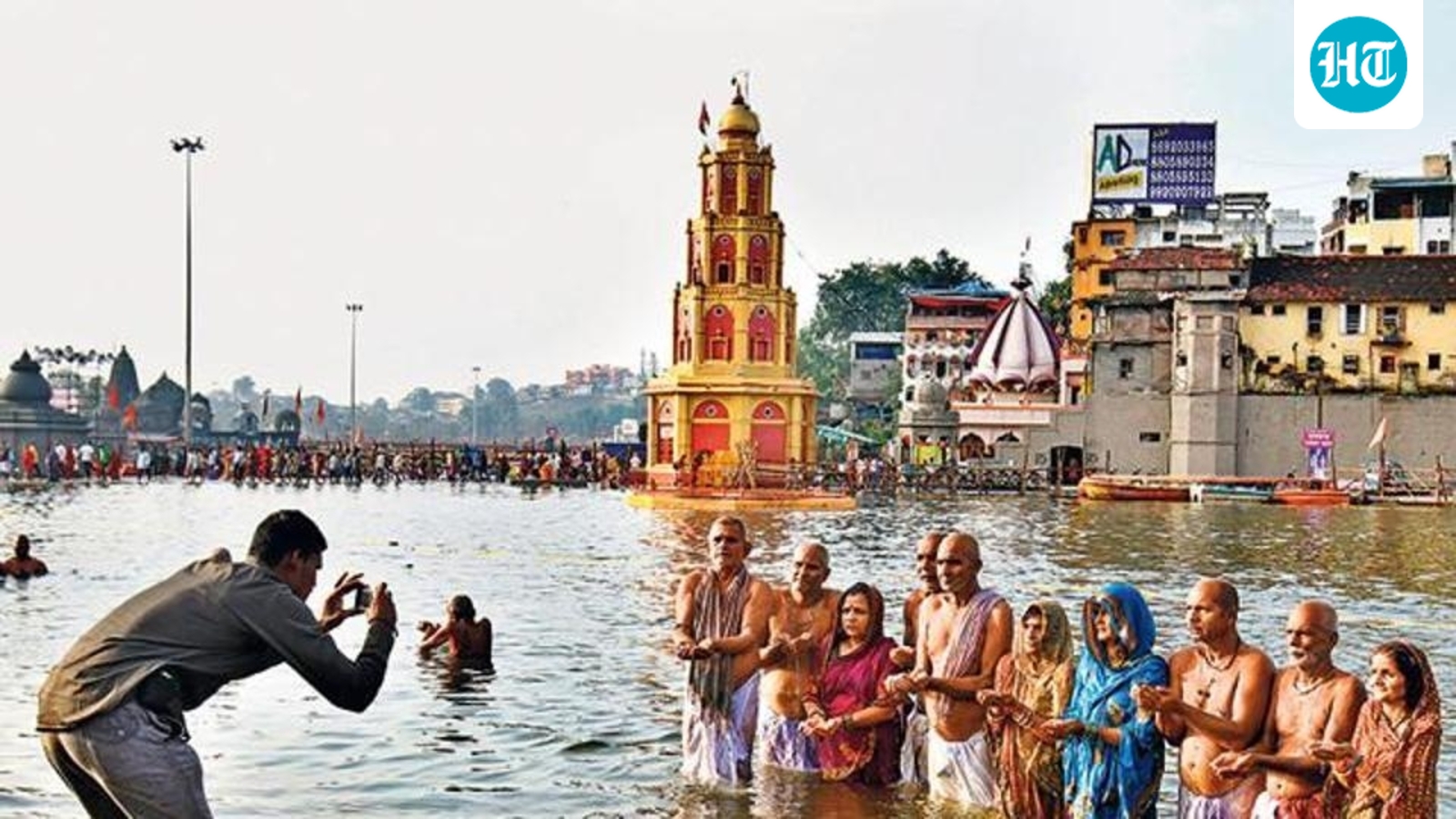
President Droupadi Murmu will hoist sacred flags at Ramkund in Nashik and Kushavarta Tirtha in Trimbakeshwar today, marking the start of a 12‑year cycle of pilgrimage that will trigger Maharashtra’s largest administrative and infrastructure effort yet. The project is estimated to cost ₹34,732 crore, will attract 12 crore pilgrims, and seeks to transform two pilgrimage centres before the first major ritual bath in August 2027.
Roads are being widened and a 65‑km outer ring road is under construction. Railway stations and the airport are being upgraded, and sewage‑treatment and river‑cleaning projects are underway. Thousands of cameras, drones and AI‑based systems will monitor crowds, while temporary settlements are being mapped for ascetics and pilgrims.
The event carries political weight for Chief Minister Devendra Fadnavis, who has assembled the Nashik‑Trimbakeshwar Kumbh Mela Authority (NTKMA) to oversee the mela. The authority is headed by the Nashik divisional commissioner, with Kumbh Mela commissioner Shekhar Singh as member‑secretary. Singh has emphasised that 85 % of the ₹34,732‑crore outlay will fund permanent infrastructure, such as roads, bridges, sewage‑treatment plants and upgraded railway stations, rather than temporary facilities.
Unlike other Kumbh sites, Nashik‑Trimbakeshwar has two separate bathing traditions: Vaishnav akhadas bathe at Ramkund on the Godavari, and Shaiva akhadas at Kushavarta Tirtha, the symbolic source of the river. The separation dates to a 1790 clash over bathing order, resolved by the Peshwas. This year, representatives of all 13 akhadas met with Fadnavis to discuss the dates of the royal baths, a first for joint meetings between the two traditions.
The Sadhugram arrangements have sparked environmental concerns. The area for ascetics in Nashik is expected to grow from 323 acres in 2015 to nearly 1,619 acres in 2027, and the area in Trimbakeshwar from 17 acres to around 777 acres. A municipal proposal to cut about 1,700 trees was halted by a petition to the National Green Tribunal. Alternatives are being sought, with the municipal commissioner noting 1,000 acres of land available for accommodation without tree felling.
Economically, Water Resources Minister Girish Mahajan estimates the pilgrimage could generate at least ₹35,000 crore for the local economy, based on 12 crore pilgrims spending an average of ₹3,000 each. The 2015 edition attracted 2.5 crore devotees and generated about ₹6,000 crore. Other estimates place the projected economic activity at around ₹26,000 crore.
Key infrastructure projects include the 65.60‑km outer ring road, managed by the Maharashtra State Infrastructure Development Corporation (MSIDC), which will connect Nashik to two national highways, two state highways and the city’s internal road network. MSIDC has begun construction on seven stretches and is acquiring land across 25 villages, with about 30 % of the land already secured.
The airport will receive a new terminal and apron at a cost of ₹629.41 crore, and five railway stations will be redeveloped at ₹1,329 crore. A major river‑cleaning effort will establish four new sewage‑treatment plants and upgrade an existing facility, aiming for a combined capacity of 547 million litres per day. The system will use SCADA monitoring linked to an Integrated Command and Control Centre.
Crowd management plans include more than 4,000 CCTV cameras, drones and an AI‑enabled digital twin of the Kumbh area, combining maps, surveillance feeds and operational data to monitor density, traffic and emergencies in real time. The government expects 12 crore pilgrim visits, with a peak footfall of 2.25 crore during the main bathing period.
The Simhastha calendar runs for 21 months, from the Dhwajarohan to the lowering of the flags on July 24, 2028, and includes 97 bathing days. The first major Amrit Snan is scheduled for August 2, 2027, followed by subsequent baths on August 31, September 11 at Ramkund and September 12 at Trimbakeshwar.
The Kumbh presents a test of public administration, infrastructure delivery and political stewardship, with potential benefits for businesses, residents and the city’s long‑term development.