Sports
From Corporate Sales to Chess Community Builder: A Delhi Family’s Journey
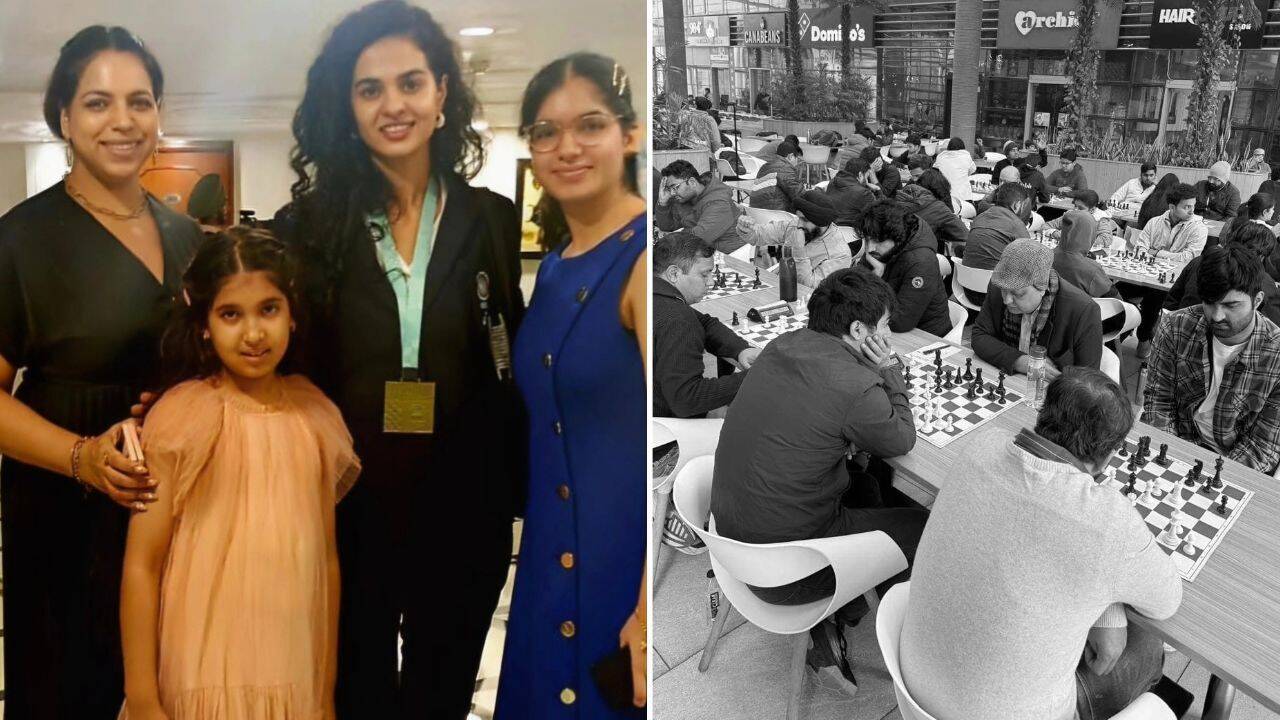
Nidhi Bhasin Rohilla, once a corporate salesperson earning about Rs 50 lakh per year, left her job to support her daughter Shivika’s chess career. Shivika began playing at six and a half in September 2013 and, by April 2014, was second in her age group at the Delhi State Championship. Seeing her rapid progress, Nidhi decided to focus more seriously on chess.
Nidhi, a dentist by degree, and her husband, a surgeon at AIIMS Delhi, struggled to find adequate coaching in Delhi. They sent Shivika to tournaments abroad and eventually sent her mother to accompany her, but travel and coaching costs became unsustainable. When Shivika’s rating approached 2,000 and she needed to travel more frequently, Nidhi quit her job. The family spent almost all their savings on coaching, travel, and practice partners, who were paid Rs 2,000‑3,000 per hour.
After Shivika’s father left salaried work to open his own hospital, the family launched SR Chess Academy (SRCA). Initially a small setup with a coach, books, and Shivika’s equipment, it grew to host nearly 80 children. The academy’s flagship Chess Coffee Connect brings players to cafés for practice games, addressing the lack of community in Delhi. SRCA now runs more than 40 events a month across eight states, employs about 16 paid staff, and relies on roughly 100 volunteers.
SRCA offers tailored services: a 25+5 time control for practice, discounted entries for senior citizens, free play for girls whose fathers do not support them, and classes for students. Through the NGO Helping Hands, some children receive free books and lessons. The organization also produces chess-learning cards, a Grandmaster series, and runs a sports‑psychology arm, Mind to Moves, which provides sessions for parents on rating anxiety.
Shivika, now a Woman International Master, studies aerospace engineering in London and continues to compete, winning a recent tournament. SRCA has organized eight ECF‑rated events in England.
Nidhi acknowledges that sponsorship remains a challenge; the organization is self‑funded except for occasional support from Chess.com. She credits her sales and marketing background with helping secure schools and institutions for events. Despite the financial hurdles, she expresses pride in the community built and states that more can always be done.