World
Singapore to Raise Ministers' and MPs' Pay After 15-Year Freeze, Following Independent Review
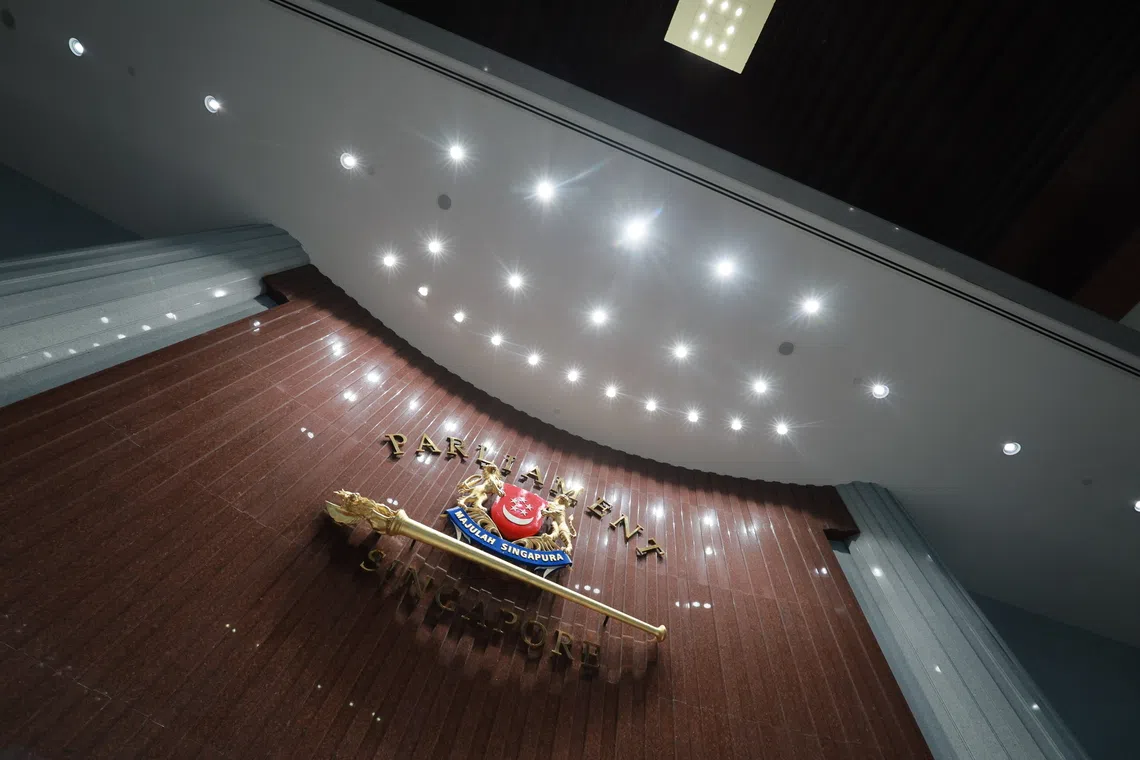
Singapore's Government will implement salary adjustments for political appointment holders and Members of Parliament, based on recommendations from an independent review committee. Prime Minister Lawrence Wong and Coordinating Minister for Public Services Chan Chun Sing outlined the Government's response in Parliament on Sept 8, with a debate scheduled for Sept 10.
Under the changes, current political office-holders will receive a one-time pay adjustment of up to 9 per cent starting Oct 15, with the exact amount depending on factors such as individual performance. Future adjustments will similarly be tied to performance and responsibilities.
The committee recommended raising the entry-level Ministerial Grade 4 (MR4) benchmark salary from $1.1 million to $1.8 million. However, PM Wong opted not to shift current office-holders to this new benchmark immediately. Instead, a minister currently earning $1.1 million annually could see an increase of nearly $100,000, pushing their salary to roughly $1.2 million. Chan noted this equates to about a 3.6 per cent annual increase, given that the MR4 reference figure had remained unchanged for 15 years.
The $1.8 million MR4 benchmark is not a mandatory target, as ministers can be paid above or below it within a set range. PM Wong anticipates that most ministers remaining at the MR4 level will settle near the lower end of this range - approximately $1.35 million - by the end of the current government term, which began in 2025 and typically runs about five years. Currently, 10 of Singapore's 16 ministers hold MR4 grade, while six others at higher grades handle more senior roles, including Coordinating Ministers.
The Government also adopted the committee's suggestion to broaden the monthly salary range for each ministerial grade to between 75 and 125 per cent of the reference salary, aligning with typical market practices and accommodating officials from varied professional backgrounds. Additionally, the MR2 and MR3 grades will be merged, reducing the total number of ministerial grades from four to three, with salary ranges widened to plus or minus 25 per cent. Similarly, the grades for Mayors, Senior Parliamentary Secretaries, and Parliamentary Secretaries will be consolidated, with salary ranges set between 70 and 130 per cent of the reference figure.
Regarding top leadership roles, the Prime Minister's salary - set at twice the MR4 benchmark - will rise from $2.2 million to $3.6 million. PM Wong announced he will personally donate the full increase, about $1.4 million annually, for the next five years. The Deputy Prime Minister's salary will increase from about $1.8 million to $3 million, while the President's annual salary will rise from roughly $1.5 million to $2.5 million. The Speaker's salary, pegged at 50 per cent of the MR4 reference, will increase from $550,000 to $900,000 per year, and the Deputy Speaker's salary, at 15 per cent of the Speaker's pay, will rise from $82,500 to $135,000 annually. The committee also recommended further study into how the Speaker and Deputy Speaker roles have evolved over time.
Monthly allowances for Members of Parliament will rise from $13,750 to $18,500 to keep pace with inflation. Non-Constituency MPs will see their allowance increase from 15 per cent to 30 per cent of an MP's annual allowance, equating to $5,550 monthly - reflecting their full voting rights, granted since 2017. Nominated MPs will continue receiving 15 per cent of the MP allowance, now amounting to $38,900 annually.
The review was conducted by an eight-member independent committee appointed in December 2025 and chaired by Gan Seow Kee, chairman of the Singapore LNG Corporation and an alternate member of the Council of Presidential Advisers. The committee, which included representatives from both the private and public sectors, also consulted global HR firm Mercer for technical input on pay practices. It concluded that the existing salary framework remains fundamentally sound but recommended updates and refinements.
Ministerial salaries are benchmarked against the median income of the top 1,000 Singaporean earners, discounted by 40 per cent to reflect the ethos of public service. This group includes senior executives, financial professionals, and specialists such as doctors, lawyers, and accountants. About 65 per cent of the MR4 reference salary is fixed, with the remaining 35 per cent variable, tied to a National Bonus framework based on four indicators: median income growth, income growth among the lowest 20th percentile of earners, the national unemployment rate, and real GDP growth. The Government has agreed to update these targets starting Jan 1, 2027, and will also explore adding a Quality of Life measure to the framework once a suitable method is developed.
The salary system rests on three core principles: calibre, commitment, and a clean wage. These aim to attract capable leaders through competitive market-linked pay, reflect the spirit of public service through built-in salary discounts, and maintain transparency by avoiding hidden perks.
Chan, who also serves as Defence Minister, emphasized that officials holding multiple portfolios will still receive only one salary. "The principle is simple - one person, one salary. Holding more portfolios does not mean receiving more pay," he said.
The Government estimates the changes will cost about $5 million more annually if the full 9 per cent adjustment is applied to all political office-holders, plus an additional $6.6 million annually for MPs.
The current salary framework dates back to 2012, following recommendations from a committee led by Gerard Ee, and was applied retroactively from May 2011. Since then, reference salaries have remained frozen - reviews in 2017 and 2023 were shelved due to economic and geopolitical uncertainties, including conflicts in the Middle East and Ukraine, political tensions, and global economic instability.
Explaining the rationale for the current changes, PM Wong said strong leadership is increasingly vital as Singapore faces a more volatile global environment. He noted that ministerial pay has lagged behind other sectors, including parts of the public service, where some senior Permanent Secretaries now earn more than ministers. The revised structure, he said, will allow greater flexibility to reward high performance and attract experienced professionals from the private sector into public service. "We will still expect them to make a meaningful sacrifice to enter political service. But we should not make that gap larger than it needs to be," he said.
Chan added that the goal of the review is to help Singapore build a strong governing team. "We want to be able to say to capable Singaporeans, 'Singapore needs you, and while political service involves sacrifice, it will not come at an unreasonable cost to you and your family'," he said.