India
Small Hive Beetle Continues to Devastate Karnataka Beekeepers, 800 Colonies Lost in 25 Days
By Rashmi Patil
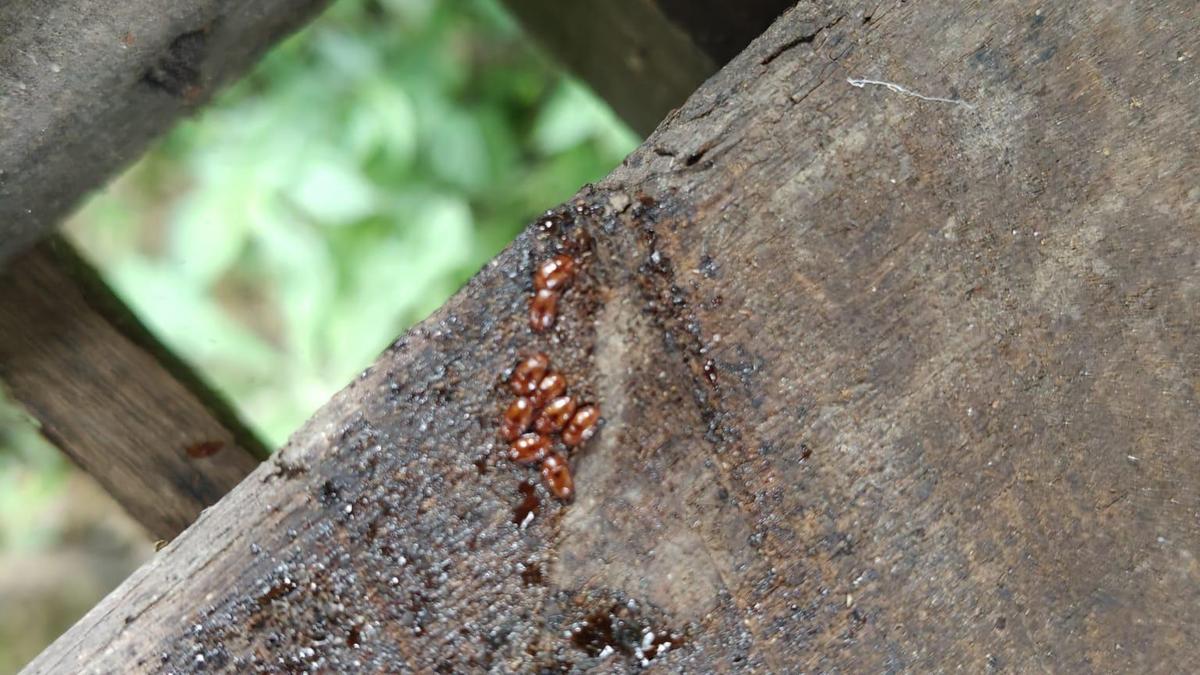
Two years after the small hive beetle first struck Karnataka’s apiculture sector, the pest remains a serious threat. In a recent 25‑day period, about 800 honey‑bee colonies were destroyed. Researchers at the University of Agricultural Sciences Bangalore (UAS‑B), GKVK, have described the beetle as a destructive, invasive scavenger that attacks colonies, bees, honey and pollen. K.T. Vijayakumar, principal investigator and head of the Department of Apiculture at UAS‑B, told The Hindu that the beetle’s impact on plains farms has doubled over the past two to three years. Originally from America, the insect was first recorded in Asia in China, then Bangladesh, and from there spread to West Bengal, Assam, Odisha, Andhra Pradesh, Telangana and finally Karnataka and neighbouring states. Vijayakumar noted that the beetle resembles a bedbug and is hard to identify. It has so far affected colonies in Bengaluru Urban, Bengaluru Rural, Mysuru, Mandya and Chamarajanagar, but has not yet reached the hills. He warned that if the beetle reaches hilly areas, pollination in coffee plantations could be compromised and has alerted the Department of Horticulture.
Beekeepers report severe losses. Sunny Burton of Sakleshpur, who has been beekeeping for five years, said that when he moved his bee boxes from the hills to the plains during the rains in June‑July, 200 colonies were destroyed in 25 days. He added that four other farmers had moved to the plains and together they lost about 800 colonies in the same period. Burton explained that the beetle lays eggs rapidly and can multiply within a day, destroying colonies and honey. He urged the Horticulture Department and the National Bee Board to devise a solution before the ecological system collapses.
Apoorva B.V., a Bengaluru beekeeper, said he is currently using traps or poison bait to deter the beetle, but cautioned that bees are sensitive to such chemicals and the approach cannot be sustained long term.
A senior official from the Department of Horticulture said the department is raising awareness among beekeepers about the beetle and how to trap it in cooperation with UAS‑B. "It is not possible to control it, as it has adapted to the environment," the official said. "We hope researchers at UAS‑B will develop a solution."