World
Viral Videos of Argentina's 'Vanishing' Sea Explained: Temporary Weather Phenomenon, Not a Catastrophe
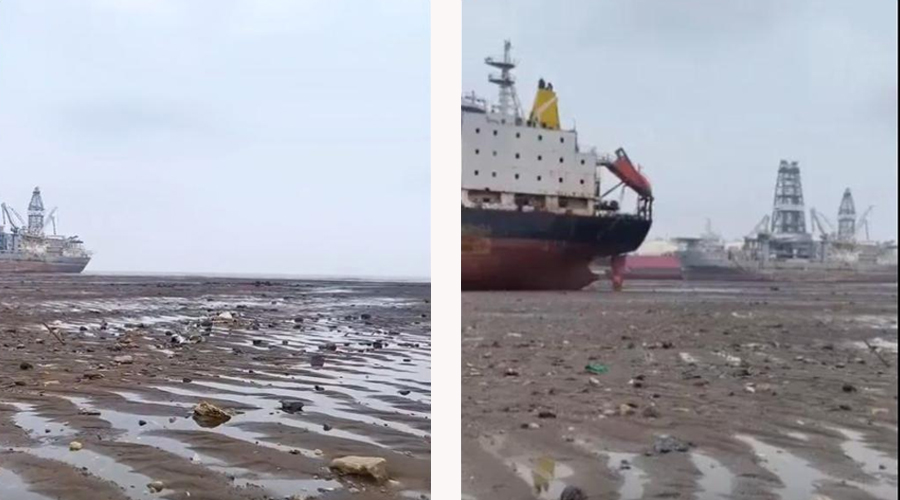
Kathmandu, September 8 — Viral videos circulating on TikTok, YouTube and Facebook have alarmed viewers worldwide with claims that the Atlantic Ocean off Argentina suddenly dried up or dramatically receded overnight. The footage shows large areas of exposed seabed, stranded boats, and what looks like a mysterious new island rising from the water. Some social media posts have gone so far as to call the event a "global catastrophe" or a sign of impending doom.
While the videos themselves are authentic, claims that the sea permanently disappeared are false. Experts say the event was a temporary, weather-driven phenomenon rather than any kind of disaster.
The footage was recorded along the coastline of Mar del Plata, a popular tourist city in Argentina's Buenos Aires Province. Over several hours, the sea level dropped noticeably from the shore. According to Argentina's major newspaper La Nación, this exposed a rocky formation called Restinga del Faro, which is normally hidden beneath the water. Its sudden appearance gave the impression of a newly formed island. By the end of the day, however, the water had returned to its normal level as the tidal cycle completed.
The unusual drop in sea level was caused by a combination of temporary natural factors. Local marine outlet Pescare reported that strong offshore winds—blowing from land toward the sea—pushed surface water away from the coast, a process known as wind setdown. Shifts in atmospheric pressure also contributed to short-term changes in sea level, further pushing water offshore. These effects coincided with a period of unusually low tide, amplifying the visual impact of the retreat.
This combination of wind and pressure-driven effects is known scientifically as wind setdown or a meteorological low tide—essentially the reverse of a storm surge, in which strong winds drive seawater toward land instead of away from it.
Despite the dramatic imagery, experts clarified that the event was not a warning sign of a tsunami. Tsunamis are usually caused by undersea earthquakes or landslides, during which the sea can withdraw rapidly within minutes before a large wave strikes. In contrast, the Mar del Plata event unfolded gradually over several hours due to wind and atmospheric conditions, and posed no tsunami risk.
Similar weather-driven phenomena have been recorded elsewhere in the world, where strong storms have temporarily pushed water away from shallow bays and coastlines.
In summary, the temporary retreat of the sea in Mar del Plata exposed sand and rock formations usually hidden underwater, but the sea returned to normal within the same day. Argentina's ocean did not dry up or vanish, the Earth did not open up to swallow the water, and the event was not connected to any global catastrophe.